

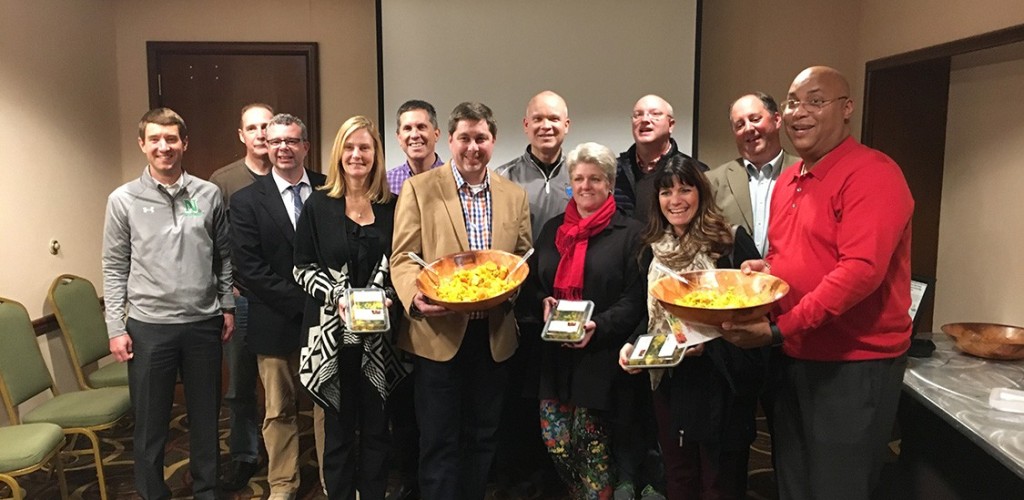
Students from Ithaca’s Beverly J. Martin Elementary School (BJM) were treated recently to an unusual culinary experience, thanks to a new program at Cornell Cooperative Extension of Tompkins County (CCE-Tompkins) and the volunteer efforts of a group of visiting school superintendents from Wayne County, New York.
It began with a call from the Wayne Finger Lakes BOCES, which was seeking to actively engage school superintendents in a food activity to benefit local students. This sparked the idea to introduce students in BJM’s A+ Enrichment Program to cuisine based on the ancient Indian health system of ayurveda, as prepared by an aspiring local caterer, Asif Ullah, and supported by CCE-Tompkins’ Food Entrepreneurship Program.
The end result? Fifty students went home with a nourishing meal of kitchari, a rice and lentil dish, and cauliflower potato subji, prepared by Ullah at CCE-Tompkins and assembled by 25 superintendents at Cornell’s Statler Hotel.
The Food Entrepreneurship Program, funded by the City of Ithaca Community Development Block Grant Program and the Latino Civic Association, helps a diverse range of budding food entrepreneurs overcome the challenges of starting a catering business. The program aims to develop sustainable catering and food vending businesses that enhance social well-being and economic development.
For more information, contact Lara Parilla Kaltman, nutrition and community development issue leader at CCE-Tompkins, at 607-272-2292 or ljp9 [at] cornell.edu (ljp9[at]cornell[dot]edu).


