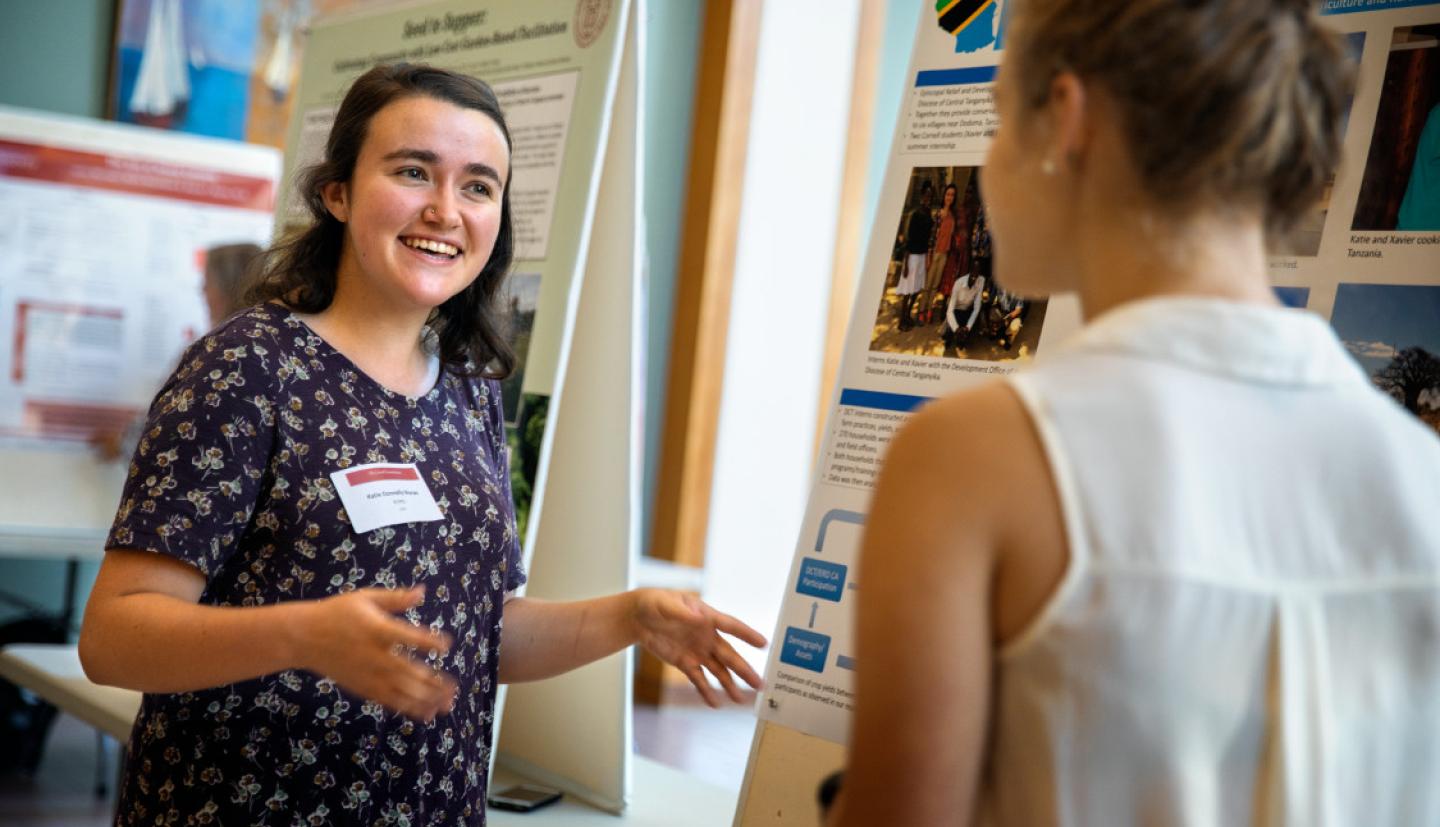
In Dodoma, Tanzania, where Katie Donnelly Moran ’18 and Xavier Salvador ’19 spent their summer learning about food insecurity, 47 percent of the households interviewed by the CALS students were food insecure.
“This was my first time conducting hands-on research,” Donnelly Moran said of the project supported by the CALS Global Fellows Program, which facilitated the partnership with the Diocese of Central Tanganyika’s Development Office.
“Through preparation and the warmth of my hosting organization, my experience was better than I could have imagine," said Donnelly Moran, explaining that they noted household demographics, farm practices and yield as part of the survey to assess food security in the region.
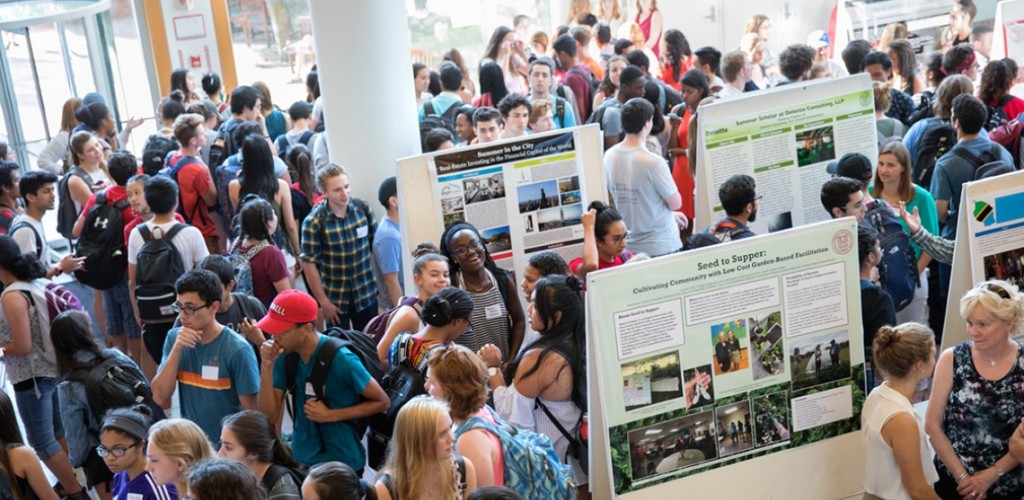
Donnelly Moran and about 30 students from the Cornell Commitment office – Meinig scholars, Rawlings research scholars and Cornell Tradition fellows – presented posters and panel discussions Sept. 27 on how they spent their summer interning with local, national and international organizations.
Ebeid attended public meetings and studied policy decisions. “I loved interning and doing research there,” he said.
Freshmen entering the Cornell Commitment program – which has about 900 students – attended the poster sessions and talks. Victor Odiwuor ’21 said the upperclassmen seemed quite engaged: “It’s very inspiring to see these student projects, and I appreciate that it took time for the research and to present it.”
Said Sofian Albayati: “This program gives us an opportunity to widen our perspectives, meet new people and engage.”
Kierra Grayson ’19 interned at a Montessori school at Kumasi, Ghana, through a collaboration between Cornell and the United Nations on behalf of the Voices of African Mothers Foundation, a group that supports African women.
Grayson admired the kindergarten and first-grade children who were learning English pronouns and fractions. As a development sociology major, she observed social structures, familial backgrounds and education.

“I want to know how families are manifested into overall life health. This internship was a chance to observe what the culture was like and the value of health in their community,” she said.
“Personally, the internship was a very introspective experience, as it taught me a lot about myself and career goals … and it taught me how to be comfortable when you’re uncomfortable.”
A version of this article appeared in the Cornell Chronicle.