

Cheers to apples … and to a cider revival!
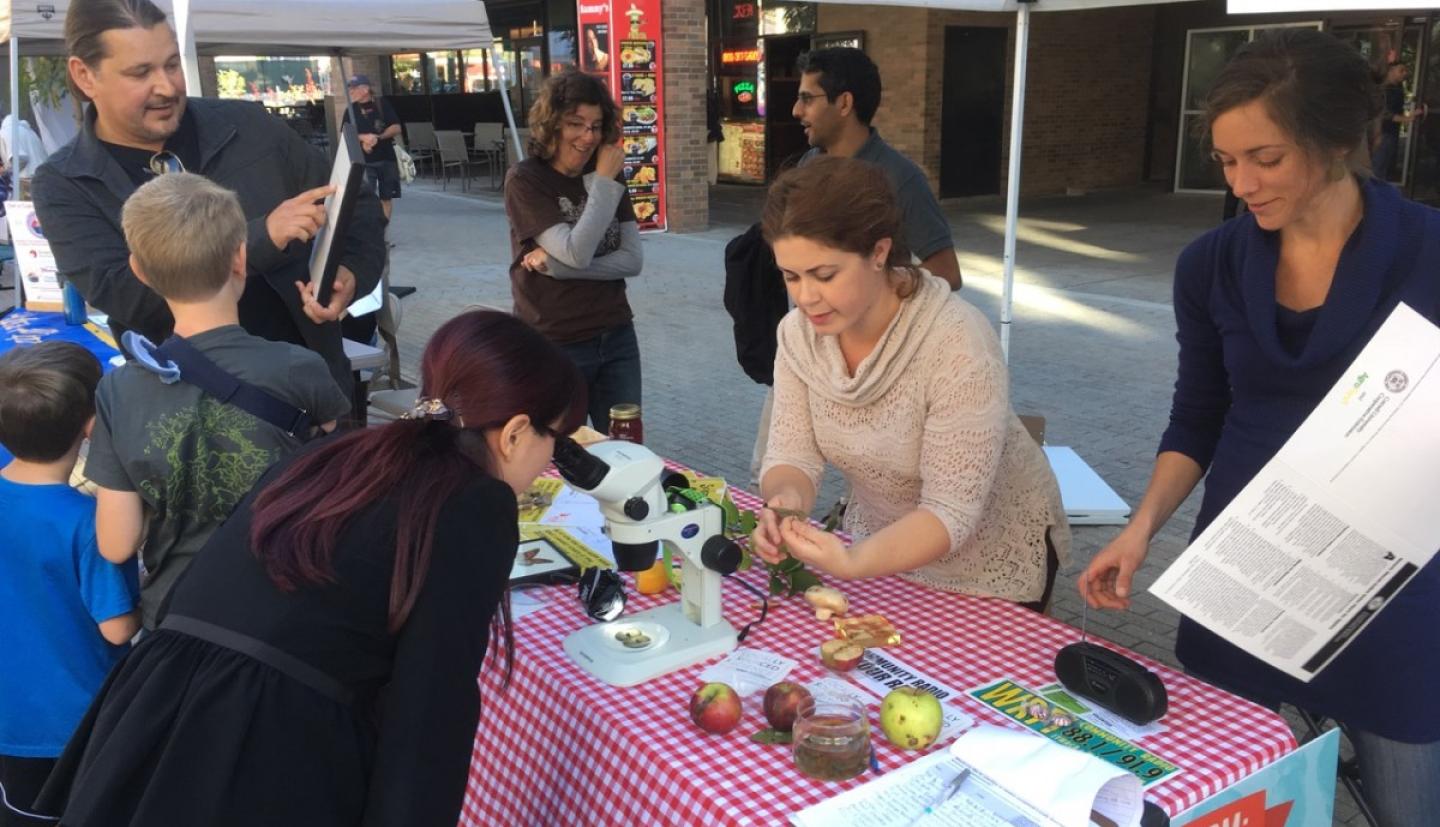
Science Cabaret – Ithaca’s local scientific ensemble – presented Cornellians and apples in a spirited way. In between music acts at the 35th Ithaca Apple Harvest Festival, four scientists explained the core of making apples to the Ithaca Commons Pavilion crowd Oct. 1.
For “A Bite of Science,” Ali Al Farqani, a doctoral student in horticulture, expounded on rootstock for making apples; Megan Biango-Daniels, a doctoral student in plant pathology, described apple disease and spoilage. Doctoral student Anna Wallis told the crowd how apples are grown and Jackie Nock, research support specialist in horticulture, discussed how to optimize apple storage: Put them in the fridge.
At the Oct. 3 Science Cabaret event Pressing the Apple: A Cider Maker’s Tales, the audience enjoyed cider tastings while listening to Elizabeth Ryan ’82, owner of Breezy Hill Orchard in Staatsburg, New York, and Autumn Stoscheck, owner of Eve’s Cidery in Newfield, New York, pore over cider history.
Emeritus professor Ian Merwin, M.S. ’88, Ph.D. ’90, owner of Black Diamond Cider in Trumansburg; Leah Grady Sayvetz and orchardist Steve Selin of Ithaca’s South Hill Cider and Eric Schatt of Redbyrd Orchard Cider in Trumansburg helped to answer questions and pour cider.


