

The Great Lakes are a crucial natural resource that accounts for 84 percent of North America’s surface fresh water and one-fifth of the surface fresh water for the entire planet. But the sheer size and complexity of the lakes make them difficult to study. Now a regional consortium that includes Cornell University is collaborating to preserve the Great Lakes, thanks to a five-year, $20 million grant from the U.S. National Oceanic and Atmospheric Administration (NOAA).
The Cooperative Institute for Great Lakes Research is a consortium of nine universities, several private businesses and nongovernmental organizations, led by the University of Michigan, which works in partnership with the National Oceanic and Atmospheric Administration (NOAA) Great Lakes Environmental Research Laboratory in Ann Arbor. This consortium is one of 16 such cooperative institutes that connect academic institutions with NOAA research laboratories across the country.
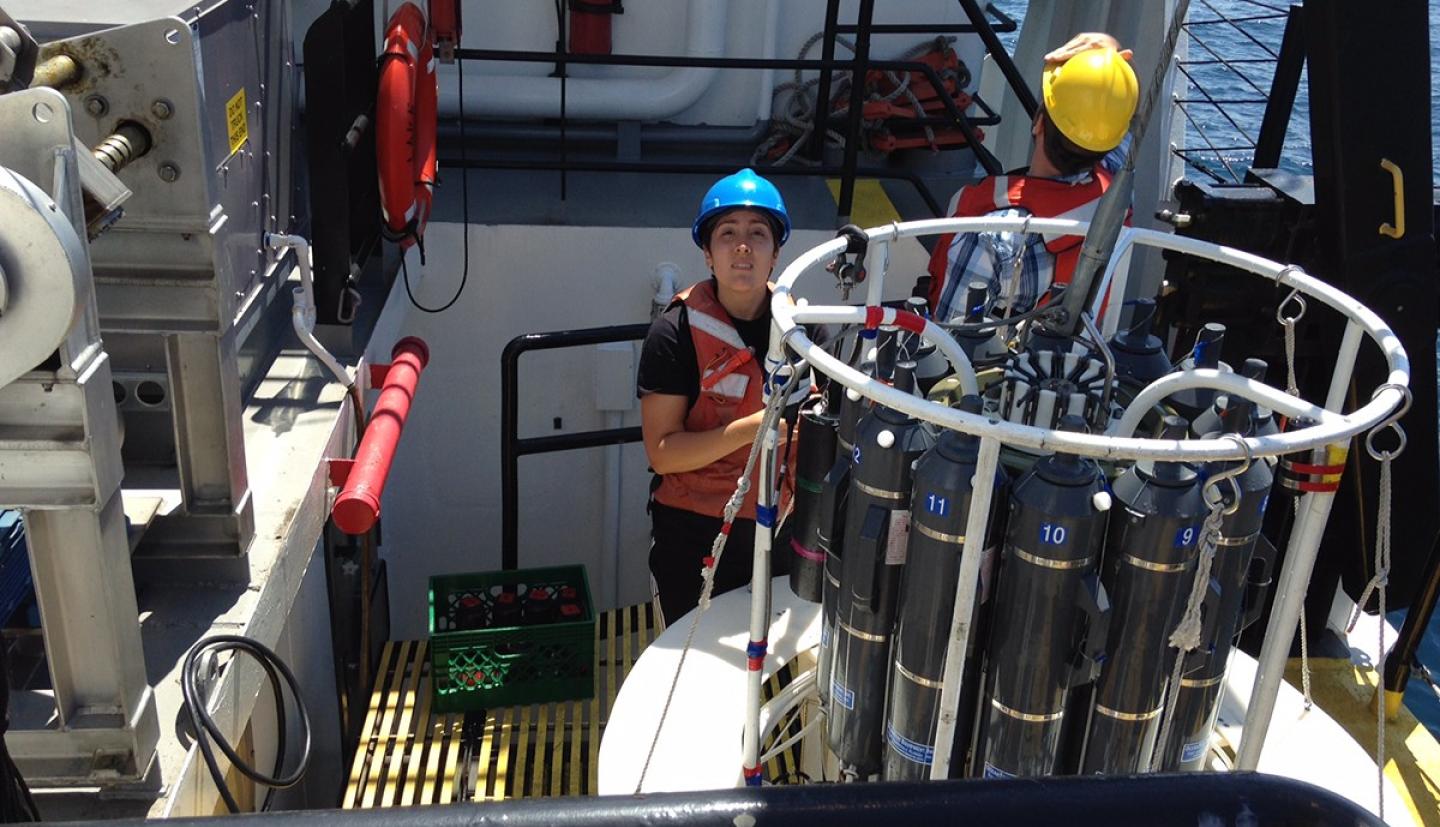
“In general we want to understand how the Great Lakes function,” says Lars Rudstam, professor of natural resources, who is Cornell’s co-principal investigator on the project, along with David Lodge, the Francis J. DiSalvo Director of the Atkinson Center for a Sustainable Future. “There is a lot of expertise in this NOAA Great Lakes Environmental Research Lab that we don’t have, and we have expertise they don’t have. So by combining forces we can do better science.”
From shipping to fisheries to providing fresh water, the Great Lakes support a wide range of economic activity that depends on the lakes’ health. The consortium aims to address a variety of issues impacting the lakes’ ecology, such as harmful algal blooms and invasive species.
Cornell is no stranger to Great Lakes research. For the last six decades the university’s Biological Field Station at Shackelton Point has tackled numerous Great Lakes projects, such as studying invasive species, including zebra mussels; interactions between fish species and the resulting effects on fisheries; and the importance of zooplankton and mysid shrimps in the food web.
As a member of the consortium, Cornell will play a key role in research projects studying the lower trophic levels of phytoplankton and zooplankton affected by a changing climate; coupling ecology with the physical sciences to address hydrodynamics of the lakes; genetic barcoding of fish and invertebrates; and mapping invasive species like zooplankton, fish and mussels. Rudstam, who is a fellow with the Atkinson Center, is hopeful that Cornell will also integrate more social sciences into Great Lakes research to shape how public policy for the lakes is formed.
“I am so pleased that Cornell has joined the Cooperative Institute for Great Lakes Research. Cornell has an outstanding suite of research facilities and dozens of scientists who work on the Great Lakes with expertise that no one else has,” said Bradley J. Cardinale, director of the Cooperative Institute for Great Lakes Research. “All universities involved in this regional partnership have chosen to set aside some of their own individual interests, stop competing against one another and instead cooperate for the good of the whole. Together, we will do more good for the Great Lakes and its people than any of our universities would ever do alone.”
David Nutt is a freelance writer.


