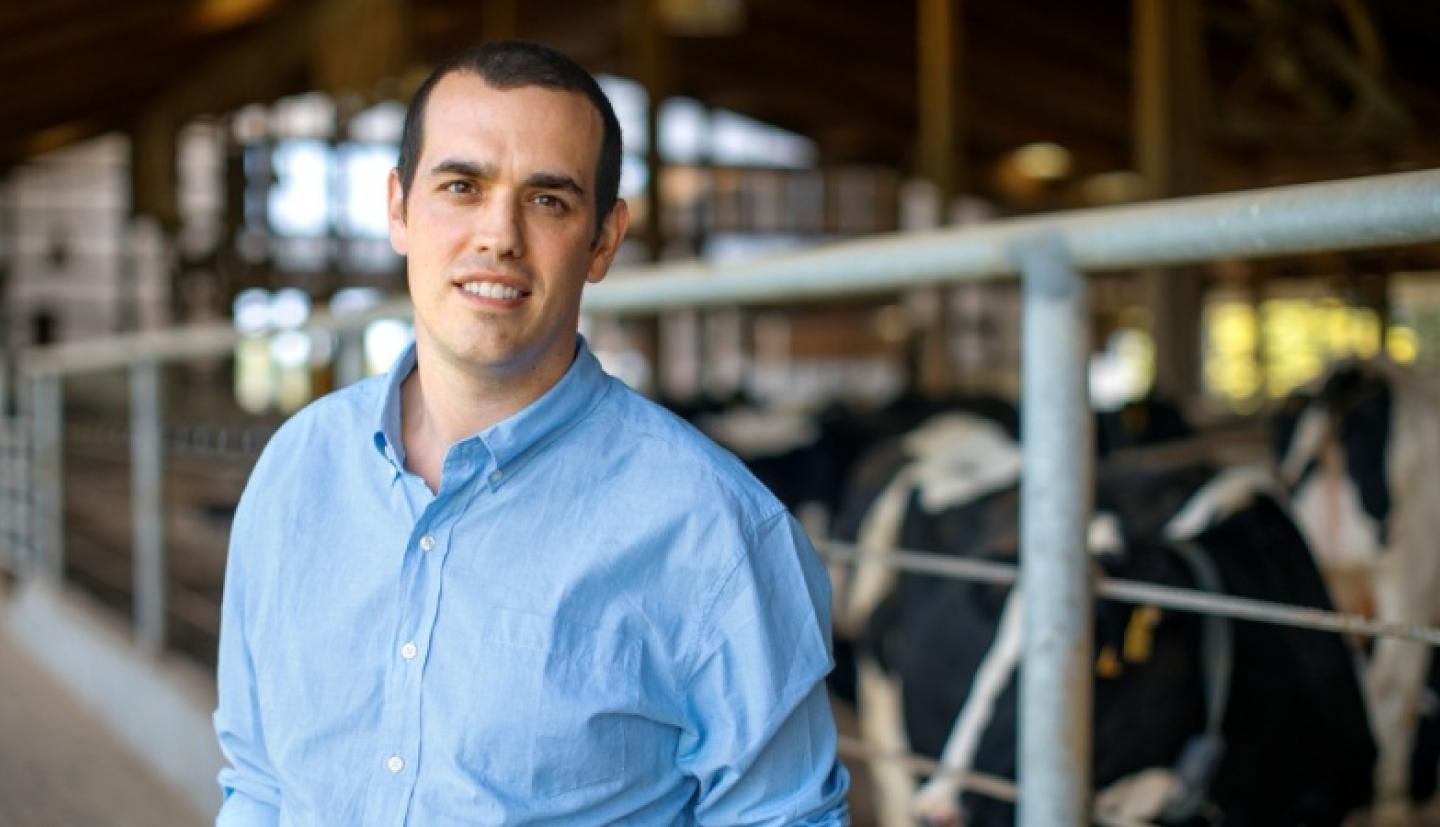
Joe McFadden, assistant professor, Northeast Agribusiness and Feed Alliance Partners Sesquicentennial Fellow in Dairy Cattle Biology, animal science
Academic focus: My goal is to characterize the mechanisms that mediate the development of metabolic disease in cows and humans using mass spectrometry-based lipidomics. Our focus is to characterize the role of sphingolipids as associative and causative biomarkers of insulin resistance and hepatic steatosis.
Previous positions: assistant professor of biochemistry, West Virginia University, 2012-17; postdoctoral fellow in neuroscience, Johns Hopkins University School of Medicine Center for Metabolism and Obesity Research, 2009-12
Academic background: B.S. animal science, Cornell, 2003; M.S. animal science, University of Illinois, 2005; PhD. In dairy science, Virginia Tech, 2009
Last book read: “The Grant Application Writer’s Workbook”
What do you do when not working?: I enjoy woodworking, hydroponic gardening, camping with family and skiing.
What gets you out of bed in the morning?: The opportunity to make novel scientific discoveries that can dramatically transform our understanding and eventually lead to innovative technologies that are developed to improve health.
Current research project?: We are exploring pharmacological and nutritional approaches aimed at modifying ceramide synthesis as a means of improving cow and human metabolic health.
Courses you’re most looking forward to teaching?: Mammalian energy metabolism
What most excites you about Cornell CALS?: The opportunity to work with faculty that share a common interest and for a dairy industry that demands innovation.
► Meet all our new faculty