Ludmilla Aristilde
In the circle of life that enables human existence on Earth, phosphorus plays a considerable role.
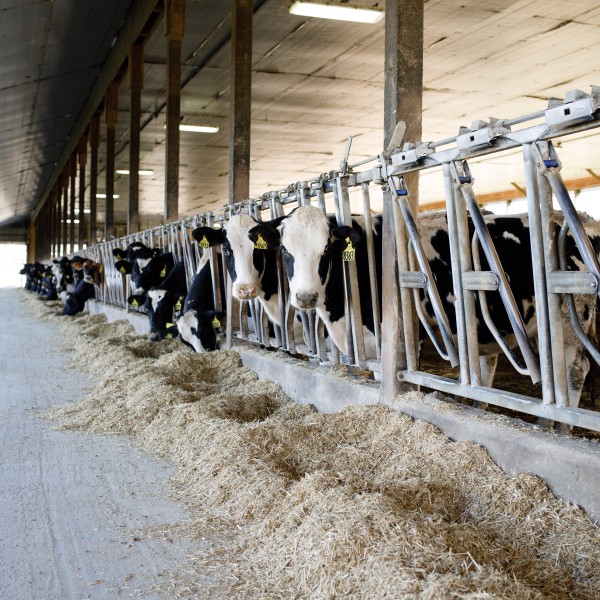
Along with nitrogen, phosphorus is a crucial macronutrient for plants. Farmers add it to their fields through livestock manure and direct chemical fertilization. However, when excessive phosphorus runs off from farm fields, it can become a pollutant in waterways, causing harmful algae and threatening water quality.
A new grant to a researcher in the College of Agriculture and Life Sciences aims to discover the ways phosphorus cycles in the environment.
Principal Investigator Ludmilla Aristilde, assistant professor in the Department of Biological and Environmental Engineering, and co-principal investigator Deb Jaisi of the University of Delaware were recently awarded $454,712 from the National Science Foundation to “address a long-standing knowledge gap in the environmental mapping of phosphorus species and their fate in soils and waters.”
Excess phosphorus and nitrogen in waterways can cause algal blooms that reduce oxygen in water, killing fish and other aquatic species. The problem can also harm humans, because certain algal blooms produce toxins that can sicken humans who drink contaminated water or eat tainted fish or shellfish, according to the Environmental Protection Agency.
Little is known about the basic chemical transformation that is involved when organic phosphorus — the form of phosphorus in carbon-containing molecules — becomes inorganic phosphorus in soils and waters. Inorganic phosphorus found in minerals is associated with other metals and non-carbon elements. This form is mined and used to produce fertilizers, among other uses.
The researchers are tackling the problem using a multidisciplinary approach that combines tools from molecular biology, analytical chemistry and computational modeling.
“Beyond providing insights on the complex cycling of phosphorus in the environment, the research findings will inform possible new strategies to engineer sustainable recycling of phosphorus from organic wastes,” said Aristilde.
The project also includes an educational outreach component, “aimed at increasing public literacy on nutrient cycling, from middle school students to farmers in New York and Delaware, and informing nutrient and fertilizer management on agricultural lands,” according to Aristilde.
The researchers’ grant, “Collaborative Proposal: INFEWS N/P/H2O: Supramolecular Recognition in the Biocatalytic Transformation of Organic Phosphorus-Containing Environmental Matrices,” is funded through an NSF-wide initiative called Innovations at the Nexus of Food, Energy, and Water Systems.