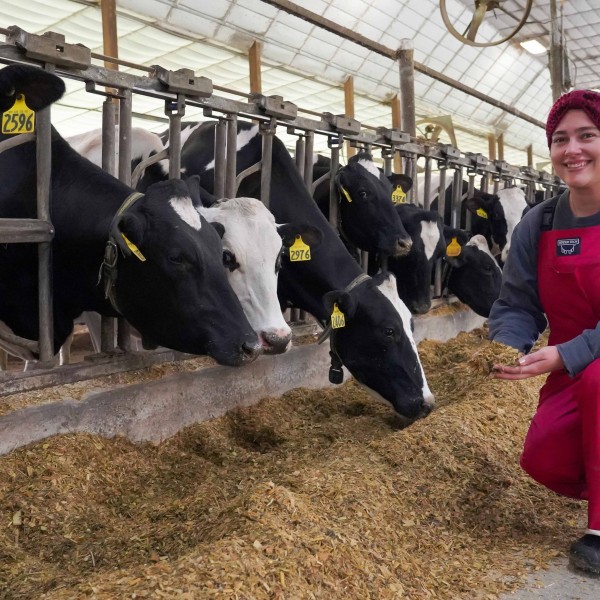
Looking good, #CornellCALS! #Cornell2017 pic.twitter.com/310c6er1Zf
— Cornell CALS (@CornellCALS) May 28, 2017
Cornell’s newest graduates, along with their families and friends, wore smiles, grins and pride throughout Cornell’s 149th Graduation Weekend. They now share a collective memory of 6,000 deft men and women striding into the future.
While Cornell’s graduating veterinarians typically wave inflated, shoulder-length examination gloves at Commencement, seniors at the College of Agriculture and Life Sciences did not throw in the towel. Instead, they waved them. Jessica Nino de Rivera ’17 and Claudia Mimosa ’17, both biological sciences majors, and Jiaming Huang ’17, animal science, and Kevin Chou ’17, applied economics and management, picked their towels out early.
Miquela Lee Hanselman ’17, animal science, shares a special connection with her great grandfather, Ernest S. Smith. She graduated from Cornell 100 years after he did. Smith’s graduation was held June 27, 1917, at Bailey Hall, when Cornell President Jacob Gould Schurman gave the Commencement address. That 1917 senior class procession formed in front of Goldwin Smith Hall, yards from where she lined up a century later.
At Convocation the day before, Schoellkopf Stadium was packed to capacity as nearly 30,000 people heard former Vice President Joe Biden.
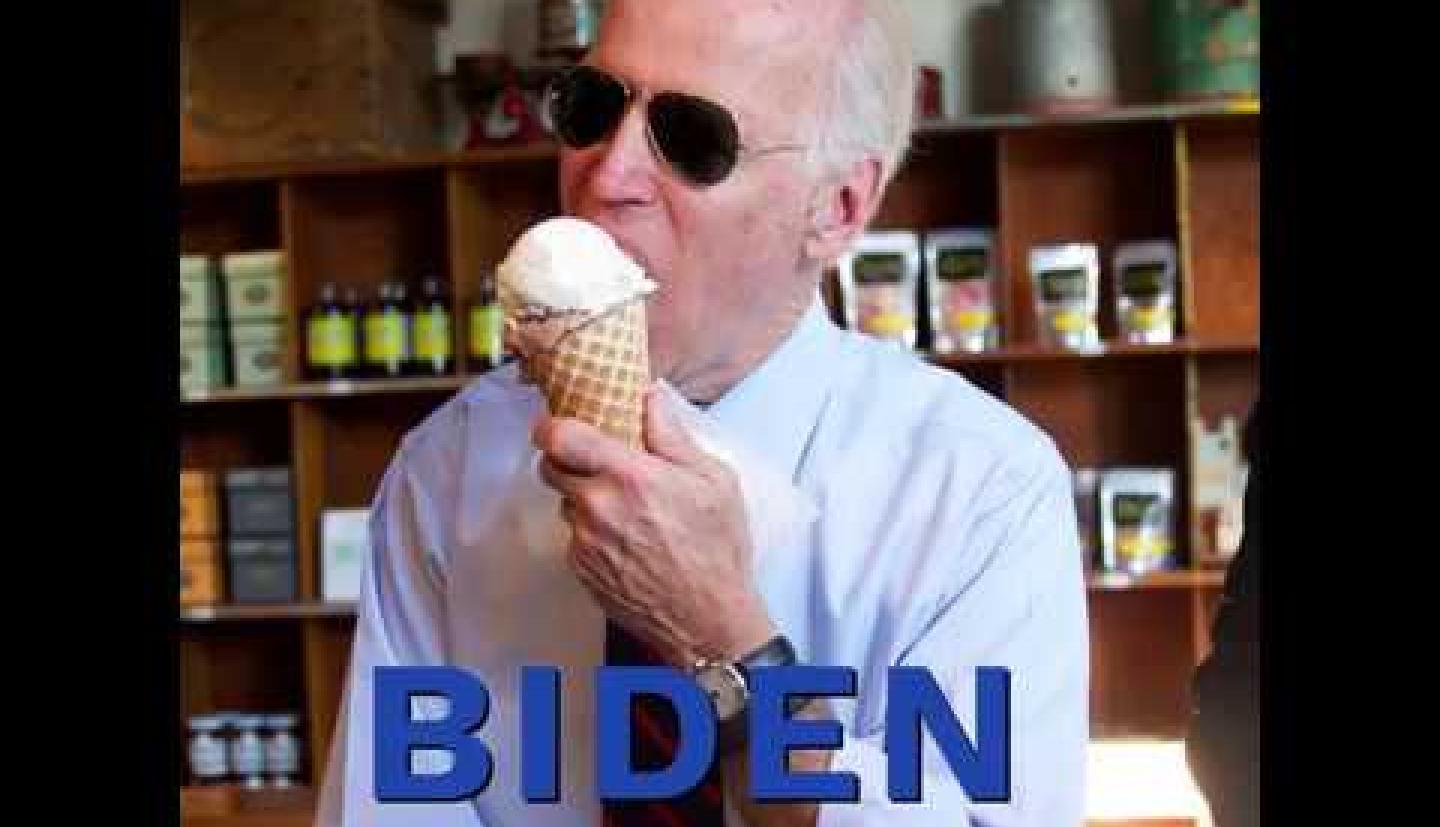
After Convocation, thousands of Cornellians, their families and friends headed to the Arts Quad for the mid-afternoon ice cream reception. The vanilla chocolate chip ice cream – named in honor of Biden, “Big Red, White & Biden” – proved so popular, there was only enough for the first half-hour of the party.
A version of this article appeared in the Cornell Chronicle.