periodiCALS, Vol. 7, Issue 1, 2017
CALS research and outreach have deep roots in New York City, from the rat burrows of city parks to the furrows of a rooftop farm in Brooklyn. Meet some of the people and programs working with issues including urban pests, coastal resilience, flood prevention, urban agriculture, and water quality.
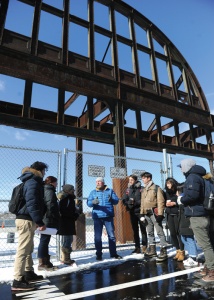
Peter Trowbridge and the Students of Landscape Architecture 3020
Department of Landscape Architecture
For more than two decades, landscape architecture professor Peter Trowbridge has challenged his studio class students with real clients and contemporary projects in New York City and the metro area. The spring 2017 cohort gathered in Chelsea on a snowy February day to survey the site of their current semester-long assignment: using landscape design to decrease the risk of flood damage from storm surges in Chelsea. “In the city, the pressing issues have to do with a rise in sea level and the heat islands, and certainly there is a division between the haves and the have-nots,” Trowbridge notes. “Through their projects, they engage with both.”
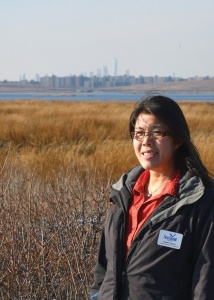
Helen Cheng
Jamaica Bay Coastal Resilience Specialist
Cornell Cooperative Extension, New York Sea Grant, and the Science and Resilience Institute at Jamaica Bay
Bounded by southern Brooklyn and Queens and the Rockaway Peninsula, Jamaica Bay is a place where migrating birds stop over and kayakers paddle, while planes overhead depart from and land at JFK airport. To Helen Cheng, Jamaica Bay offers a unique opportunity to define resilience in the face of a changing climate. Cheng is helping communities grapple with the risks of coastal living highlighted by Hurricane Sandy, offering climate forums that provide a dialogue between residents, scientists, and decision-makers, as well as collaborating on restoration programs which aim to improve water quality and decrease erosion with oyster reefs. For more information, visit srijb.org and seagrant.sunysb.edu/jamaicabay.
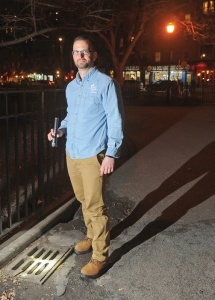
Matt Frye
Community IPM Extension Area Educator
New York State Integrated Pest Management
Matt Frye knows his way around rodent real estate in the city: Storm drains, soil for burrowing, and convenient access to the all-night deli of street trash are key features. In his work as an extension educator with the Community Integrated Pest Management Program, Frye helps people manage urban pests in ways that minimize environmental, health, and economic risks, leveraging information about their basic biology to prevent and exclude rather than exterminate. In addition to helping communities manage rodents and conducting research on pathogens carried by rats in New York City, Frye’s expertise extends to bedbugs and ticks as well.
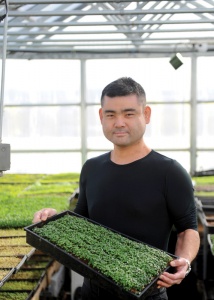
Yoshiki Harada
Ph.D. Candidate
School of Integrative Plant Science
The Brooklyn Grange, a commercial farm which spans more than two acres of rooftops, is a flagship for urban agriculture, and Yoshiki Harada is a scientific pioneer in this new agricultural environment. Working with horticulture professors Tom Whitlow and Nina Bassuk, Harada focuses on optimizing water retention and minimizing nutrient loss in the soil, a lightweight mix of compost and porous stones that allows the Grange to produce 50,000 pounds of produce annually yet is light enough for rooftop use. He’s driven by questions about the chemical, biological, and hydrologic processes in highly urbanized environments, such as green roofs, rooftop farms, and other engineered ecosystems.
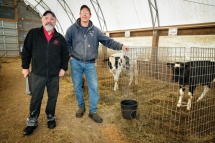
Dale Dewing
Extension Watershed Team Leader
Cornell Cooperative Extension of Delaware County
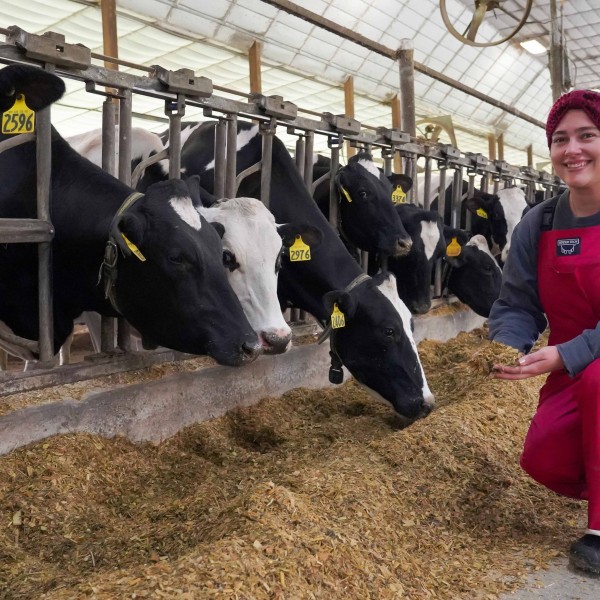
Walton, N.Y., may be 150 miles from the Big Apple, but the water that flows off the county’s farms eventually spills from New York City faucets without passing through a water filtration plant. The pristine water quality is due in part to the work of Dale Dewing—pictured with dairy farmer Dave Holley (right)— and colleagues in the Watershed Agricultural Program, which reduces runoff from the farms in the New York City watershed. Farmers in the watershed have been able to bolster their environmental and economic sustainability using the latest Cornell research in animal nutrition, crop production, and hydrology and funding from the city to implement new conservation practices. Program partners include the Delaware County Soil and Water Conservation District, the Watershed Agricultural Council, and the USDA Natural Resources Conservation Service, with funding from New York City Department of Environmental Conservation.