Micronutrients such as iron, copper, and zinc are required for crop growth, fertility, and grain yield. They are also essential components of the human diet. However, bread wheat has inherently low concentrations of these micronutrients.
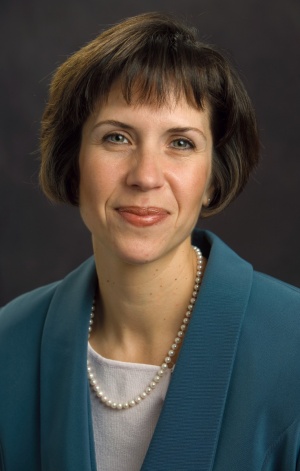
Olena Vatamaniuk in the SIPS Section of Soil and Crop Sciences and Olga Terek at the Ivan Franko National University of Lviv have been awarded a $90,000 grant from CRDF Global to develop innovative breeding strategies with the goal of boosting yield and mineral content of bread wheat. In addition to being a globally important crop, wheat is also a major source of calories and revenue in Ukraine.
Using a multi-faceted approach spanning molecular genetics, functional genomics approaches, soils tests, and the state-of-the-art synchrotron x-ray technologies, Ukrainian and U.S. investigators will evaluate wheat responses to mineral availability, using wheat genotypes from the State Register of Plant Varieties Suitable for Dissemination in Ukraine. Mark Sorrells (Section of Plant Breeding and Genetics), Murray McBride (Section of Soil and Crop Sciences), Zhangjun Fei (USDA-ARS, Boyce Thompson Institute), and Arthur Woll and Rong Huang (Cornell High Energy Synchrotron Source) are also project participants.
As described on their website, CRDF Global is an independent nonprofit organization that promotes international scientific and technical collaboration through grants, technical resources, training, and services. Based in Arlington, VA, CRDF Global works with more than 40 countries in the Middle East, north Africa, Eurasia, and Asia and specializes in bringing isolated scientific communities into the scientific mainstream through a variety of science engagement and capacity-building programs.