

Cornell researchers in the Department of Food Science found exposure to light-emitting diode (LED) sources for even a few hours degrades the perceived quality of milk more so than the microbial content that naturally accumulates over time. Their study determined milk remained at high-quality for two weeks when shielded from LED exposure, and consumers overwhelmingly preferred the older, shielded milk over fresh milk stored in a typical container that had been exposed to LED light for as little as four hours.
Keep Exploring
News
Conferences Graduate student Nishat Tasnim presented “The Condolence Clause: The Boundaries of Accountability after the San Diego Mosque Shooting” at the conference Confronting the Rising Tide: Islamophobia, White Nationalism, and the Global...
Field Note
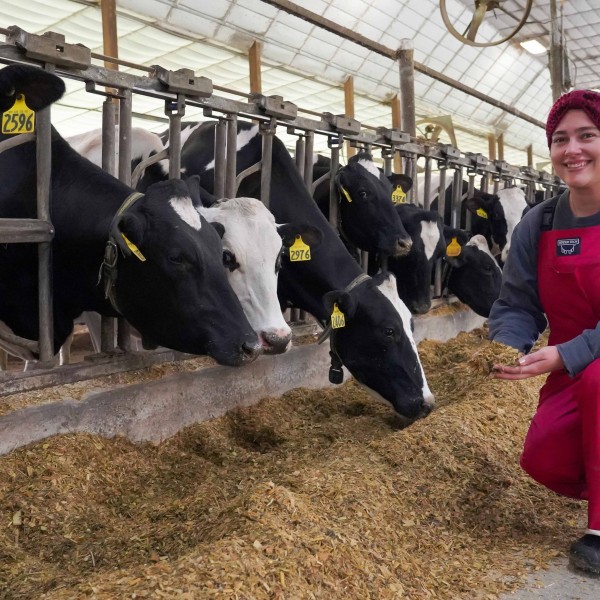
Ananda Portela Fontoura PhD’22 is a postdoctoral associate working in the lab of Michael Van Amburgh , professor of dairy nutrition. Ananda’s research focuses on maintaining or enhancing dairy cow performance through optimizing nutrient use...

We openly share valuable knowledge.
Sign up for more insights, discoveries and solutions.
Please enter a valid email address to subscribe to the newsletter.