

Cornell’s Atkinson Center for a Sustainable Future (ACSF) has given $1.5 million from its Academic Venture Fund to a record 14 new university projects. CALS researchers are involved with 11 of those projects.
“Our Academic Venture Fund (AVF) program, now in its ninth year, continues to enable faculty from across campus to form new collaborative teams offering innovative approaches to a wide range of sustainability challenges,” said Graham Kerslick, the executive director of the center. “This year, our AVF awards have a strong international component, with work involving 15 countries in addition to the United States.”
Researchers will obtain data or prove principles and seek external collaborators to partner with in government, for-profit or nonprofit companies, nongovernmental organizations or philanthropies, he said.
CALS researchers are involved in these 2016 projects:
- Wild Seafood, Healthy Harvest – About 20 percent of the world’s wild seafood is harvested with fishing gear that operates along the seafloor with potential to disturb seabed ecosystems. The research team will develop models for how the seafloor responds to various fishing gear, with the goal to reduce habitat impacts. Researchers: Suresh Sethi and Patrick Sullivan, natural resources; Miguel Gómez, applied economics and management.
- Power in the Wind – Uncertainty about the lifetime power potential of proposed wind farm sites raises financing costs and risk for investors. This team will develop computational tools to improve projections of annual electricity yields from potential wind farms. Researchers: Sara Pryor, earth and atmospheric sciences; Rebecca Barthelmie, mechanical and aerospace engineering.
- New Tech for an Ancient Food – Basic 3-D printing technology could make tools rice farmers in Asia and Africa need to grow more rice sustainably. The team aims to manufacture quality weeders, transplanters and harvesters for low-water, climate-smart rice production – simply, cheaply and locally. Researchers: Derek Warner, civil and environmental engineering; Erika Styger, International Programs in the College of Agriculture and Life Sciences; Robert Shepherd, mechanical and aerospace engineering.
- Hydropower and Ecosystem Services –The Andean Amazon is experiencing a hydropower boom, as more than 150 new dams are proposed across several countries – with more under construction. The group will evaluate the cumulative economic and environmental impacts. Researchers: Alexander Flecker, ecology and evolutionary biology; Carla Gomes, computing and information science; Patrick Reed, civil and environmental engineering; Gregory Poe, applied economics and management; Scott Steinschneider, biological and environmental engineering.
- Crop Disease and Climate Change – Climate change could mean more frequent and devastating plant epidemics, as plant pathogens spread through the air to infect staple food crops fundamental to world food security. Researchers will model how extreme weather events and changing agricultural landscapes could influence the way plant pathogens move across continents and oceans. Researchers: Natalie Mahowald, earth and atmospheric sciences; Gary Bergstrom and William Fry, plant pathology and plant microbe biology; Christopher Myers, physics.
- Coffee: What’s Fair? – Fair-trade certification gives consumers peace of mind the supply chain meets a standard of fairness for workers and farmers, but small coffee growers bear many hidden expenses that may not be factored into price-setting. The team will collect real production costs and build an online tool to clarify pricing, and compare the costs and benefits of coffee production systems. Researchers: Miguel Gómez, applied economics and management; Gilly Leshed, information science; Joshua Woodard, applied economics and management.
- Fighting Bacteria with Better Dairy Practices – Working with local dairy farms, the team will study routine use of antibiotics in cows and screen colostrum (first milk) to detect antibiotic residues and resistance genes that reach calves at their first feeding. Researchers: Daryl Nydam, population medicine and diagnostic science; Lorin Warnick, population medicine and diagnostic science; David Just, applied economics and management.
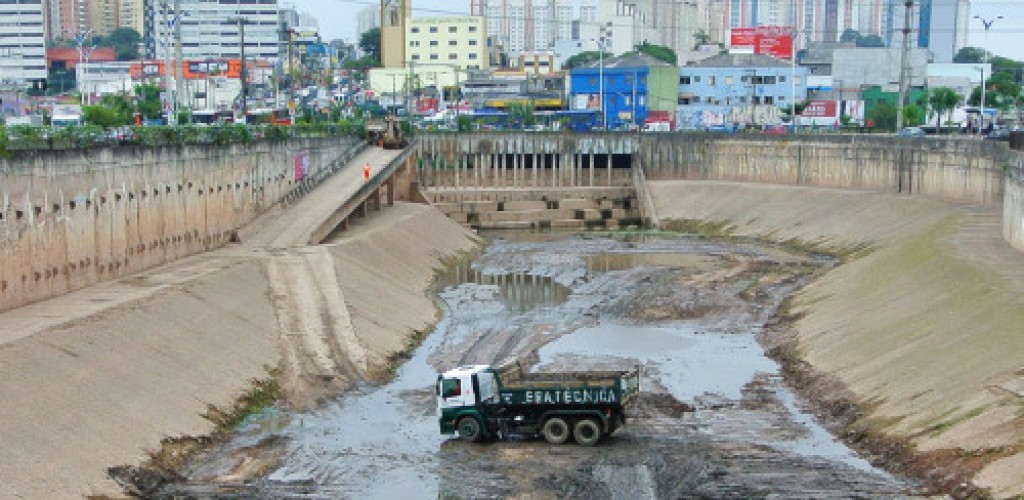
- Big Pool, Little Pool – Piscinões (big pools) are São Paulo’s primary strategy for reducing flooding. These basins divide neighborhoods, concentrate pollutants and require costly maintenance. Investigators will create landscape-based design guidelines that work to enhance communities and urban ecosystems. Researchers: Brian Davis, landscape architecture; Raymond Craib, history; Tammo Steenhuis, biological and environmental engineering; Thomas Whitlow, horticulture.
- Detecting Toxic Chemicals in Fracking Water – Many chemicals used in hydraulic fracturing gas wells are unknown, so water-quality monitoring is difficult. Using new techniques in environmental toxicology, the team will identify unknown chemicals of concern in water collected throughout the fracking process for better wastewater treatment strategies. Researchers: Damian Helbling, civil and environmental engineering; Anthony Hay, microbiology.
- Conservation Incentive Programs for Latin America –Working with Rainforest Alliance and industry partners in Nicaragua, the researchers will develop practical incentive programs to help Nicaragua meet its pledge to restore 2.8 million hectares of degraded forest lands. Researchers: Amanda Rodewald, Lab of Ornithology/natural resources; Mark Milstein, Johnson; Viviana Ruiz Gutierrez, Lab of Ornithology; Miguel Gómez, applied economics and management; Stephen DeGloria, soil and crop sciences.
- Boosting Maize Yields Sustainably – Farming systems that use ecological principles let African farmers raise more food sustainably. The team will look into how surrounding landscapes and soil affect crop yields to help more smallholder farmers benefit from sustainable practices. Researchers: Katja Poveda, entomology; Andre Kessler, ecology and evolutionary biology; Laurie Drinkwater, horticulture; Magdeline Laba, soil and crop sciences.
This article originally appeared in the Cornell Chronicle.


