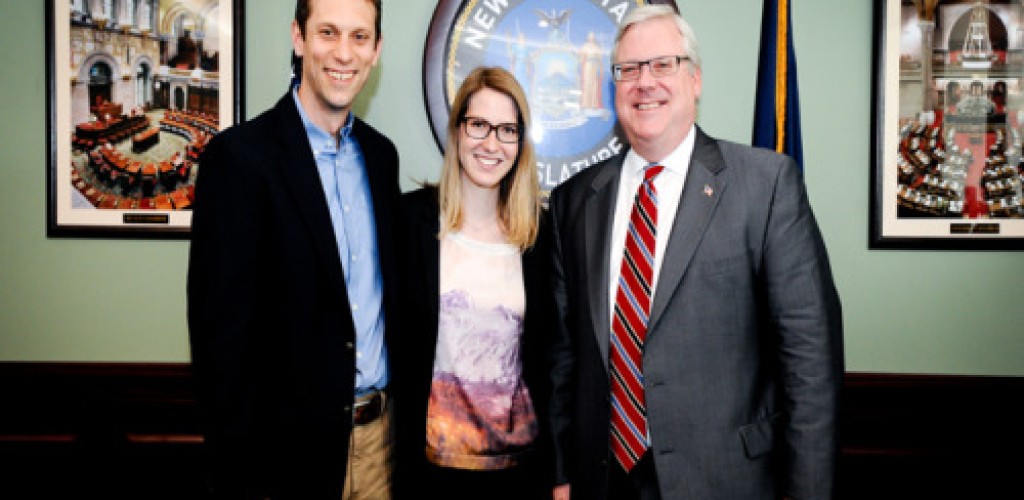
Researchers from the College of Agriculture and Life Sciences (CALS) provided their expertise to New York policymakers during a roundtable May 24 in Albany as the scientists explained strategies to protect the state’s honeybee and native pollinator populations.
Research scientist Scott McArt and extension associate Emma Mullen of the Department of Entomology took part in the “Honeybees & Native Pollinators” roundtable hosted by State Senator Tom O’Mara (R,C,I-Big Flats), chairman of the Senate Environmental Conservation Committee. The event gave beekeepers, researchers, government officials and farm, environmental and agricultural business groups the opportunity to highlight points for inclusion in the development of a New York State Pollinator Protection Plan.
Julie Suarez, CALS assistant Dean, said the college is pleased to partner with policymakers and stakeholders on issues vital to New York agriculture. “With over 450 species of bee pollinators in New York State, everyone who enjoys eating local, fresh fruits and vegetables relies on these busy insects. The world-class entomologists at CALS are working to understand and solve the key challenges causing declines in pollinator populations in New York.”
In addition to CALS researchers and scientists, participants at the May 24th round table discussion included representatives of the governor’s office, and the state Departments of Agriculture and Markets and Environmental Conservation; regional beekeepers and beekeeper associations, including the Southern Adirondack Beekeepers and Rulison Honey Farms LLC (Amsterdam); New York Farm Bureau; The Nature Conservancy of New York; the National Resources Defense Council (NRDC); and Citizens Campaign for the Environment.
O’Mara said that he hopes the event will assist and spur action on the ongoing development and implementation of New York’s Pollinator Protection Plan. In April 2015, Governor Andrew Cuomo established an interagency task force, led by the state departments of Agriculture and Markets and Environmental Conservation (DEC), to begin producing the plan as well as examine other issues critical to the sustained well-being of the state’s pollinator populations. The 2016-17 state budget includes $500,000 through the Environmental Protection Fund (EPF) for the plan’s implementation.