

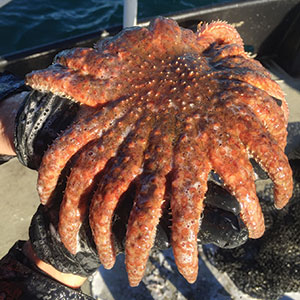
CRUISING THE WATERS of Puget Sound in January, the crew aboard the research vessel the Clifford A. Barnes netted some good news: several healthy sunflower stars (Pycnopodia helianthoides), which had been thought to be functionally extinct in the area. The expedition was led by Ian Hewson, associate professor of microbiology, who last year identified a marine virus named SSaDV (sea star-associated densovirus) as the most likely culprit in recent massive sea star die offs. “Severe losses of sea stars had been reported in these waters by various collaborators, so we were keen to see what lay beneath the waves,” he said. “Time will tell whether SSaDV lurks in these samples, but we saw only a couple of ‘funky’ looking animals during the trip. The vast majority were totally healthy.” In addition to collecting sea stars and other invertebrates to test for the virus, they also took sediment cores to track the virus’ presence in the environment over time.
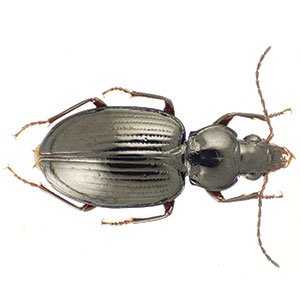
DROPPED BY HELICOPTER onto the farthest reaches of Haleakala volcano in Maui, Entomology Professor James Liebherr, M.S. ’74, and his team followed their headlamps to the eventual discovery of 74 new species of ground beetles. The volcano, which occupies an area less than 900 square miles, is now known to be the only home of 116 species of Mecyclothorax, a genus of diminutive predators only four to five millimeters long. It’s one of the densest concentrations of endemic species in the world. “Lava flows have fragmented the landscape, isolating small populations of tree-bound beetles from their neighbors. Plus the beetles’ small size makes their world a whole lot bigger,” Liebherr explained. “Perhaps the biggest lesson for me is that our initial ignorance of Haleakala biodiversity was so much greater than what we thought, suggesting that even now we should be cautious about what we think we know about Hawaiian ecosystems.”
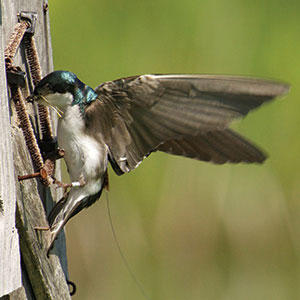
DAVID WINKLER, professor of ecology and evolutionary biology, finally found a needle in a haystack: three Ithaca tree swallows among the five to ten million overwintering in Florida this December. This coup was made possible by the first solar-powered lifetime tag for small songbirds. “This is something we’ve been working toward for 20 years: the ability to follow small birds throughout their annual movements,” Winkler said. The tag consists of a solar cell and radio chip covered by a thin film of mylar with a wispy antenna that transmits the bird’s unique ID number. The design was the invention of Winkler; visiting scientist and engineer Rich Gabrielson; senior Space Plasma Physics Group engineer Steve Powell, B.S. Eng. ’83, M.S. ’83; and Rob MacCurdy, B.S. Eng. ’99, M.S. Eng. ’14, Ph.D. Eng. ’15. This summer, Winkler hopes the tags will let them track the Ithaca arrival of youngsters completing their first round-trip migration.


