Marianne Krasny, the director of Cornell University’s Civic Ecology Lab and a professor in the Department of Natural Resources, has been elected a foreign fellow of the Royal Swedish Academy of Agriculture and Forestry.
Krasny, an international expert on community environmental stewardship and education in urban areas, was one of 25 scientists elected this year, and one of two foreign fellows named to the academy’s general section.
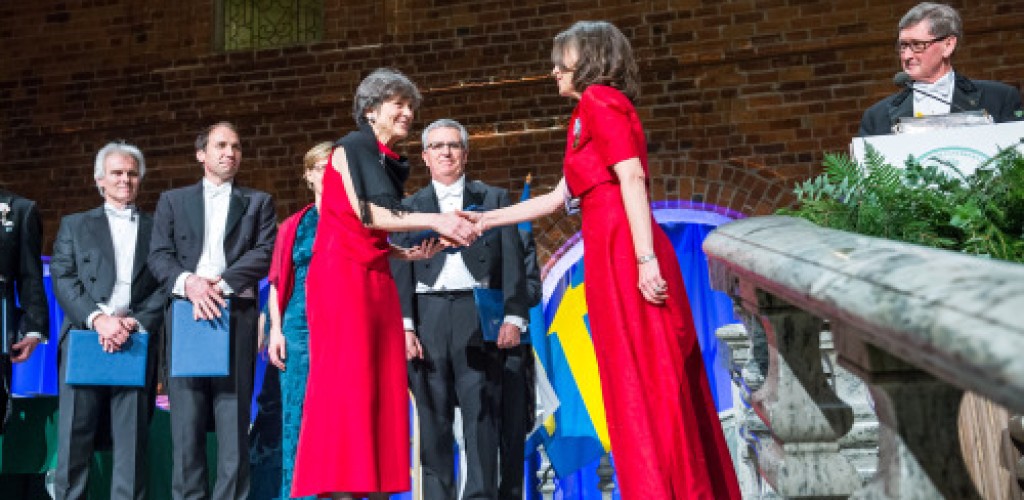
She received a certificate of fellowship during a ceremony attended by Prince Carl Philip Jan. 28 in Stockholm.
With research focused on the nexus between communities and the environment, Krasny is internationally recognized for her research exploring civic ecology and environmental education. Her work focused on locally-organized environmental practices — such as community gardening, community forestry, invasive species control, and watershed restoration — and how they integrate community and environmental concerns.
She earned her B.A. from Cornell in 1974 and several degrees from the University of Washington, including her Ph.D in 1986.
The Academy was founded in 1811 by the Swedish king to promote agriculture and forestry and related activities with the goal to benefit society. The independent organization now has more than 600 members in research, government, and industry to promote the ecological and socially sustainable and use and management of land, forests, plants, animals, water and air. The general section of the academy works with issues relating to natural resources, conservation, environment, landscapes, research, knowledge sharing and community.