For beginning farmers the work of getting crops to grow is often the easy part. Understanding the financial aspects of running their own business is another trouble altogether.
The business side of farming is complex and, for many first-time farmers, an afterthought. To help, a group of Cornell Cooperative Extension (CCE) specialists gave an introduction on the basics of farm finance aimed at the grower just starting out in the business of agriculture.
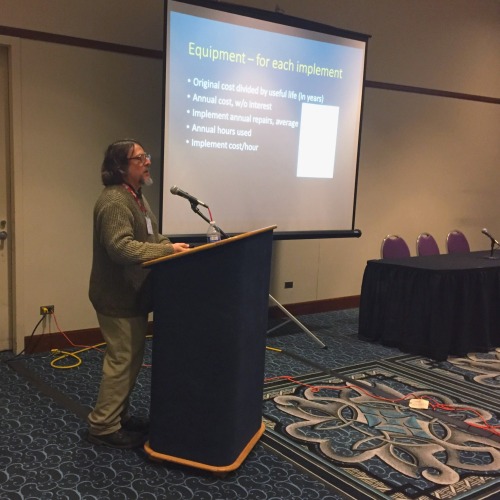
Led by Robert Hadad of the CCE Cornell Vegetable Program and Crystal Stewart, an extension specialist with CCE Eastern New York Commercial Horticulture, the pair gave a presentation focused on the financial fundamentals of farming during a Jan. 19 session at the Empire State Producers Expo in Syracuse, NY.
“Beginning farmers often come in with some knowledge of how to grow crops, but they haven’t been trained at all on the money,” Stewart said. “We want to help farmers get started on the right foot. A huge part of that, beyond production, is understanding the finances.”
Financial problems tend to arise when farmers don’t know how to accurately track investment and account for revenue, Stewart said. Understanding finances early can be the difference between a successful farm and one that struggles to fix avoidable, early missteps.
Problems most often crop up when beginners don’t accurately anticipate money they will make, especially in the first years. That leads to spending too much money too soon and, with little grasp of the financial system, problems can soon grow like weeds. “It’s really easy for beginning farmers to overextend themselves,” she said
Even figuring out how to set a price for what they grow can be perplexing. To understand just how farmers go about setting their price, Hadad sends out surveys asking farmers what goes into their calculations. He discovered about 18 percent of beginner farmers set prices based what’s charged at the supermarket, while another 20 percent priced their crops based on local competition. About 18 percent admitted they simply guessed when it came to pricing. And for 40 percent of the respondents, they said they used some combination of all three.
About four percent first calculated their costs and then priced their produce based on that figure. “So that’s a sign of encouragement,” he told the farmers in attendance.
Farming is an expensive endeavor, with labor, insurance, taxes and equipment just a few of the many variables to be taken into account as farmers evaluate their costs. But Stewart said most farmers decide to get into the business because they are passionate about the work rather than the expectation of riches.
“I’ve never heard a farmer say they got into farming because they thought they’d make a lot of money,” Stewart said. But the right information can be the seed needed to turn their passion into a profitable business.
More information about beginning farming can be found at www.nebeginningfarmers.org.