

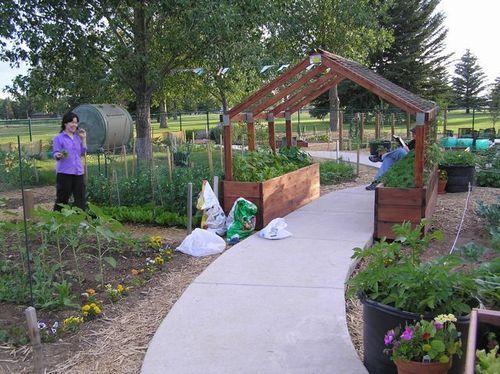
It started as a project to explore and strengthen food systems, but became so much more: a bridge between campus and community, a model for cooperative learning, and a catalyst for change.
Christine Porter, Ph.D. ‘10, started the Food Dignity project while doing her dissertation, inspired by her work with Jemila Sequeira of Cornell Cooperative Extension’s Whole Community Project, which collaborates throughout Tompkins County to support the health and well-being of children.
She wanted to draw upon the knowledge of Sequeira and others like her – community leaders, activists, gardeners, parents – to help create more equitable, healthful and sustainable community food systems.
Porter also wanted to invest in citizen solutions to food system problems, which went beyond just growing and selling food to encompass issues of social justice, food sovereignty, community building. A portion of the $5 million, five-year grant she received from the U.S. Department of Agriculture goes into minigrants to support community-designed initiatives such as community gardens, food entrepreneurship, and local outreach.
Input from Sequeira and other community activists informed the development of the project and proved crucial to its success, said Porter, who is now an assistant professor of public health at the University of Wyoming.
With their help, Porter launched a multistate effort involving Cornell University, Ithaca College, the University of Wyoming, the Center for Popular Research, Education and Policy in Oakland, CA, and five community partners: the Whole Community Project; East New York Farms! in Brooklyn, NY; Feeding Laramie Valley in Laramie, WY; Blue Mountain Associates on Wind River Reservation, WY; Dig Deep Farms & Produce in Cherryland/Ashland, CA.
Each of the community partners has contributed case studies of both struggle and success. But during the course of the project, a sixth case study emerged and grew in importance: the project itself.
As Porter and project partners attended conferences to present the work, they found that audiences seemed more interested in the dynamics of the group and how they got academics and activists to work together. The trick, Sequeira said, was finding shared values and common concerns, then forging honest relationships.
Now in its third year, Food Dignity has garnered national recognition, recently receiving an award from Community-Campus Partnerships for Health, which praised the project for proving “the power and potential of partnerships between communities and academic institutions as a strategy for social justice and health equity.”
Although it may seem obvious that academics involved in community research should involve those communities, it is rarely done well in practice, Porter said.
“We had to work through some tense relationships between communities and campuses, based past experiences and historical patterns,” Porter said. “There were language and cultural barriers, imbalances of power and money, and conventional knowledge hierarchies.”
As the group learned, a key challenge is to overcome conventional knowledge hierarchies that are so often perpetuated in community-university projects, leading to a failure to recognize the variety of knowledge that exists within a community, and its value. The project’s commitment to community voice and expertise is what won over many of the partners, including Sequeira, who admitted to being skeptical at first, and protective of her community.
“I get angry at the dysfunctional system that doesn’t recognize the inherent value of individual people,” Sequeira said. “I try to focus on helping the people in my community not get discouraged that their knowledge is not respected. This project is a good opportunity to have that knowledge valued. It has the potential to mend, heal, facilitate and redefine knowledge.”


