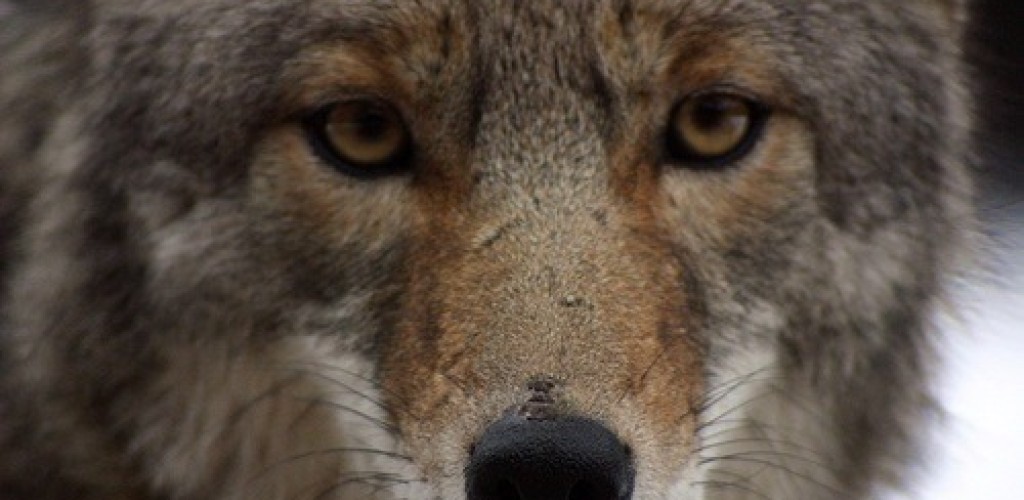
Does this photo inspire fear or wonder? Newark Valley sixth graders Colin Creeley, Riley Malone and Joshua Post worried that fear and ignorance of coyotes is leading to killings as the animals increasingly venture out of the woods into suburban and urban areas. So they worked with Cornell coyote expert Paul Curtis to develop and carry out their own social science experiment.
As part of a project for the national web-based science, technology, engineering and mathematics competition eCYBERMISSION, they measured children’s feelings of fear and tendency toward acts of violence against coyotes, and then educated these same children about the animals in general. After the intervention (the education about coyotes) they found that students’ feels of fear and tendency toward aggressive behavior against the animals significantly dropped. The students placed first at the state level in their age division, landing them savings bonds towards their college tuition.
“Dr. Curtis was a tremendous asset to our students and was a wonderfully supportive and encouraging guide and the students were so grateful for his input,” teacher Jessica Williams told the local paper, according to the Department of Natural Resources blog.