

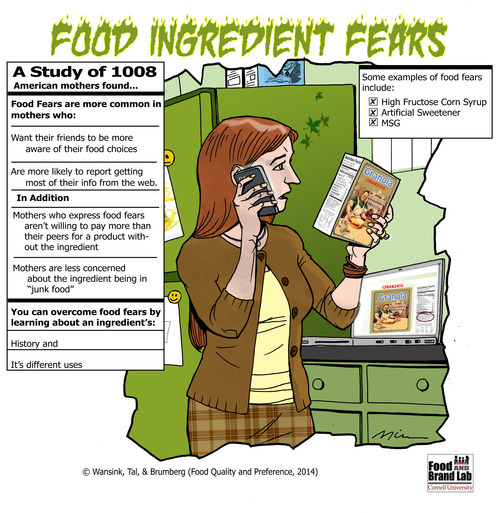
With the constant barrage of health and safety claims about foods and their ingredients online and in the media, one could be forgiven for developing certain food phobias that may not always be based on the best evidence available. A new study conducted by researchers from the Cornell Food and Brand Lab, investigated food fears – why people have them and what can be done to correct misconceptions.
“MSG, gluten and high fructose corn syrup are just a few of the ingredients that have received a lot of negative attention in recent years,” said Aner Tal, a post-doctoral researcher and co-author of the study. “While some ingredient food fears are justified by objective evidence, others have unnecessarily damaged some industries.”
The research unveiled four key findings about those who avoid specific ingredients:
- They are more likely to receive their information from the internet rather than television
- They had a desire to have their food-related opinions known by their friends or reference group
- Feared ingredients mainly hurt evaluation of foods that they perceived as relatively healthy rather than of foods that they perceived as unhealthy
- Those with a fear of a specific ingredient may exaggerate and overweigh perceived risks
The researchers also found food fears may be offset when an ingredient’s history, background, and general usage are effectively communicated.
“Learn the science, history, and the process of how the ingredient is made,” said Brian Wansink, lead author and director of the Food and Brand Lab. “You’ll be a smarter, savvier consumer if you do.”
Find out more about the study here.


