In a career that spanned 50 years and several continents, Robert Herdt learned a thing or two – about agriculture, economics and leadership. On the brink of retirement, he shared some of his most valuable lessons with colleagues, friends, and the next generation of scholars, at a special event on Nov. 20, hosted by the Cornell International Institute for Food, Agriculture and Development (CIIFAD).
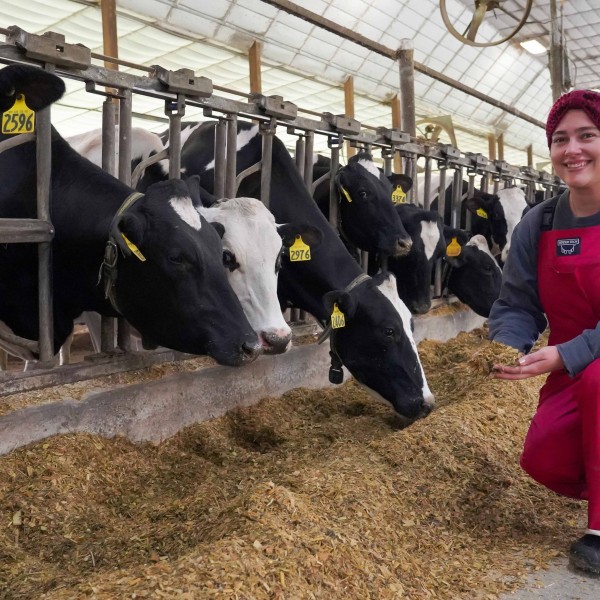
A former World Bank adviser who worked at the International Rice Research Institute (IRRI) for a decade and the Rockefeller Foundation for 17 years before becoming an adjunct professor at the Dyson School in 2003, Herdt first came to Cornell 56 years ago, as an undergraduate who aspired to be a dairy farmer.
Those aspirations changed, however, when he met his faculty advisor and saw a rigid courseload laid out for him. A subsequent meeting with agricultural economics professor Kenneth Robinson pointed him in an entirely different direction.
“That was probably the best thing that ever happened to me,” Herdt said. “He got me into courses I never would have taken, such as math for social scientists and scientific writing.”
The lesson Herdt learned: listen and take advice from others who have more knowledge and experience than you. The formerly quiet and reserved boy was also challenged to screw up his courage and speak out. And he was instilled with a sense of the importance of discipline and responsibility.
“You are free to do what you want to do, as long as you take responsibility,” Herdt said. “Of course the question is, what do you want to do? There are infinite numbers of opportunities, but you can only do one at a time. When you graduate, will you try to make money or save the world?”
Herdt chose the latter, heading to India for an eye-opening internship with the Ford Foundation. He was an intern working with one of 10 specialists from the United States sent there as part of a program to build up agricultural extension expertise in seven districts. He was sent into the field with little direction, and soon realized he was expected to decide what to do on his own.
No matter how many people you manage – and Herdt ended up managing many in his various leadership roles - managing yourself is one of the biggest challenges, he said. His advice?
- Understand the flow of the money;
- Plan the work and work the plan;
- Do the hard part of the job first;
- Say what you think, but think before you say it;
- Seek out people you can trust, who share your goals and work hard – it can be more important than brains, power, or experience- and look for those who are better than you at the job you want them to do;
- Celebrate success;
- Identify the overarching goal of your organization and your part in achieving that goal, build team commitment to shared goals, and help individuals meet their personal goals along the way.
Setting goals is very important, and core values are critical, he added. His core values: honesty (telling the truth in the same way to everyone), integrity (doing what you say you will do), respect (listening carefully to what people say), and humility (having a modest opinion of one’s own self).
“You can outsource many things, but you can’t outsource leadership and have a successful organization,” Herdt said.