What is Vine Balance?
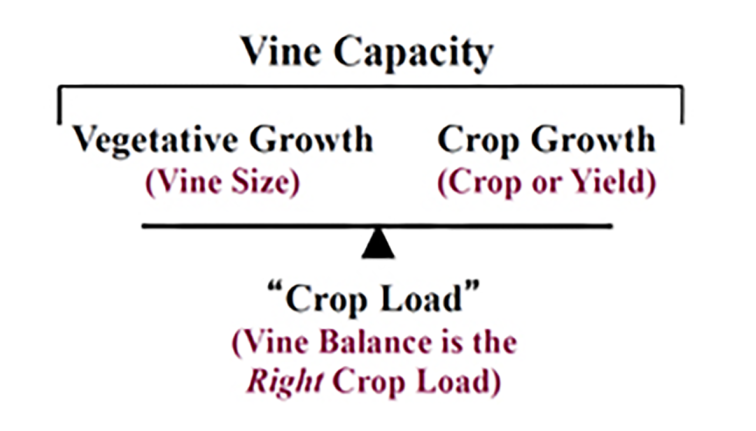
Vine balance (i.e., the balance of supply and demand) as a concept can mean the same as crop load. But generally we mean the correct balance of vine capacity and crop load to give the desired fruit quality and vine sustainability. In other words, vine balance is achieved when adequate, but not excessive, growth is combined with an optimal crop load as described above. A target shoot size is about four feet, plus or minus as that length shoot will provide enough leaf area ripen about 200 grams of fruit.
The optimal crop load or balance for specific wine grape varieties appear to differ when varietal flavors and aromas are considered. Recent research suggests that for Cabernet family varieties, a very low crop load with excess vigor tends to be as detrimental to quality as over-cropping, so there is probably a moderate crop that is optimal. Chardonnay appears to be much less responsive to crop load than many varieties, while Pinot Noir may have a lower optimal crop than most. This aspect needs much more objective research to provide better guidance.
What if Your Vines are Too Weak or Too Strong?
Soils, water and nutrient availability and climate affect the inherent potential for vine growth in given vineyard. This can make reaching vine balance difficult. A large part of a growers' job is to manage vines to maximize good light interception and to use management practices (e.g., pruning, thinning, shoot positioning) to achieve the appropriate crop load and shoot vigor. Vines that intercept more light (GDC, Lyre or tall Scott Henry) can ripen more crop, and growers should aim to fill the trellis as uniformly as possible to maximize light interception and vine capacity.
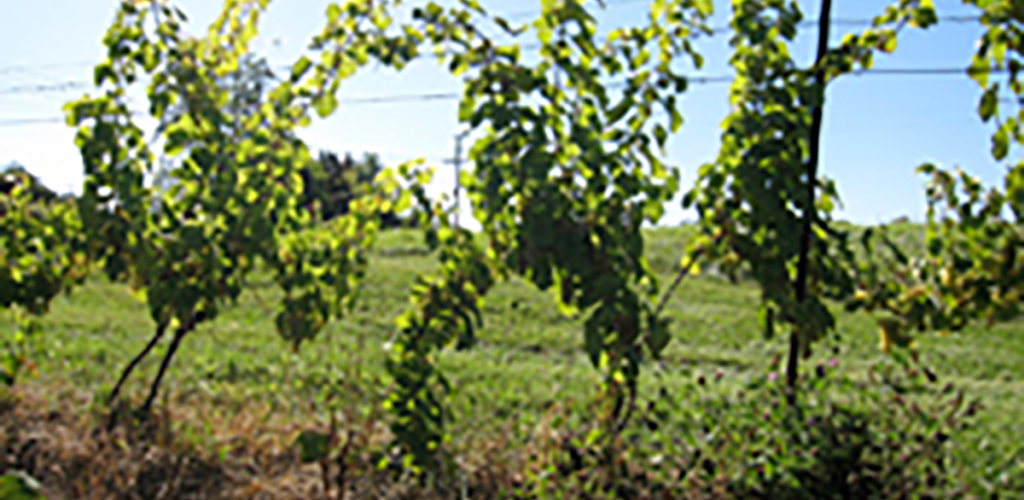
If poor soil leads to excessively weak shoot growth and low vine capacity with normal shoot numbers, there are several approaches to consider. The low capacity can be accepted and a low crop grown though it can be difficult to judge just how much to thin on each shoot to get proper balance. Alternatively, leaving fewer shoots per vine will increase shoot growth in the remaining shoots. If shoots reach three to four feet, then thinning can likely be simplified to one cluster/shoot. Another option is to increase shoot growth by irrigation or increased fertilization to raise vine capacity to sufficiently ripen a normal crop.
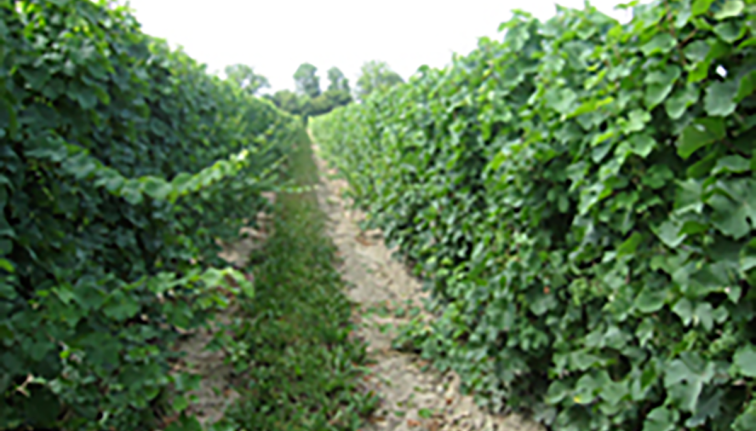
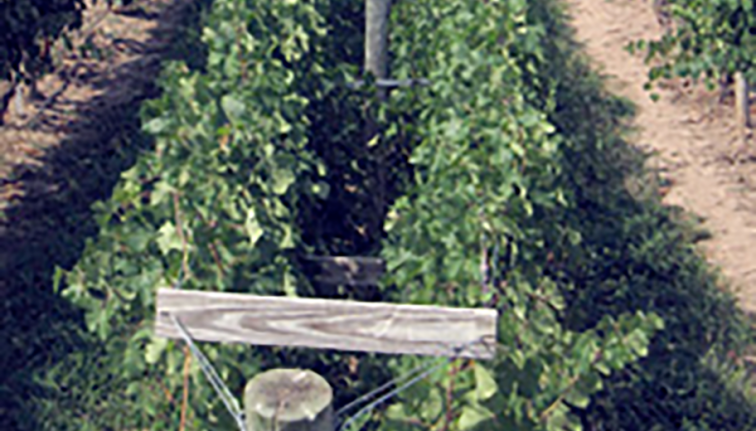
Excess growth, on the other hand, can be difficult to handle. Excessive shoot growth can be reduced by leaving more shoots per vine to reduce growth per shoot. But to maintain good canopy exposure with more shoots may require wider spacing between vines or divided canopies such as with Scott Henry or Lyres. The advantage is that the divided canopies will increase vine capacity and thus crop ripening. The alternative is to reign in shoot growth by reducing water or nutrients or increasing competition from cover crops or weeds for water and nutrients. This can be successful, but it can be difficult in deep, fertile soils and in wet seasons or climates where rainfall is abundant.
Can heavier crops reduce shoot growth? In trials with vigorous Cabernet Franc/101-14 on a deep silt soil, we found no effect on shoot growth of thinning at set to crop levels from six tons per acre down to 1.5 tons per acre. Over many years of observation, it appears that crop level reduces vine growth primarily in combination with another stress, such as drought stress or nutrient deficiency. That may be why in high vigor conditions crop tends to have relatively little effect on reducing growth.