Bud Fruitfulness and Yield
As grapes enter dormancy, the maximum crop potential for the next growing season has already been determined. Each compound bud has the potential to produce three shoots from the primary, secondary, and tertiary buds, and each of the individual buds has a fixed number of cluster primordia. We remove much of this crop potential during dormant pruning, retaining a specific number of buds. Each of these buds has a set number of grape clusters —normally ranging from zero to three —that was determined during the previous growing season in the month following bloom. While events after bud swell also influence crop size (floret development, fruit set), the number of clusters is set by bud development the previous year.
Fruitful buds
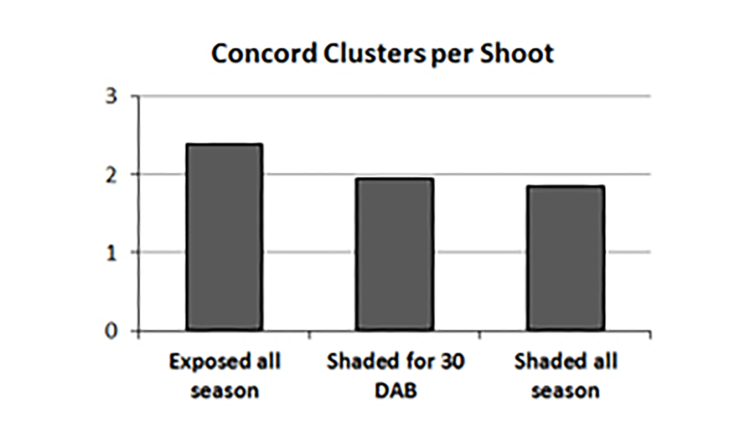
Buds are said to be fruitful if they have at least one developing cluster. But many buds have two or more clusters, so bud fruitfulness is often expressed as the average number of clusters per shoot. Clusters are initiated during the previous year’s growing season before bloom, and the final number of clusters on the first six to ten nodes that are likely to be retained after pruning is determined by approximately a month after bloom. In California’s Central Valley, bud fruitfulness (clusters per shoot) can vary by about 25% from year to year, and growers can get a first estimate of yield potential by dissecting buds and counting cluster primordia during the dormant season.