

About the speaker
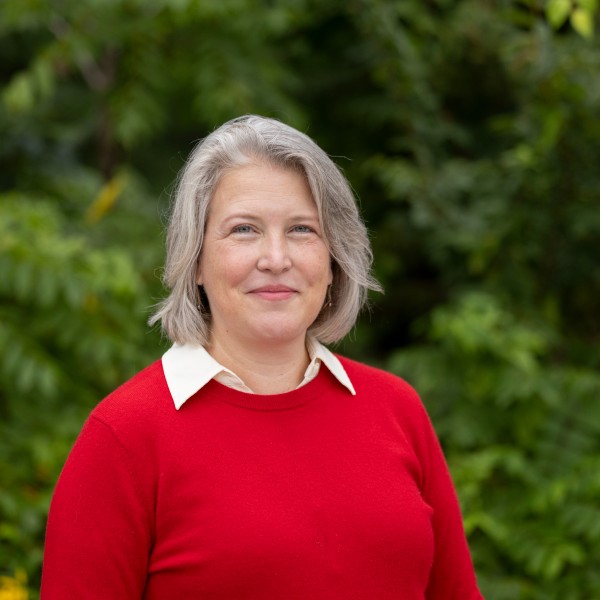
Holly Jean Buck is an Associate Professor of Environment and Sustainability at the University at Buffalo, and a Coordinating Lead Author of the IPCC’s seventh assessment report (Working Group III). She is an environmental social scientist whose research focuses on public engagement with emerging climate technologies. Her research has appeared in journals like Nature Climate Change, Climatic Change, Nature Sustainability, and Environmental Research Letters, and she is the author of After Geoengineering (Verso, 2019) and Ending Fossil Fuels (Verso, 2021). Her current book project, developed while on a 2024-2025 Harvard Radcliffe fellowship, involves how rural regions engage in technological future-making. She holds a Ph.D in Development Sociology from Cornell University and a M.Sc. in Human Ecology from Lund University.
Abstract
What do people think is a viable economic base in the twenty-first century? Economies have shifted away from agriculture, forestry, and extractive sectors; manufacturing has become offshored; artificial intelligence threatens to make knowledge jobs redundant; and a polarized media ecosystem makes it difficult to create new narrative frameworks for a desirable future. There’s a paradox in that at the same time that work feels scarce, ecological and social pressures are reaching scales that require remaking whole systems — and many of these opportunities are in rural places. This talk will explore why neither classical models of regional economic development nor approaches that fetishize the community scale are fit for the current moment, even though the Biden Administration’s attempts at place-based policy arguably tried to fuse these approaches. Based on interviews, focus groups, and surveys in the US, including three particular cases of agtech in North Dakota, blue economy innovation in Maine, and forest health technologies in California, this talk draws out lessons from recent national attempts at place-based rural development through technological innovation. The talk will outline key factors that are enabling rural communities to design and deploy emerging technologies on their own terms, and make specific policy recommendations for investments in the social infrastructure that needs to accompany innovation.
About the series
The Critical Development Studies Seminar Series is a graduate student-led effort that aims to provide space for junior scholars to share innovative research and discuss emergent debates within critical development studies.
Invited speakers cover a range of geographical areas, disciplinary backgrounds, and research topics. Examples of potential topics include agroecology and food justice issues, state-building, land and labor, extractivist politics, the gendered and racial dynamics of ongoing capitalist development, and the political ecological histories of the global development project. The target audience for the series is graduate students and faculty interested in critical development studies both within the Cornell community as well as external scholars.
Date & Time
April 17, 2026
12:00 pm - 1:30 pm
Location

More information about this event.
Contact Information
Mariah Doyle-Stephenson
- md2237 [at] cornell.edu
Speaker
Holly Buck
Departments
Global Development Section
Natural Resources and the Environment Section
Polson Institute for Global Development
Related Events
Conference
Seminar

We openly share valuable knowledge.
Sign up for more insights, discoveries and solutions.