

Seminar in Critical Development Studies: Maron Greenleaf
Co-sponsored by the Department of Anthropology
Abstract:
I will give a talk based on my book Forest Lost, an ethnography of forest carbon credits and the wider effort to make the living rainforest valuable in the Brazilian Amazon. Unlike other forest commodities, forest carbon credits do not involve resource extraction; instead, they require keeping carbon in place through forest protection. I explore forest carbon credits to understand green capitalism—the use of capitalist logics and practices to mitigate environmental damage. I trace cultural, environmental, governmental, material, and multispecies relations involved in making forest carbon valuable and how forest carbon’s commodification in the Amazon turned it into a source of redistributable public environmental wealth. At the same time, I show how making forest carbon monetarily valuable created an unexpected set of uneven, contingent, and contested social and political relations. While forest carbon in the Amazon demonstrates that green capitalism can be socially inclusive, it also shows that it can reinforce the marginalization it purportedly seeks to combat. By outlining these complex relations and tensions, I elucidate broader efforts to create a capitalism suited to the Anthropocene and those efforts’ alluring promises and vexing failures.
About the speaker
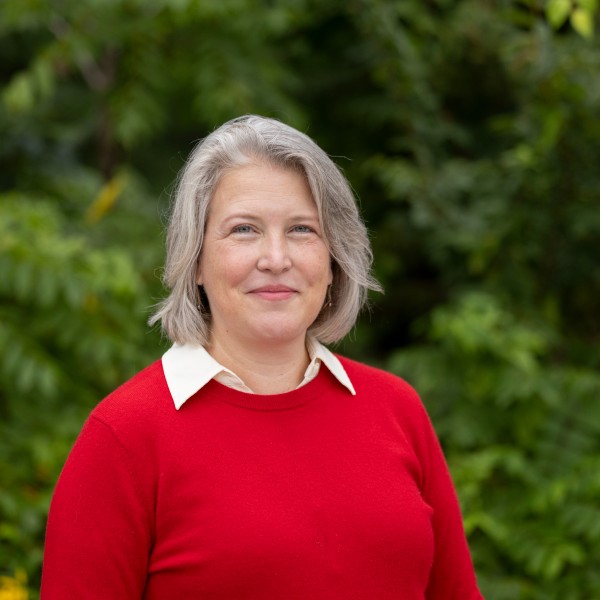
I am a cultural anthropologist, political ecologist, and legal scholar studying human-environment relations in this time of environmental change and crisis. My research centers on how efforts to address linked environmental crises—like climate change and biodiversity loss—shape everyday life. I am interested in how these efforts shift people’s relationships with nature, including how they interact with, understand, value, and govern it. Topics of focus include efforts to protect and restore landscapes, make nature valuable, and create “green” economies, as well as related issues of environmental justice and land rights.
My published work has centered on green capitalism, carbon credits, deforestation, tree planting, postindustrial restoration, and energy transitions in Brazil, the US, and the UK. This work includes my first book—Forest Lost: Producing Green Capitalism in the Brazilian Amazon—and collaborative work on energy justice in the United States and South America. My current research centers on tree planting and environmental restoration in postindustrial England.
I have a BA in Political Science from Yale University, a JD from New York University, and a PhD in Anthropology from Stanford University. Originally from Colorado, I now live in Hanover, NH with my husband and two children.
About the series
The Critical Development Studies Seminar Series is a graduate student-led effort that aims to provide space for junior scholars to share innovative research and discuss emergent debates within critical development studies.
Invited speakers cover a range of geographical areas, disciplinary backgrounds, and research topics. Examples of potential topics include agroecology and food justice issues, state-building, land and labor, extractivist politics, the gendered and racial dynamics of ongoing capitalist development, and the political ecological histories of the global development project. The target audience for the series is graduate students and faculty interested in critical development studies both within the Cornell community as well as external scholars.
Date & Time
December 4, 2026
2:00 pm - 3:30 pm
Location

More information about this event.
Contact Information
Mariah Doyle-Stephenson
- md2237 [at] cornell.edu
Speaker
Maron Greenleaf
Departments
Global Development Section
Natural Resources and the Environment Section
Polson Institute for Global Development
Related Events
Conference
Seminar

We openly share valuable knowledge.
Sign up for more insights, discoveries and solutions.