

Seminar in Critical Development Studies
About the speaker
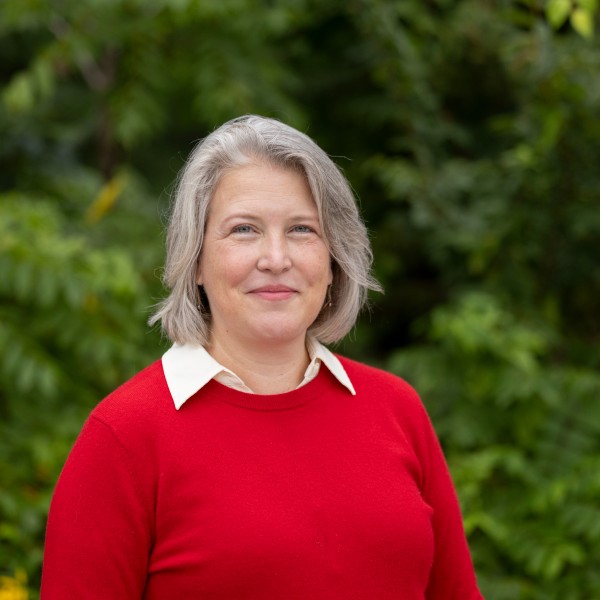
Amiel Bize is an assistant professor in the Department of Anthropology at Cornell University. Her work considers capitalist processes as they unfold in rural space, with a focus on economic marginalization, livelihoods, and ecological change in the East African context. She also has an enduring interest in practices of gleaning—the gathering of remainders—and things that escape from capitalist enclosure. She is currently finishing a book on rural life western Kenya entitled The Postagrarian Question and starting new research on green finance.
Abstract:
This paper takes rent as a lens onto rural change in East Africa, examining how new efforts to derive an income from land—in a context of declining agricultural possibilities—are shifting the nature of household life. It focuses on the construction of rental properties inside rural homesteads in western Kenya. This practice at once transforms patriarchs into landlords and disrupts patterns of patrilineal belonging that spatially manifest in rural homesteads (bomas). In its idealized form, the boma layers home, house, and (inherited) home onto a single space. But this ideal form is increasingly difficult to achieve in western Kenya, as land sizes become too small to provide for traditions of partible inheritance; as the commercialization of rural land makes real estate uses more attractive; and as the need for housing in rural areas grows. In this context, and in an effort to commercialize their property without selling it, many rural landowners have begun building rental properties inside their homesteads. Spaces that were once shared by a single extended family—and that indeed defined that family—now welcome “outsiders.” The paper considers the social and material practices that made this possible, particularly the practice of earthen building that draws on rural traditions of collective labor and allows for low-cost housing construction, as well as the implications for household life. As household patriarchs become landlords, their dependents also forge new friendships and even alliances with non-kin tenants. This disturbs the clear opposition between landowners and tenants in ways that ask us to mobilize rent less as a way of thinking about the dynamics of resource capture and more a lens onto the complexity of social and material life in rural spaces.
About the series
The Critical Development Studies Seminar Series is a graduate student-led effort that aims to provide space for junior scholars to share innovative research and discuss emergent debates within critical development studies.
Invited speakers cover a range of geographical areas, disciplinary backgrounds, and research topics. Examples of potential topics include agroecology and food justice issues, state-building, land and labor, extractivist politics, the gendered and racial dynamics of ongoing capitalist development, and the political ecological histories of the global development project. The target audience for the series is graduate students and faculty interested in critical development studies both within the Cornell community as well as external scholars.
Date & Time
February 27, 2026
2:00 pm - 3:30 pm
Location

More information about this event.
Contact Information
Mariah Doyle-Stephenson
- md2237 [at] cornell.edu
Departments
Global Development Section
Natural Resources and the Environment Section
Polson Institute for Global Development
Related Events
Conference
Seminar

We openly share valuable knowledge.
Sign up for more insights, discoveries and solutions.