

Elisa España Cordon
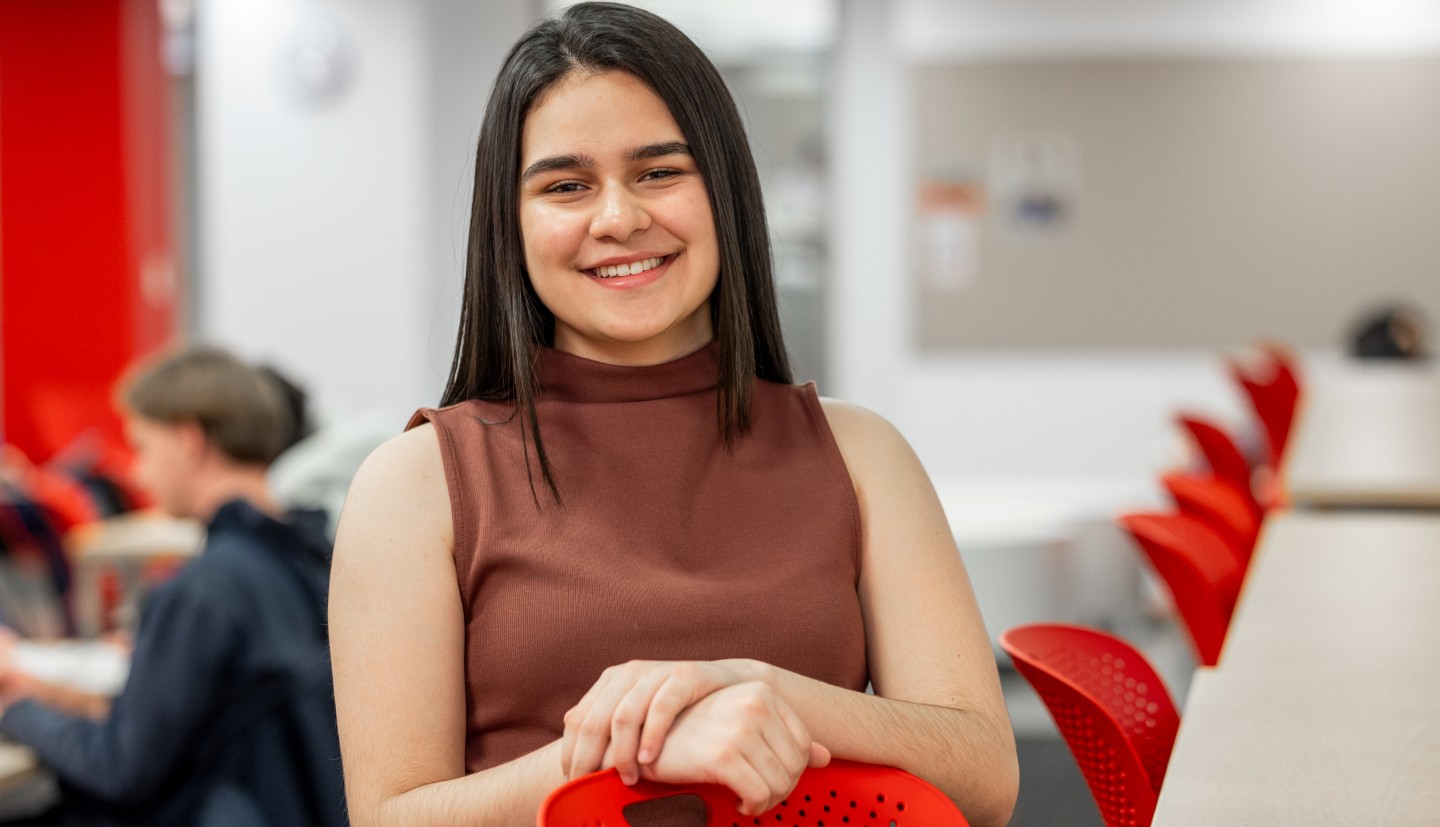
About Elisa
- Field and focus area of study: Integrative Plant Science, Crop Science
- Hometown: Guatemala City, Guatemala
- Fun fact: I like to wear colorful socks to add a touch of joy to my day.
- Favorite place at Cornell: Ag Quad
Interests and hobbies outside of schoolwork: I love spending time with family and friends, especially playing board games.
What led you to apply to the CALS MPS program - what were you doing before grad school?
I was completing my undergraduate degree in biotechnology engineering, and during a class I fell in love with plants and decided I needed to learn more about them.
What are your short-term and long-term career goals?
In the short term, I plan to gain professional experience by working in the industry, developing technical and managerial skills that will allow me to grow in my field. In the coming years, I aim to complement my expertise with a master’s degree in business administration, equipping myself with the knowledge to take on leadership roles. Ultimately, my goal is to establish my own business, leveraging my experience and education to create a venture that contributes to the agricultural sector in my country.
What were the biggest obstacles you had to overcome in order to participate in the program?
One of the biggest challenges I had to overcome to participate in the program was believing in myself. At first, I doubted whether I was able to succeed in the program. However, my advisor helped me to change my mindset and told me to focus on my strengths and enjoy the journey of learning. I gained confidence thanks to faculty and fellow students, who were always willing to help. Through this process, I’ve realized that growth comes from stepping outside our comfort zone, being determined and having faith in ourselves.
What are the strengths of the CALS MPS degree program?
One of the main strengths of the program is its flexibility, allowing students to tailor their experience by selecting courses that align with their interests and complement their previous studies. The faculty are not only highly knowledgeable and experienced, but also passionate about teaching and always willing to support students. Additionally, Cornell provides a wide range of resources that make the learning journey as enriching and enjoyable as possible.
What words would you use to describe the CALS MPS degree program?
Enriching, supportive, dynamic, simply life changing!
What were some of the most rewarding moments while in your program?
One of the most significant was the warm welcome I received upon my arrival. After months of uncertainty and preparation, that moment made me realize the vast opportunities ahead of me. Meeting my advisor and having regular meetings has also been incredibly meaningful—each one felt like a reassuring pat on the back, reinforcing my growth and progress. Securing an on-campus job has been a highly rewarding experience, allowing me to develop skills in communication, educational outreach, and soil health while gaining valuable professional experience.
What courses were your favorite? Why?
It's hard to choose just one! Honestly, I've enjoyed each of the courses I’ve taken, but if I had to decide, I would say Soil Science, Integrated Pest Management, Business and Economics of Food, and Post-Harvest Biology. Soil Science was an incredibly hands-on and intense course, but it taught me to appreciate the importance of soil and the science behind it. Professor Jonathan Russell-Anelli is one of the most inspiring educators I have ever had. Integrated Pest Management was fascinating because it was taught by various professors who are experts in the field, offering diverse perspectives. Business and Economics of Food was such an engaging class—it allowed me to understand food supply chains and processes, which was something I had never explored before. Post-Harvest Biology opened my eyes to the science behind what happens after harvest and the measures we can take to ensure better post-harvest handling, which I found extremely interesting.
What advice would you give to your younger self embarking on the journey of graduate school?
There is no reason to compare yourself to others or think that you won’t make it. I came into graduate school thinking that everyone around me knew exactly what they wanted to do with their lives. But what I’ve learned is that graduate school is not a place where you need to enter with total certainty—it’s more about having an open mindset, ready to learn everything you don’t know. Everyone has their own rhythm and style of learning, and that’s completely okay. It’s important to embrace the journey and trust the process, even if it doesn’t look exactly like you initially imagined.
How has your MPS experience changed you, both personally and professionally?
My MPS experience has significantly broadened my perspective on learning. It has given me greater confidence in myself and in the work I do. Professionally, I’ve gained extensive technical knowledge that has been directly applicable to developing sustainable solutions for food production. The experience has enhanced my problem-solving skills and deepened my understanding of how different fields intersect to create impactful, innovative solutions in agriculture and sustainability.
What do you enjoy most about Ithaca?
The rich cultural diversity and, as a result, the wide variety of food options! The blend of different cultures creates a unique atmosphere where you can experience flavors from all over the world.
Why are you interested in Crop Science?
I am interested in Crop Science because I believe it is a key tool for producing food sustainably. When people think of crop science, they often think simply about increasing production, but it's much more than that. It's about producing while taking care of the soil to ensure long-term sustainability. It's about finding creative solutions to maintain high yields despite factors beyond our control, such as pests or environmental problems. It involves precision, ensuring that we avoid excess in order to minimize both economic and environmental impact. Crop science is a dynamic field that encompasses much more than many realize, and offers the opportunity to address complex challenges with innovative, customized and environmentally friendly approaches.
How has pursuing an MPS helped your understanding of Crop Science? The future of Crop Science?
The MPS program has deepened my understanding of Plant Science by providing both theoretical knowledge and hands-on experience. The interdisciplinary approach has allowed me to see the bigger picture, integrating aspects of biology, economics, and technology to enhance crop production while protecting the environment. As for the future of Crop Science, I believe there are many advancements ahead, with technologies and sciences becoming increasingly interconnected. At the same time, these innovations are becoming more accessible to the key stakeholders in agriculture—the farmers. It is crucial that they have the tools and information needed to make well-grounded decisions. Therefore, it is equally important that the future of Crop Science remains empathetic, ensuring that these solutions are tailored to their needs and realities.
What are the biggest challenges you want to tackle in the world?
The challenges I want to tackle the most are food security and promoting empathy and teamwork. I believe food security is a fundamental issue, as access to safe and nutritious food is critical for the well-being of individuals and communities. I also believe that empathy and teamwork are key in addressing these challenges—by working together and focusing on the needs of others, we can make a lasting impact. Through collaboration, we can create a world where everyone has the opportunity to grow and prosper.
What has been the most memorable or impactful part of being in the Integrative Plant Science MPS program?
Meeting so many incredible and passionate individuals who are dedicated to building a better world.
What Cornell / Integrative Plant Science MPS resources have been most helpful?
I truly feel fortunate and supported at the moment. Academically, I have always felt incredibly supported by my advisor, who has been a key part of my learning journey. Access to the library, laboratories, and greenhouses has allowed me to be hands-on. Professionally, having a career advisor readily available has been crucial to helping me feel more confident navigating the job market.
How has learning from faculty experts changed your perspective on Crop Science?
All of the professors are incredible scientists and professionals who are deeply passionate about what they do. They create real-world solutions to real-world problems, and are always willing to offer support. They've inspired me with their optimistic and committed approach to crafting solutions, always focusing on creating a better world through collaboration and ingenuity.
Share about your capstone project.
My capstone project is something I hold dear, inspired by my grandfather and my home country, Guatemala. It focuses on studying mango production in Guatemala, specifically finding solutions for small farmers like my grandfather, and exploring the potential and steps required to export this fruit internationally. I truly hope that my research efforts will not only help my grandfather but also many small farmers in Guatemala, providing them with the knowledge to make informed decisions to improve their mango production and export to international markets, ultimately improving their family economies.