

Wayne County Pollinator Project
- Date: June 1 - August 15, 2026
- Location: CCE Wayne County
- Faculty sponsor: Amara Dunn-Silver, Cornell IPM
- Field mentor/supervisor: Laurie VanNostrand
- Stipend: $6,000
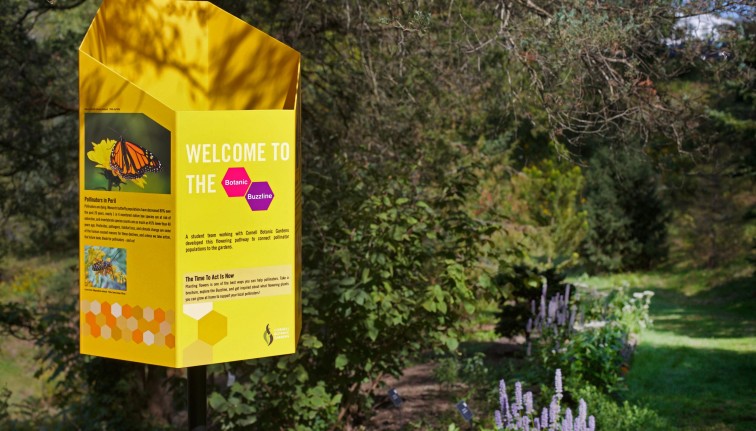
The goal of this project is to support residents of Wayne County as they create more habitat for insect pollinators and other beneficial insects (e.g., insects that help with pest control; natural enemies). The intern will enhance programming to be offered in spring/summer 2026. Program participants will attend a spring workshop on creating habitat for pollinators and other beneficial insects and be given 3-5 plants each to help get them started. The intern will follow-up with program participants to learn about their successes and challenges and enhance documentation of the impact of the programming in the local community. Outputs will include: quantitative data on plant success and insect visitation, qualitative data on participant experiences, digital versions of signs that could be offered to participants.
Roles and responsibilities
We are seeking a student intern to enhance CCE Wayne’s extension programming on pollinator and beneficial insect habitat creation by: (1) following-up with program participants to find out how their plants are growing and address participant questions (with support from county Master Gardener Volunteers); (2) assessing or helping program participants assess the success of their plantings in attracting insects (e.g., creating a simple pictorial data sheet for participants, or collecting data at a few of the plantings); (3) designing signage that could be made available to local municipalities, gardeners, or garden club members managing public gardens (e.g., purpose of planting, common beneficial insects, info on plants in planting, plant characteristics that support beneficial insects); (4) with support from their county supervisor, designing and administering a survey to document the impact (e.g., experience of participants, environmental benefits, community perceptions) of the program. To achieve these goals, the intern would travel from the Wayne CCE office to visit 20 participating gardens approximately every other week. Weekly Zoom check-in and mentoring meetings amongst the intern, Wayne CCE supervisor, and on-campus mentor will provide time to address intern questions, discuss the project’s progress, and support the intern as they prepare their end-of-internship poster and presentation.
Qualifications and previous coursework
This opportunity is available to non-graduating students in Cornell University's College of Agriculture and Life Sciences.
- Essential/required qualifications:
- Ability to pay attention to detail and be willing to learn and follow new protocols;
- Ability to develop basic proficiency in Excel (if not already acquired);
- Ability to work independently;
- Ability to communicate well with supervisors/mentors, collaborators, and program participants (gardeners);
- Willingness to ask questions;
- Other qualifications would be helpful but are not required:
- Previous coursework/interest in entomology, plant science or other biological sciences;
- Interest or experience in communication (especially, but not exclusively science communication), perhaps including photography, graphic design, etc.
- Valid drivers license as driving is required for this project
Learning outcomes
- The student will:
- Learn about beneficial insects; common pollinators and insects that help with pest control; basic identification and habits
- Learn which plant characteristics support these beneficial insects, and the community benefits to cultivating these plants
- Communicate with members of the public about science
- Design educational materials about beneficial insects and how to support them through plant selection
- Summarize data in Excel
- Document impact of an extension program