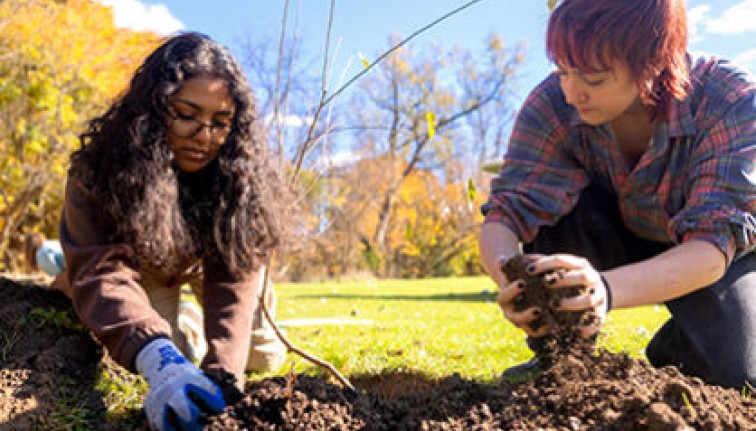
Planting the Seeds of Youth Development

This project will support youth well-being and skill development as part of a summer 4-H experience (the "Cultivating Community" program) for youth in Rochester, NY. The intern will reside in Rochester and be co-mentored by leaders in the 4-H Program at CCE-Monroe and in PRYDE (Program for Research on Youth Development and Engagement) in the College of Human Ecology. 

The goals for the project are to successfully lead Cultivating Community, which is a Youth Workforce Development program for teenagers 14-18 in the city of Rochester. Through this program, youth are exposed to careers in agriculture and food systems. They develop skills in food preparation, gardening, public speaking, healthy eating, and financial literacy. The student intern will support the implementation of this program, working directly with young people, and will lead a research effort to explore the impact of these programs on participating youth. We seek to better understand if or how our programming impacts the way youth view their community and community food system and what role they see themselves playing in it. 

Roles and responsibilities 

The student intern will be working at the interface of youth development research and practice. The intern will be supporting summer youth programs in Rochester offered by CCE Monroe. The intern will assist in coordination, program design, and delivery of youth programs with adolescents. Prior to the launch of these youth programs, the intern will learn about facilitation and program content and theory. The intern will work with the campus PRYDE team to develop program evaluation materials (building upon the 4-H Thrive Model) to assess the impact of summer programs on youth. The intern will conduct a short survey of workforce-relevant skills and a series of brief interviews with youth to explore how working in these outdoor settings impacts their knowledge and beliefs about food systems and agriculture.
 

Qualifications and previous coursework

This opportunity is available to students in Cornell University's College of Human Ecology.

  • Enjoys working with teens
  • Introductory course experience in child development and/or research methods
  • Knowledge or experience in nutrition education and horticulture is a plus, but not required
  • Bilingual ability (English & Spanish) is a plus, but not required
  • Interest in supporting youth well-being and skill development
     

Learning outcomes 

Through this summer experience, a successful intern will learn to:

  • Translate positive youth development research into practice with educators and youth
  • Facilitate research-informed programs with adolescents
  • Develop evaluation materials to assess the impacts of programming on youth knowledge, attitudes, and behaviors
  • Communicate effectively with diverse audiences and stakeholders that include youth, parents, educators, and researchers