

Cultivating Healthy Soils, Healthy Cities: Advancing Urban Soil Health and Pest Management in Monroe County
- Date: June 1 - August 14, 2026 (dates are flexible)
- Location: CCE Monroe County
- Faculty sponsor: Judson Reid, Cornell Cooperative Extension, Harvest NY Team
- Campus-based mentor: Mallory Hohl (Harvest NY)
- Field mentor/supervisor: Jarmilla Haseler
- Stipend: $6,000
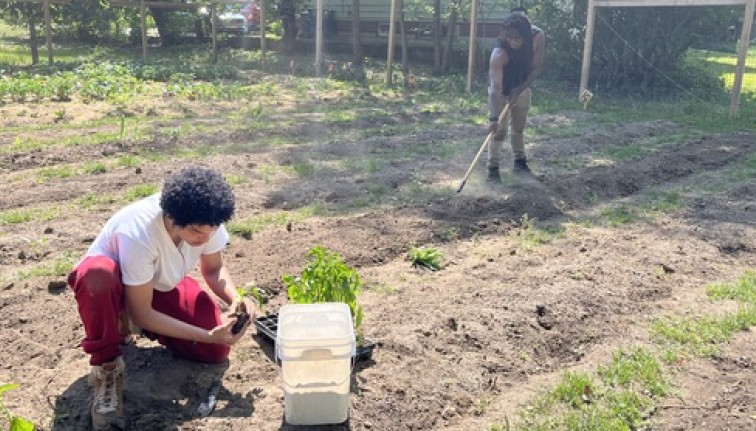
This project will assess soil health practices and pest management challenges across urban farms, community gardens, and homeowner plots in Monroe County. Building on Cornell Cooperative Extension of Monroe County’s expanding diagnostic services, including pH, texture, and NPK analyses, the project will explore how urban growers currently understand and use practices such as cover cropping, minimal tillage, and organic matter additions. The intern will help identify urban populations and neighborhoods that stand to benefit most from improved soil health and integrated pest management (IPM) support, with particular attention to underserved communities. Data will be collected through surveys, interviews, site visits, and review of existing soil test submissions. The project aims to generate an actionable plan that links soil health practices with common pest issues in urban settings. Expected outcomes include a summary of current practices and needs, a map or profile of priority audiences, and specific recommendations for outreach, education, and programming. Ultimately, the project will help CCE Monroe County deliver more targeted, equitable, and environmentally sound support to urban growers.
Roles and responsibilities
The student intern will assist in designing and distributing surveys and interview tools to urban farmers, community gardeners, and homeowners engaged in food or flower growing practices. They will conduct field visits to collect observational data on soil conditions, pest pressures, and current management practices, as well as help coordinate and interpret soil test results. The intern will work directly with CCE staff to compile and analyze data, identify patterns in soil health and pest issues, and highlight gaps in knowledge or resources. They will help identify and characterize key urban populations that would benefit from soil health education, including neighborhoods with limited access to existing resources. The intern will contribute to the development of an actionable outreach plan, including draft fact sheets, workshop outlines, and recommendations for future programming. Throughout the internship, the student will engage with the public, practice science communication skills, and represent CCE Monroe County in a professional, community-facing role.
Qualifications and previous coursework
This opportunity is available to non-graduating students in Cornell University's College of Agriculture and Life Sciences.
- The ideal candidate will have coursework or experience in one or more of the following areas: soil science, sustainable agriculture, agroecology, environmental science, urban and regional studies, or related fields.
- Familiarity with basic concepts of soil health (e.g., soil structure, organic matter, nutrients) and integrated pest management is strongly preferred.
- Experience with community engagement, outreach, or education—such as volunteering in community gardens, working with youth or community organizations, or peer education—will be an asset.
- Comfort with data collection and organization (e.g., surveys, spreadsheets, simple data summaries) is important.
- Strong communication skills, reliability, and an interest in working with diverse urban communities are essential.
- A willingness to travel locally within Monroe County and to conduct outdoor fieldwork is also expected.
- A valid driver's license and access to a car is required as driving on behalf of the project is expected
Learning outcomes
The intern will gain hands-on experience in applied research and extension, learning how to design and implement basic social and environmental data collection tools (surveys, interviews, field observations). They will deepen their understanding of soil health principles, sustainable production practices, and integrated pest management in an urban context. The student will develop practical skills in data organization, interpretation, and synthesis to inform real-world programming decisions. They will also build their communication skills by interacting with community members, listening to their needs, and translating technical information into accessible language and formats. Additionally, the intern will gain insight into how Cornell Cooperative Extension operates and how university-community partnerships can advance equity, environmental stewardship, and food system resilience. Overall, the experience will prepare the student for future roles in extension, community-based research, or sustainable agriculture.