Changing Public Perception About Declining Common Tern Populations in Inland North America
- Date: May 26 - July 31, 2026
- Location: CCE Madison County
- Faculty sponsor: James Watkins, Natural Resources and the Environment
- Campus-based mentor/supervisor: Jennifer Arnold
- Field mentor/supervisor: Tess Southern
- Stipend: $6,000
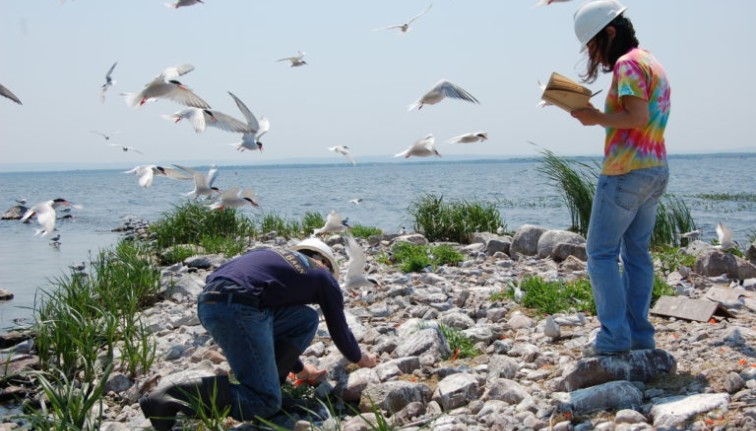
Despite being a Threatened Species in New York State, Common Terns (Sterna hirundo) are often not perceived by the general public to be a critical resource. Their resemblance to other more prolific waterbirds, their apparent abundance at colonies, and even their name make them forgettable as a listed species. However, they are disappearing across inland North America and within the Great Lakes region there has been a 31% population reduction in the last decade, on top of the long-term decline since the 1970s. Effective conservation requires not only science-based research and management, but also public engagement. This project aims to raise public awareness of the plight of this species throughout inland areas and of key populations at Oneida Lake, NY by developing and disseminating outreach materials to educate about the threats facing terns, and their solutions. This project is timely as researchers and managers are currently developing an international, continental-wide working group for conservation planning for inland breeding Common Terns. Materials from this project would directly contribute to this initiative. Common Tern breeding colonies at Oneida Lake are a unique local resource but also important for regional and continental populations. However, they are rapidly declining as a result of climate-driven habitat erosion. At this juncture critical restoration could still be accomplished, but public support is a key factor in raising awareness and working towards a solution.
Roles and responsibilities
The intern would visit by boat the tern colony on an island in Oneida Lake weekly throughout the breeding season to learn about terns and be able to advocate for them. They would shadow the field research team and assist in monitoring as well as take photographs and journal about their observations and experiences. The intern would study existing primary and grey literature on Common Terns to learn more about their ecology, status, the threats to their populations, and conservation solutions. The intern would develop a short educational video about the Common Tern and its plight, interviewing researchers and managers at Oneida Lake and possibly more broadly via Zoom. The intern would connect with local interest groups (e.g. Oneida Lake Association, 4H groups) to share outreach materials or run a brief educational program.
Qualifications and previous coursework
This opportunity is available to non-graduating students in Cornell University's College of Agriculture and Life Sciences.
- A desire to share a passion for conservation with the general public and an interest in species conservation and environmental sustainability.
- The ability to communicate science effectively to a general audience.
- Video editing skills and ability to work with presentation and illustration software to produce outreach pamphlets and presentations.
- Previous experience piloting small drones is not required but could be useful.
- A valid driver's license as driving will be required on behalf of the project
Learning outcomes
- A wider understanding of how species conservation works in the real world
- An understanding of the importance of ecological sustainability of aquatic resources for local and regional communities
- An in-depth knowledge of an important species of conservation need in New York State and of its plight throughout North America
- A basic understanding of field research and monitoring skills for colonial waterbirds
- An understanding of the importance of public perception in facilitating conservation
- Experience in outreach and education through multiple methods of public engagement