Professor, Biological and Environmental Engineering
Beth Ahner is a Professor in the Department of Biological and Environmental Engineering. Her professional objectives have been to explore basic science in pursuit of better engineering solutions. In particular, she seeks to understand how organisms adapt to trace metal stress in the environment and in turn, how they influence the form of metals in the environment. Discoveries in this area lead to better strategies to remediate metal contamination in the environment and to a better understanding of natural ecosystems.
Education
Doctorate Massachusetts Institute of Technology 1994
Bachelor of Science Massachusetts Institute of Technology 1989
Recent Research
Professor Ahner’s research in environmental biotechnology explores how plants solubilize, take up, detoxify, and sequester metals. Her lab group focuses on questions involving intracellular detoxification mechanisms and how biological processes affect the biogeochemical cycling of metals in both the natural environment and in engineered systems. One application of this research is phytoremediation, the use of plants to remove metals from contaminated soils.
Courses Taught
Professor Ahner is currently teaching an introductory course focused on broad applications of biological engineering (ENGRI 1337) with Professor March and a senior/graduate level course about bioremediation of environmental contaminants (BEE 4520/5520) with Professor Capiro. She also enjoys hosting and teaching undergraduates working in her laboratory.
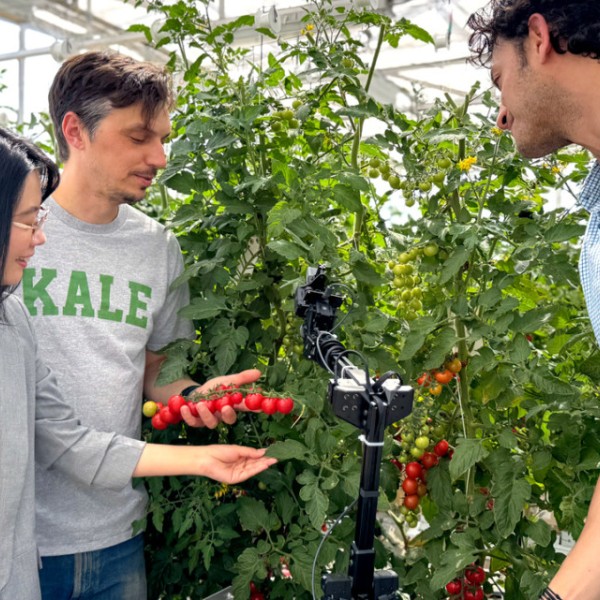
Cornell Atkinson has awarded $900k to support six new research projects that seek to protect coral reefs, improve greenhouse agriculture and understand whether wildfires affect disease spread.
Cornell Atkinson
Ashley School of Global Development and the Environment
A new study examines how a cyanobacteria manipulates its environment to give itself advantages to take over the water column, leading to harmful algal blooms and mats in lakes during hot summers.