


Steps to Creating Habitat for Beneficial Insects
Step 1: Choosing a spot for your beneficial insect habitat

You might select an area close to crops that you are hoping will benefit from the beneficial insects you attract, or you might choose a spot that isn’t currently being used. You could also interplant beneficial habitat plants with other plants. Be cautious about placing your beneficial insect habitat too close to areas where pesticides are regularly used. It may be easier to find plants for beneficial insects that will thrive in partial to full sun, instead of shade.
Regardless of the spot you choose, you should take note of the following:
- How sunny or shady is your spot?
- How wet or dry is the soil?
- Do you want to grow annuals, perennials, or both types of plants?
- Do you want this space to look neat and tidy or a bit wild?
- What is the approximate size of the area you want to plant?
The answers to these questions will be important in the following steps:
- Step 2. Choose the plants
- Step 3. Manage weeds
- Step 4. Plant
Step 2: Choosing plants that support beneficial insects
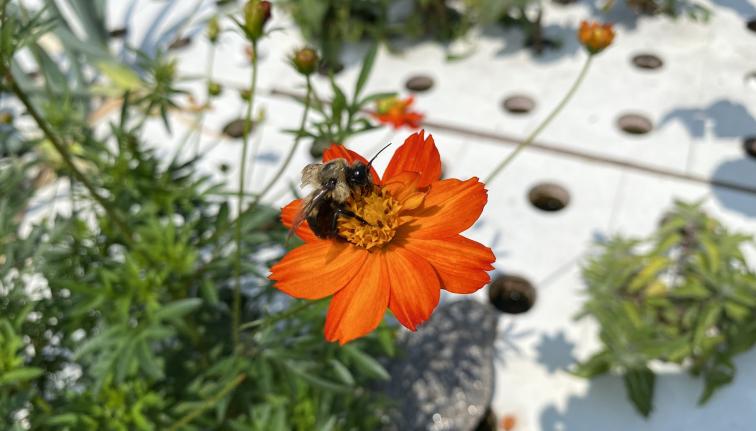
Both pollinators and natural enemies of pests benefit from flowers with pollen and nectar. Many natural enemies of pests eat pollen or nectar, either at certain life stages or in addition to pests. Natural enemies also eat the other small insects—many “neutral”—that are attracted to flowers. Growing flowers rich with nectar and pollen will welcome beneficial insects to your garden, yard, or farm. Increasingly, nurseries and seed companies will label plants that support pollinators. Often, these plants are also good for natural enemies.
Lots of pollen and nectar
Flowers that produce lots of pollen and nectar feed pollinators and natural enemies. They also attract small “neutral” insects that the natural enemies can feed on when they aren’t eating pests.
Plan for season-long blooms
Beneficial insects need food throughout the growing season. So pick a mixture of plant species to provide blooms from early spring through late fall.
Choose a variety of flower shapes
Including diverse flower shapes in your mix is important. While bees have long tongues and can easily access nectar deep in tubular flowers, beetles, flies, and other insects have short mouthparts and will benefit from small or open flowers.
Annuals vs. perennials
Both will support beneficial insects, although some experts say that perennials tend to be better choices if your focus is bees. Also, in most parts of New York State only perennials will provide very early (April or May) blooms to hungry insects.
Native vs. native cultivar vs. non-native
Do you need to plant only native plant species, or is it ok to plant cultivated varieties of native species (“nativars”), or even non-native species? It’s up to you. Of course, you should never plant an invasive species. Some native plants are better resources for some insects (especially some native bees) than are non-native plants. Some nativars are less useful to beneficial insects, while others are as good as the wild species. Some people prefer to grow only native plants, which is a fine approach. But it’s also acceptable to include some non-native plants. If you are considering a native cultivar in a garden center or nursery and it is blooming, check if insects are visiting the flowers. If so, then it probably still has the pollen and nectar resources that will feed beneficial insects.
Resources for selecting plants
Lists of plants that support beneficial insects
University of Maryland Extension.
Search for your ecoregion by zip code to get a list of recommended plants.
Finger Lakes Native Plant Society maintains a list of native plants native plants suitable for wildflower gardens & meadows or traditional gardens in the NY Finger Lakes
A guide by Jennifer Hopwood, Eric Lee-Mäder, Lora Morandin, Mace Vaughan, Claire Kremen, Jessa Kay Cruz, Jim Eckberg, Sarah Foltz-Jordan, Kelly Gill, Thelma Heidel-Baker, and Sara Morris. Published by the Xerces Society and available as a free pdf online.
You can either search for information on a plant species, or search for plants based on the criteria that are important to you (like location, sun exposure, bloom time, soil moisture).
Lists of pollinator-friendly native plants from the Xerces Society. Choose the list for your region.
Listas de plantas que favorecen a los insectos benéficos
Sources for seeds and native plants
Wildflower seed mixes; some native, others not (250 ft2 areas and up)
A variety of mixes for pollinators that are likely to also support natural enemies (minimum order may be 1 lb of seed)
Seed mixes for lots of different settings (to cover areas 500 ft2 and up)
Flatbush Gardener maintains a map of places to buy native plants, with an emphasis on the NYC area.
Native Plant Society of New Jersey Native Plant Nursery List
The Native Plant Society of New Jersey maintains this Google sheet listing nurseries that sell native plants throughout the mid-Atlantic, including NY.
The link will take you to a page where you are asked to share your name (just so they can document how many people use it) and you have the option to share your email address so that you can be notified when they update the list. They state that “We will not share your email address with anyone or send email to you for any other reason. We will only email you to let you know about updates.”
Step 3: Managing weeds in your beneficial insect habitat
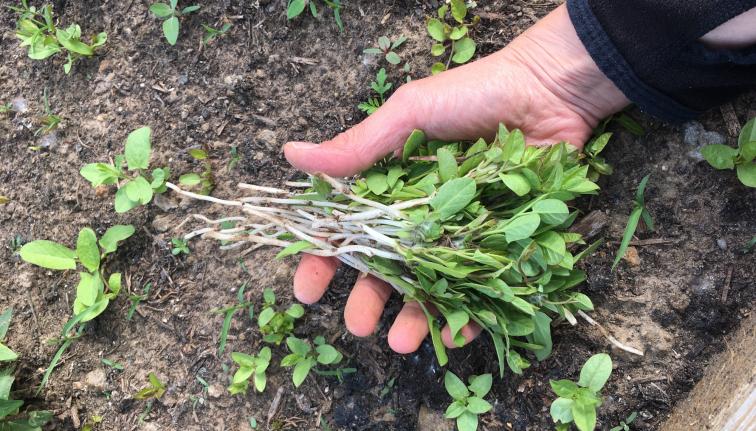
You are more likely to be successful in establishing plants, particularly perennials, that support beneficial insects if you spend at least one growing season (preferably more) managing weeds. The weed management strategies you choose will depend on your site, the types of weeds you have and your available resources. Note that some weed management happens before you plant, some after. Planting method will also dictate weed management strategy.
Options for managing weeds before planting
Here are some options for managing weeds before planting species that support beneficial insects.
Options for managing weeds after planting
After you plant, you will need to continue to manage weeds. Here are some weed management options after you plant your desired species:
Weed Management Resource Links
A guide by Natalie Lounsbury, Sonja Birthisel, Jason Lilley, and Ryan Maher. University of Maine Cooperative Extension Bulletin #1075.
By Thomas Björkman. Browse by season and find lots of other useful information.
A free bulletin from Sustainable Agriculture Research and Education (SARE).
A publication from the Xerces Society.
Step 4: Planting your beneficial insect habitat

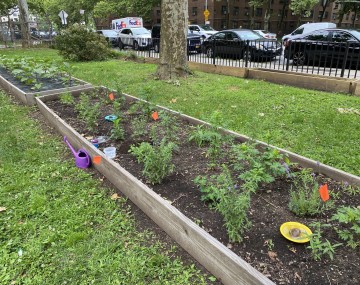
Timing of Planting
You have two decisions to make when it comes to planting the species you have selected:
- Timing—spring or fall?
- Method—seeds or transplants?
Note that planting method will also dictate weed management strategy.
Plant annuals in spring
If you are planting annuals to support beneficial insects, they should usually be planted in the spring. There are a few annuals, like poppies, that can be direct seeded in winter or early spring. Follow the instructions that come with the seeds or plants. Harvest NY’s Planting Guide for the New York City Area (pdf) lists approximate calendar dates for planting a certain number of weeks after/before last/first frost. You can look up dates of first and last frosts by zip code through tools from the National Gardening Association, or The Old Farmer’s Almanac.
Fall is best for perennial seeds
Fall is the best time to plant perennials, especially seeds, as freeze and thaw cycles improve germination. Follow the instructions on seed packages, but in general, wait until day and night temperatures are cool enough that germination of the new seed is unlikely. Otherwise, some species may germinate immediately and be killed by frost. Be aware that fall also brings wetter soils. If you need to use equipment to prepare the soil, be sure you can do this before the ground gets too soft. In Central NY, planting the third week of October works well.
Transplanting perennials in fall versus spring
If you are transplanting perennials, they are also likely to establish better if they are planted in the fall. Cooler temperatures and more soil moisture provide a less stressful environment for young plants. Fall planting also allows you to spend the previous growing season working on weed management.
If you must transplant perennials in the spring, try to pick a cooler, cloudier day. Water your plants well after planting and keep them watered during dry periods in their first year.
Methods for Planting
Annuals
If you are planting annuals, some species prefer to be direct seeded while others should be transplanted. Follow recommendations for each species.
Perennials
If you are planting perennials to support beneficial insects, the decision to transplant or direct seed is largely determined by how quickly you need or want results, as well as your available resources. As the planting area increases, purchasing seed is much more economical. Also, mowing is the most logical weed management strategy to pair with direct-seeded perennials, so you will not see flowers until at least the third year of your project. Establishing habitat for beneficial insects from seed is a long-term project.
How to direct seed:
- Make sure your seed is available when you are ready to finish your weed management in the fall. If you leave a gap between finishing weed management and planting, you will give weeds a head-start.
- Use the seeding rate recommended by the seed supplier.
- Since the volume of seed is pretty small compared to the area you need to cover,
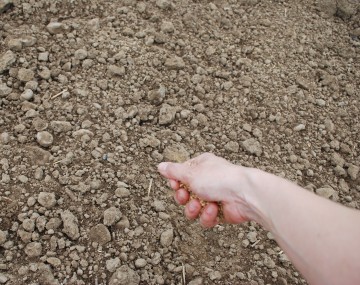
- mix something with the seed to make it easier to distribute evenly and to see where you have scattered seed. We mixed about three cups of boiled rice hulls per ounce of wildflower seed to cover a 5 x 23-foot plot. Clay-based kitty litter (50 lbs/A) also works.
- Spread the seed evenly over the area to be planted. If you are hand-broadcasting, spread about half the seed walking in one direction, then spread the other half while walking in a perpendicular direction.
- Gently rake the seed in to the soil, not too deeply. For a larger area, you may be able to use a piece of equipment pulled by a tractor or other vehicle. Then stomp or roll the area to press seed into the soil.
When to choose transplanting
If you need quick results and have funds to purchase transplants, you can have blooming flowers—at least from some species—in the first season. If you have space, equipment, and labor to start your own transplants from seed, that is another option. However, be aware that many perennials require special conditions to stimulate germination, e.g., soaking in water, chilling for weeks or months in moist soil, scratching the seed coat. Follow all instructions that come with your seeds or do some research about the species you are growing.
How to transplant:
- Make sure your transplants are available when you are ready to finish your weed management in early fall. If you leave a gap between finishing weed management and planting, you will give weeds a head-start.
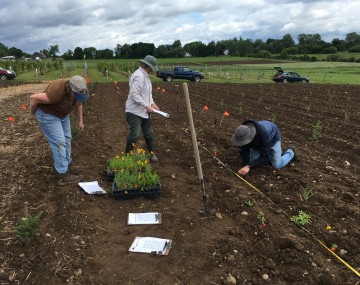
- Each plant species will likely have a recommended spacing. With a mixture of species, spacing plants 12-18” apart will probably work well. Adjust if all your species require more or less space.
- Transplant so that the potting soil around the seedling is level or just barely below the soil line in the ground.
- Water in new seedlings well. If you transplant in the spring, make sure to keep plants watered during dry spells, especially during the first year.
Planting resource links
A guide from the Xerces Society.
The Xerces Society has published guides for a variety of regions. The guides for New England and the Upper Midwest may be most relevant to New York State.
Planting Guide for the New York City Area by John Ameroso, updated by Harvest NY.
This guide was prepared by Amara Dunn-Silver. Last updated on 3/17/2023.
Funds were provided by:
- The Towards Sustainability Foundation
- USDA National Institute of Food and Agriculture, Smith Lever project 2020-21-108
- NYS Department of Agriculture and Markets
- NYS Department of Environmental Conservation

- (315) 787-2206
- arc55 [at] cornell.edu