Back

Discover CALS

See how our current work and research is bringing new thinking and new solutions to some of today's biggest challenges.

Share
Rebecca Harrison ’14 is an alumna of the Department of Animal Science and a current Ph.D. candidate in Science & Technology Studies at Cornell. She reflects on the contributions of Jerrie Gavalchin, associate professor of animal science, who passed away on May 3, 2020.

In high school, my guidance counselor told me I didn’t have what it would take to get accepted into or succeed at Cornell. It took until I walked into Jerrie Gavalchin’s office at Cornell for me to stop believing my high school counselor was right.

When I first arrived on the Hill, Jerrie wasn’t even my assigned advisor; I reached out to her early in the semester on the recommendation of a friend, and we connected immediately. She quickly became my biggest advocate. Jerrie went above and beyond her academic advisor job description on countless occasions, and I have had the pleasure of watching her do the same for many of my classmates and friends over the years.

One time it meant calling her immunologist colleagues at the medical school because I was struggling with undiagnosed autoimmune issues, and she wanted me to have access to more opinions. Another time it meant personally calling one of my professors because he refused to let me make up an exam during which I was in the emergency room. Yet another time, it meant putting in the extra work to better understand my options after I eventually made the difficult decision to pursue graduate school (in a different field) rather than veterinary school as planned.

Four years later, in 2014, I walked out of Jerrie’s office for the final time, and she gave me a hug and said, “It’s kids like you, Becca, who make my job as an advisor so awesome. You know when to ask for help, but also know when to share resources. You’ve come so far, and you’re definitely ready to do something big.”
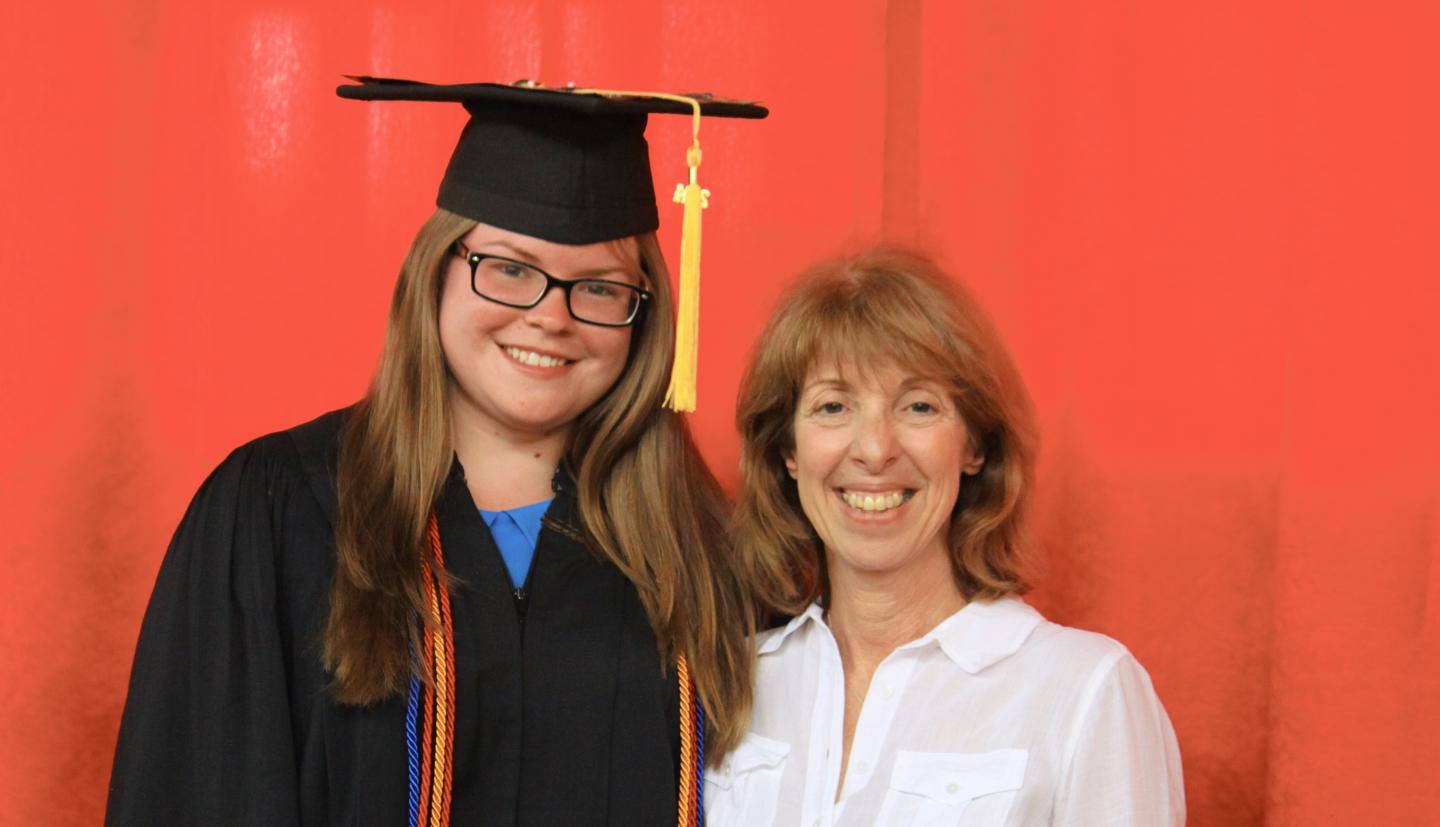
When people ask me for college advice, especially at large institutions like Cornell, I always say to prioritize finding an advisor who is there to advocate for you from day one. Given my experience in high school, I didn’t even know this type of person existed until I met Jerrie. Jerrie’s power came from her sensitive balance between making efforts to alleviate unnecessary stresses for her students, while also teaching us to become better advocates for ourselves. Over the years, I’ve begun to realize that my story isn’t unique;  Jerrie had dozens of students who weren’t necessarily her own advisees who sought her out as a mentor and confidant.

I don’t think it’s too much of a leap to say that Jerrie’s biggest contributions to my life — beyond helping me survive college – included helping me value the student-advisor relationship, and, as I’ve grown as an academic, she helped me realize the type of advocate I want to be for my own students. In the past few years, as I’ve moved to the opposite end of campus, I’ve always known Jerrie was in my corner when I needed her, but she also started to see me as a colleague who could be a resource for herself and her current students.

I’m unsure whether or not Jerrie realized that when a student of my own would come to class excited to say, “Dr. Gavalchin used you as an example in our animal science careers class today! I was so excited to be like ‘hey! I know her!’” it was usually at a time when I needed perspective the most. When she’d send current students my way or send me an email for advice on how to help undergrads with career shifts, I don’t think she knew how much the “I’m proud of you” at the end of the little notes meant. I’d thank her, of course, but she was so humble.

I ran into Jerrie not too long ago. I was standing in the toothbrush aisle at Target leaning on my shopping cart scrolling through my phone. She passed by and I was startled to hear, “Becca? Is that you?” We talked for quite some time — time that I’m now so unbelievably thankful for. She talked about how excited she was to retire soon. She updated me on her family, who she loved deeply and was always so proud of. And of course, we talked about our students.

Additional reflections were published in the CALS Newsroom, and additional coverage appeared in the Cornell Chronicle.

Keep Exploring

a group of young people stand together in front of a building

News

The New York State 4-H Livestock Ambassador Program recently offered an immersive, multi-day educational experience for youth participants, providing hands-on exposure to New York’s diverse livestock industries. The program began with a visit to...
  • Animal Science
  • Animals
Hand grabbing apple

News

Apple scab, caused by the fungus Venturia inaequalis, is one of the most economically devastating diseases facing apple growers in the Northeast. Managing it has long depended on regular fungicide applications—and for many growers, that means...
  • Cornell AgriTech
  • School of Integrative Plant Science
  • Plant Pathology and Plant-Microbe Biology Section