What is the focus of your research at Cornell AgriTech?
Since beginning my graduate work at Cornell, I have been involved in several research projects involving various fungal pathogens of hemp. Powdery mildew in particular has emerged as a threat to hemp growers, and I focused my research on this disease to help develop more effective management strategies.
Understanding the diversity of powdery mildew in New York state and throughout the United States is critical to developing these strategies. In addition, determining whether host resistance exists within the germplasm of the Cornell hemp breeding program is key. My work on host resistance is closely related to research happening in Larry Smart’s breeding program, so we can collaborate to identify powdery mildew resistance genes.
I am also interested in determining whether pathogen infection can impact the production of organic compounds. Hemp is often grown for its production of secondary metabolites like cannabidiol (CBD) and terpenes, which are highly volatile compounds that affect the plant’s smell and taste, but also play a role in insect defense. Therefore, it is important to determine whether pathogen infection can influence the plant’s production of these molecules.
What’s the most exciting discovery you have made in your research here?
This past summer, our breeding program had some high CBD cultivar trials that became infected with powdery mildew. I rated those fields and discovered one cultivar that consistently had only extremely small amounts of powdery mildew infection. This discovery indicates a potential source of resistance. I will be working with George Stack, a graduate student in Larry Smart’s lab, to investigate a possible resistance gene in that cultivar.
What do you hope the impact of your research will be on New York state growers?
In the long term, I hope that powdery mildew resistant cultivars will be available for growers; and in the short term, I hope my research will help growers identify better ways to manage this pathogen.
What do you think would surprise people most about the subject of your research?
I think people might be surprised by how little we know about hemp in general. Because it was illegal in the United States and many other countries for so long, there hasn’t been as much research done with hemp compared to many other crops. We also know very little about the diseases that affect hemp, such as powdery mildew, which is what makes me so excited about my research.
I also think people would be surprised by the diversity of hemp and the fact that there are different cultivars grown for different purposes. In general, there are three types of hemp: fiber, grain and high CBD. Each of these three cultivars has specific properties and requires different growing practices.
What’s your favorite memory from your time doing research on the Cornell AgriTech campus?
Overall, I really enjoy the sense of community that we have here on the Geneva campus and within my lab. Our lab gets quite large in the summertime with graduate students, interns and summer technicians. We often play music while doing research in the lab, and we even have a disco ball that we turn on when someone makes an important breakthrough.
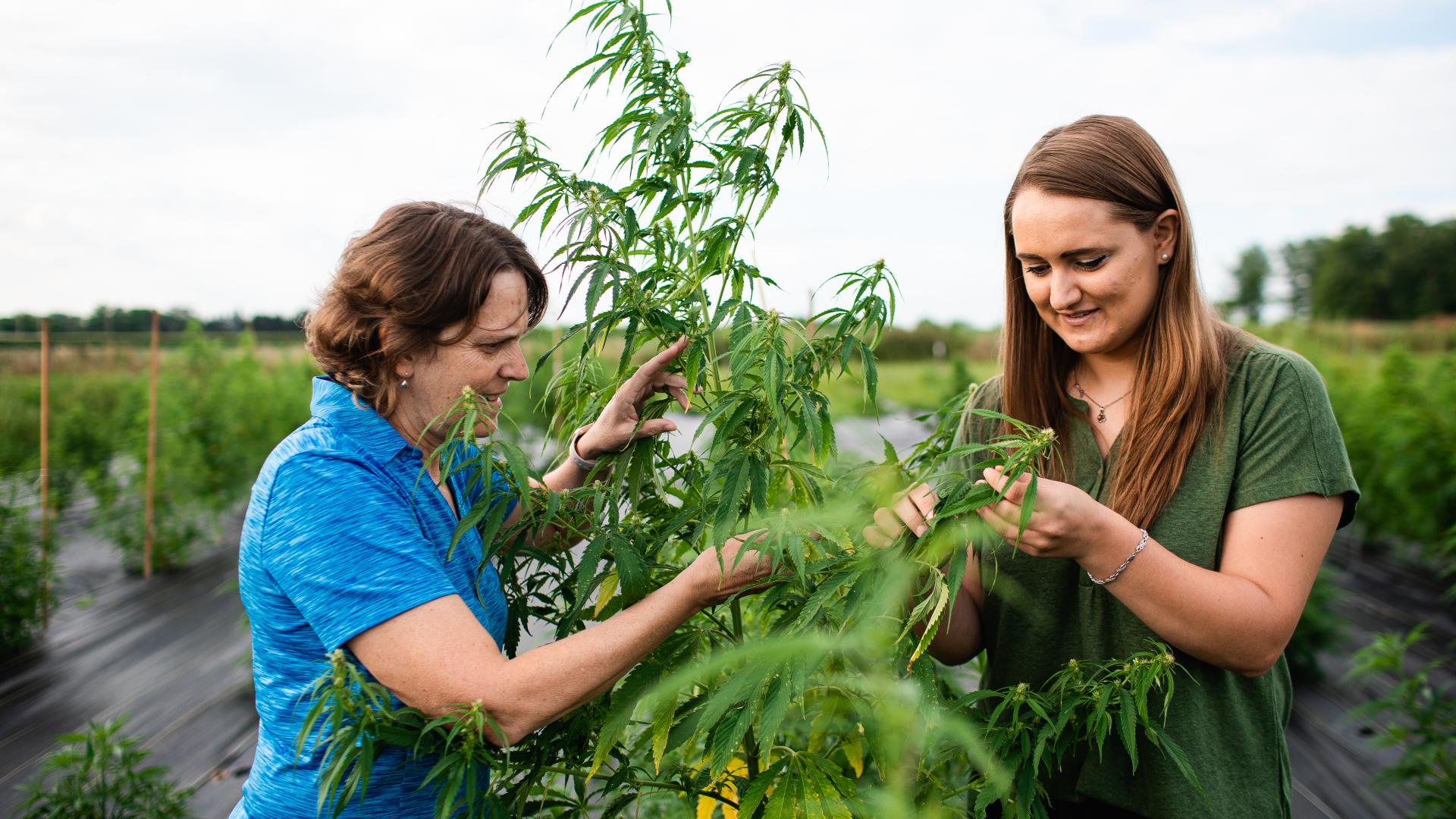
Image above, Ali and Christine examine industrial hemp growing in a research field in Geneva, New York. Photo by Allison Usavage