Back

Discover CALS

See how our current work and research is bringing new thinking and new solutions to some of today's biggest challenges.

Share
  • Animal Science
  • Animals
  • Climate Change
  • Environment

by Jackie Swift

Jocelyn Nashtatik ’28 is a sophomore in Animal Science with a concentration in pre-veterinary medicine. Currently she is an undergraduate researcher in the lab of Joseph McFadden, associate professor of dairy cattle biology. We sat down together to talk about her research experience.

I understand you want to be a large-animal veterinarian. Did you grow up working with large animals?

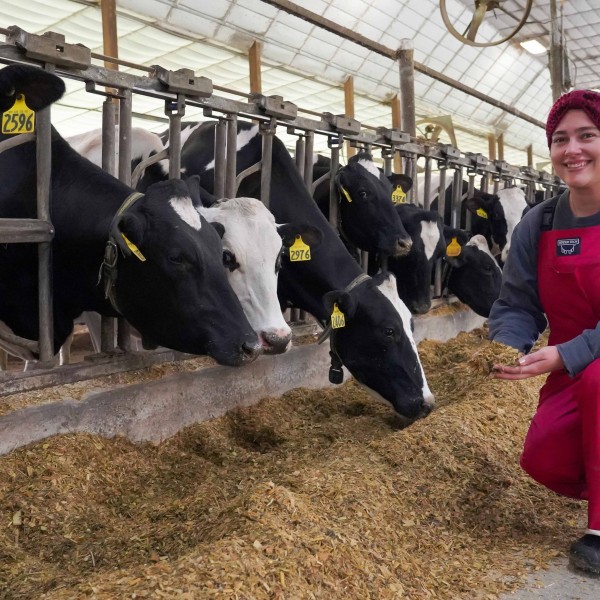
No, actually I grew up only seeing the companion-animal side of veterinary medicine, so coming to Cornell and getting hands-on experience with cattle, horses, pigs, chickens and sheep has been huge for me.

Once I started working with livestock through my classes and research, I realized how much I genuinely love it. There’s something really exciting about constantly learning new things about these animals and getting the kind of hands-on exposure here that I’d never get back home. It’s made me really sure that large-animal medicine is where I want to be.

The McFadden lab looks at ruminant nutrition and energetics, and seeks to discover ways to reduce enteric methane emissions by dairy cows. Why did you decide to work there?

I’ve always been really interested in helping the environment and finding ways to reduce greenhouse gas production. I want to be part of real solutions — not just talking about it, but actually doing something meaningful for the future.

This lab gave me the perfect opportunity to dive into that. I learned how different diets and feed additives can change a cow’s energy partitioning and reduce enteric methane production. This is exactly the kind of work that connects environmental sustainability with animal science. It also ties directly into my goal of becoming a livestock veterinarian. I’m gaining so many practical skills: animal handling, moving cattle safely and calmly, understanding cattle behavior, and getting comfortable working around large animals every day. 
What do you do in the lab? Walk us through your job duties.

The lab looks at whole-animal physiology —  things like how cattle use nutrients, how efficiently they produce milk and what affects their overall energy balance. We use tools like indirect calorimetry, respiration chambers and methane-monitoring systems to see how different diets or feed additives change energy partitioning and enteric methane production. A lot of the work is really focused on improving lactation efficiency and figuring out the actual mechanisms behind methane-reduction strategies. 

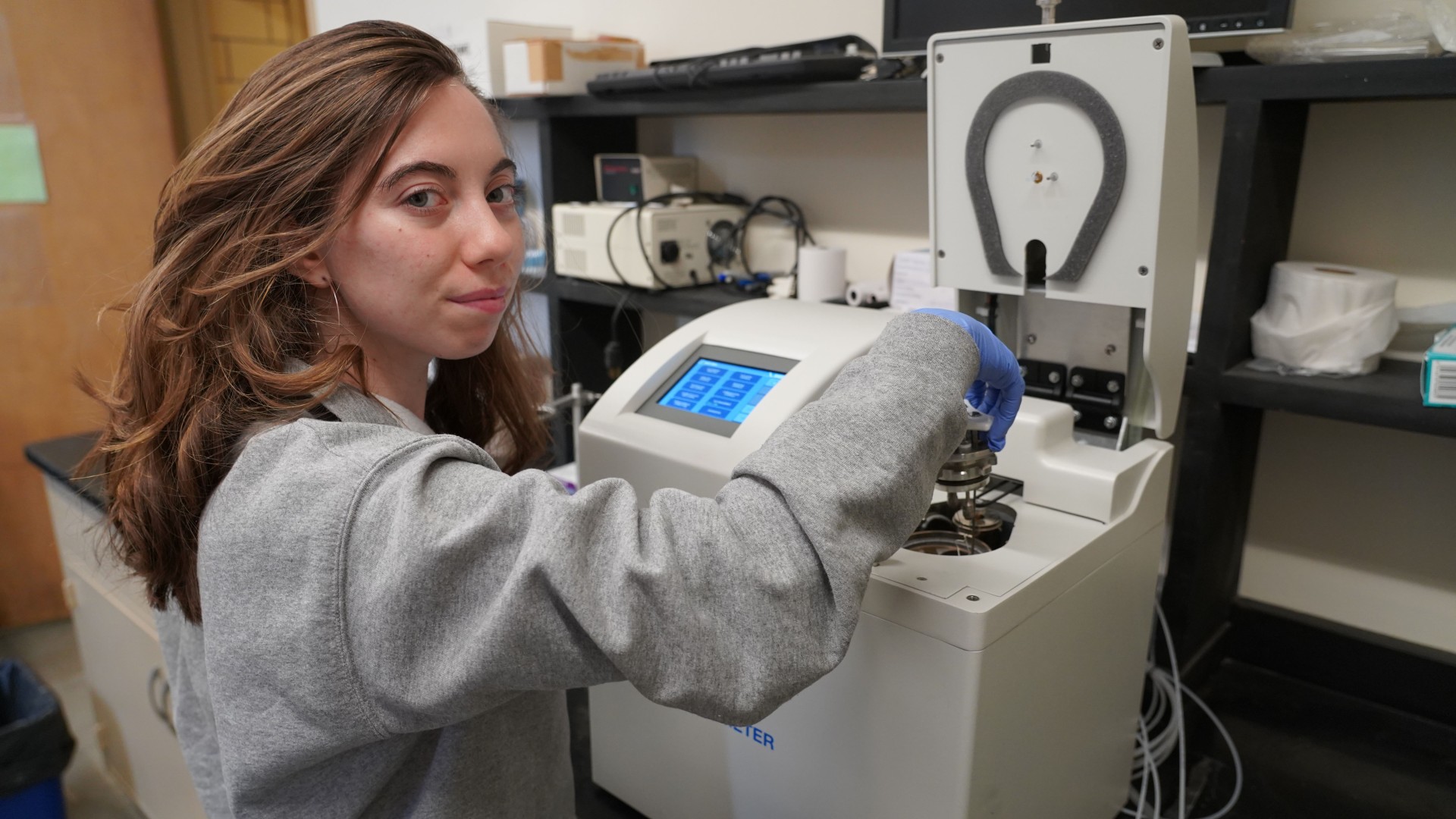
My role is a mix of lab work and hands-on animal care. I prep and process fecal and orts samples, and run bomb calorimetry to measure gross energy. I also help with daily animal work: milking the research cows, feeding them and keeping their environment clean so our physiological measurements stay consistent. On top of that, I operate the Greenfeed units, which track gas exchange and methane emissions while the cows eat. 

Bomb calorimeters measure a substance’s heat of combustion by burning a sample in a sealed high-pressure vessel submerged in water and measuring the change in temperature of the water to determine the energy content of the sample. It must be exciting to work with such a specialized piece of equipment. 

It’s one of the highlights of working in the lab. I’d only heard about bomb calorimeters briefly in my general chemistry lecture, and I never thought I’d get the chance to use one myself. In the lab, I learned not just how to operate it but how the entire system works and how to prepare samples correctly so the data is reliable. 

It’s a unique skill set, and I don’t think I’d have gotten this experience anywhere else. I picked it up quickly—after one session I already felt confident running the machine. I even learned how to troubleshoot when something isn’t working quite right. Gaining that confidence with specialized equipment has been one of the most surprising and rewarding parts of this whole experience.

What do you like the best about working in the McFadden lab?

Getting to apply the things I’ve learned in my classes to the dairy cows I work with in the lab. In my Domestic Animal Biology and Dairy Cattle Principles classes, we covered everything from udder anatomy and mastitis to how a cow’s panoramic vision affects the way we should approach and handle her. 

Now, being able to take that knowledge and use it in a real research setting is really rewarding. It makes me feel a lot more confident around the animals, and it helps me make sure they’re healthy and comfortable. 

Has your research experience changed you?

Yes, it’s calmed me because now I know that if I go into livestock veterinary medicine, I’ll be successful. I already have so many skills and so much hands-on knowledge to build on. I feel more capable, more confident in my abilities, and just genuinely happy working with these amazing animals every day. 

Jackie Swift is the communications specialist for the Cornell CALS Department of Animal Science.

Keep Exploring

a group of young people stand together in front of a building

News

The New York State 4-H Livestock Ambassador Program recently offered an immersive, multi-day educational experience for youth participants, providing hands-on exposure to New York’s diverse livestock industries. The program began with a visit to...
  • Animal Science
  • Animals
Researchers have found that enhanced rock weathering – which uses rock dust to sequester carbon in soil - could remove up to a gigaton of carbon by 2100 if adopted globally.

News

One of the most recent technologies for sequestering carbon, enhanced rock weathering could remove up to a gigaton of carbon by 2100 if adopted globally.

  • Ashley School of Global Development and the Environment
  • Global Development Section
  • Climate Change