Back

Discover CALS

See how our current work and research is bringing new thinking and new solutions to some of today's biggest challenges.

|
By Ellen Breitenbach ‘28
Share
  • School of Integrative Plant Science
  • Horticulture Section

From premier golf courses in New England to research fields in Ithaca, New York, Chris Sitko has spent his career cultivating safe and high-performing playing surfaces. 

Now in his role as manager of golf facilities and sports turf at Cornell University, Sitko works alongside Cornell researchers to make sure that the course and fields are healthy, safe and sustainable.

The 16-person athletic and golf maintenance teams manage playing surfaces for 11 different sports as well as the Robert Trent Jones Golf Course. Sitko takes on the role of agronomist, golf course superintendent and facilities manager, maintaining surfaces year-round. 

His approach to sports field management makes it possible for Cornell athletes to compete on premier surfaces with confidence. He takes a sophisticated approach where his daily planning considers the surface type, weather, short and long-term athletic team schedules and resources available. 

Path to turfgrass expertise 

Growing up in Pottstown, Pennsylvania, Sitko was just as busy outdoors then as he is now. He recalled his experience on his grandparents’ Christmas tree farm. “I got the green thumb,” Sitko said. It was this passion for land management and horticulture that brought Sitko to Cornell for college, graduating with a B.S. in Agricultural Sciences in 2015.

During summer breaks, Sitko interned at Lancaster and Saucon Valley Golf Clubs in his home state, learning the art and science of turf management from skilled practitioners. 

After graduation, he went to work as the assistant superintendent at Westchester Country Club in Rye, New York. The club is a two-time host of the acclaimed PGA golf tour. “When you work at places like Westchester CC,  the expectation is, no matter what day or what the conditions are, the golf course should be in the best shape possible,” he said. This desire to constantly improve turf quality stuck with Sitko. He called Westchester home for two years, before returning to Cornell to pursue a master’s degree in horticulture from 2017 to 2019. 
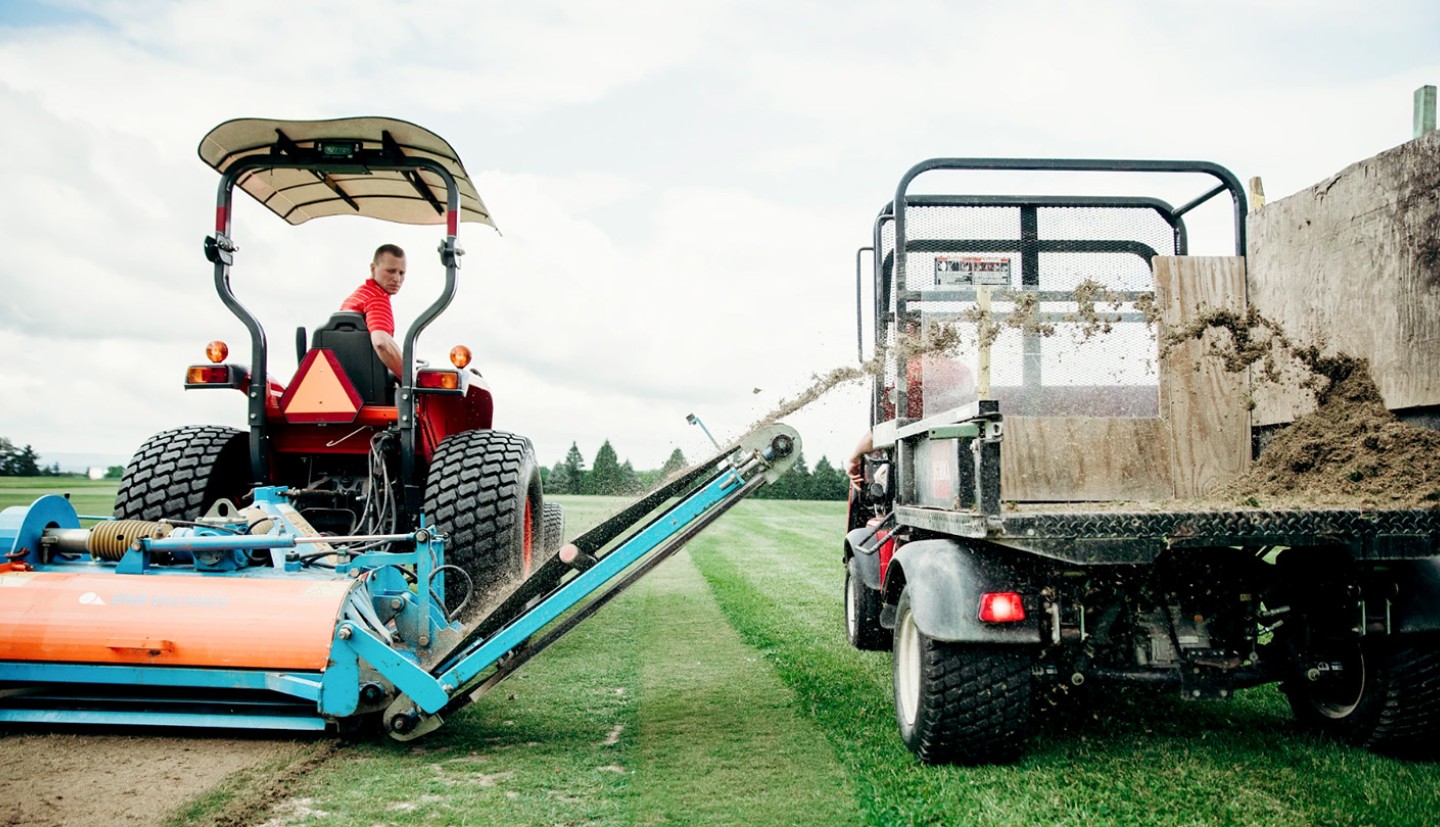
Image above: Chris Sitko mows a field plot during his master studies at Cornell University. (Image: Cornell University)

At Cornell’s Bluegrass Lane Turf & Landscape Research Center, Sitko investigated the weed seed bank in perennial turfgrass systems, organic weed management and player safety. He also studied non-chemical weed management at Vineyard Golf Club in Massachusetts where he went to work full time after finishing his master’s. In March 2022, he returned to Ithaca with his wife to take on his current position at Cornell. 

Bringing science-based practices to campus

Sitko takes a different approach on every surface under his charge. Depending on the playing surface, traffic level and location, he deploys different management programs to assure optimum health and performance. On Cornell's golf course, the intentional allocation of fertilizers, pesticides and water maximizes the budget, while ensuring a consistent playing surface. 

“The Cornell Turfgrass Extension Team did very expansive soil testing on the golf course and gave our team a more targeted fertilizer regiment based on collected data,” Sitko said. The public golf course on north campus has putting greens dominated by different types of grass in varying microclimates — annual bluegrass (Poa annua) and bentgrass (Agrostis spp.). When he took charge, Sitko questioned, “Why should we treat them all the same when they have different needs?” 

In practice, the golf course management team mapped high- and low-need areas for nutrient applications in 2022 — making it practical to make more precise fertilizer applications – saving money and protecting the environment.

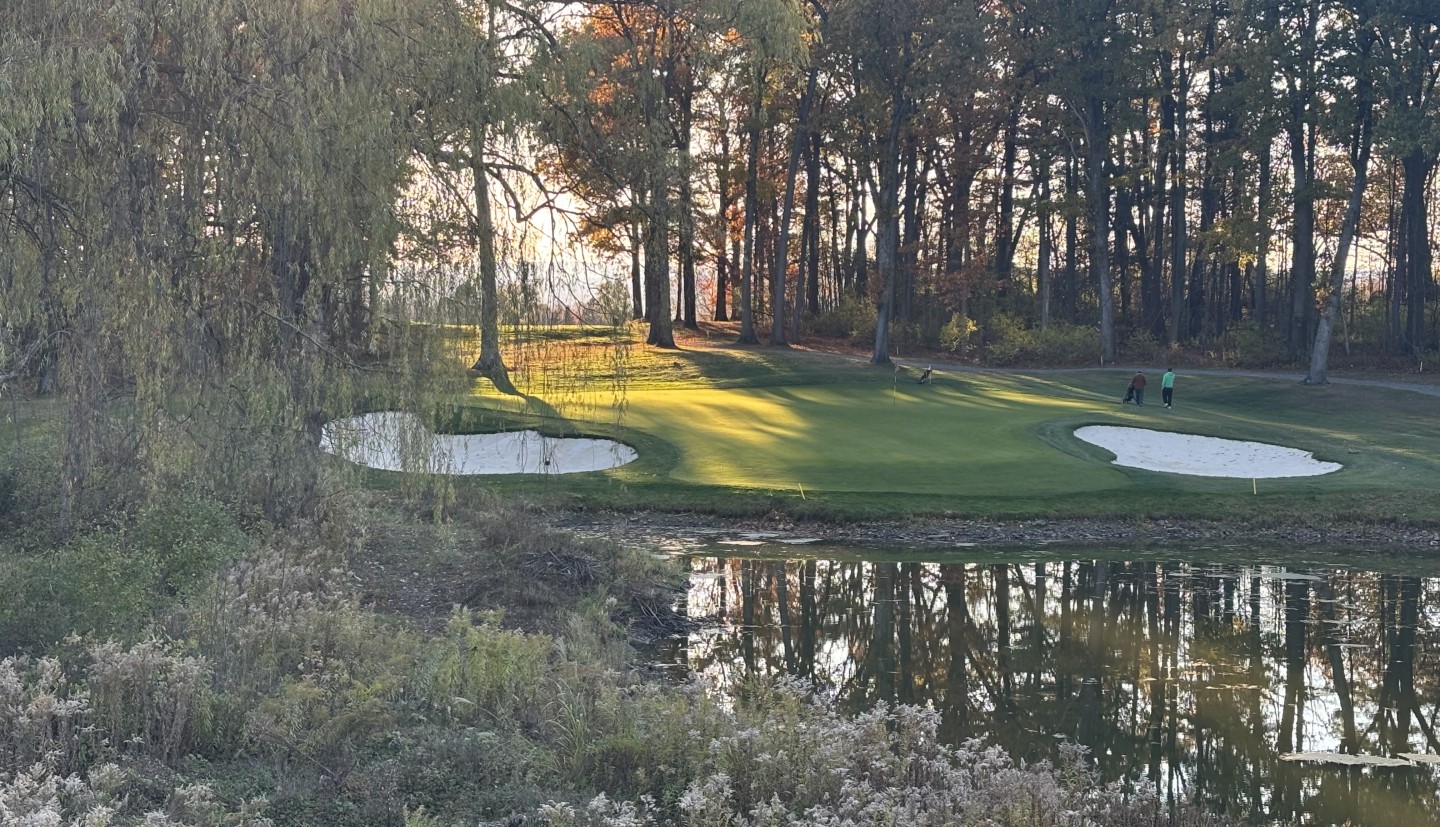
Image above: A shady green at the Robert Trent Jones Golf Course. (Photo by Dave Thomas)

Use of Cornell's natural grass athletic fields continues to rise, and intensive maintenance is needed to ensure proper cover. Sitko said that the team is “starting to disturb less and just seed more.” He explained, when overseeding they broadcast grass seed over sections of turf to help maintain its cover. “Most folks underestimate how much seed they have to put down. We’re throwing seed constantly, and I still don't think it's enough.” 

To avoid reducing the surface’s resiliency to foot traffic, they also stopped slice seeding — narrow cuttings in the turf for seed to be placed — during the season. In these cases, they broadcast seed instead and choose to slice seed during slow periods to push recovery. 

Cornell’s turf management team is just as intentional when managing plant pests and diseases on the natural grass athletic surfaces. Before spraying, they begin by scouting for pests and then determining if infestations merit treatment. Following best management practices, they balance maintaining healthy turfgrass through judicious pesticide use. “I think you can have really good athletic fields with really minimal pesticides,” Sitko said. Excluding sites with robust grub history, foliar diseases and weeds can be reduced with cultural practices rather than an intensive chemical regiment, he explained. 

Each with individual benefits and tradeoffs, synthetic and natural turfgrass fields require management unique to the sport. 

To ensure safety on artificial fields, Sitko counteracts the varying levels of foot traffic with consistent rubber infill depths. “With synthetic turf, I think consistency is safety…having surfaces that perform similarly across fiber length, stitch density, infill type, and age of the surface.” This dependability is especially important to the athletes, he said. “They are probably subconsciously realizing it, but when they plant their foot, they are expecting their body to react a certain way whether on Schoellkopf, or inside at soon to open Meinig Fieldhouse."

Partnering with Cornell researchers, Sitko and his team still work closely with Urban Environmental Specialist Carl Schimenti and Associate Professor Frank Rossi at the Bluegrass Lane Turf & Landscape Research Center. Since his master’s program, Sitko has been applying his studies to further advance Cornell fields. 

Recently, the group collaborated to improve the quality of the Cornell Men’s Practice Soccer Field. Together they successfully reduced annual bluegrass populations and improved the resilience of the surface through fraise-mowing – removing a portion of turf surface to better rehabilitate athletic fields.

Building a Cornell turf community 

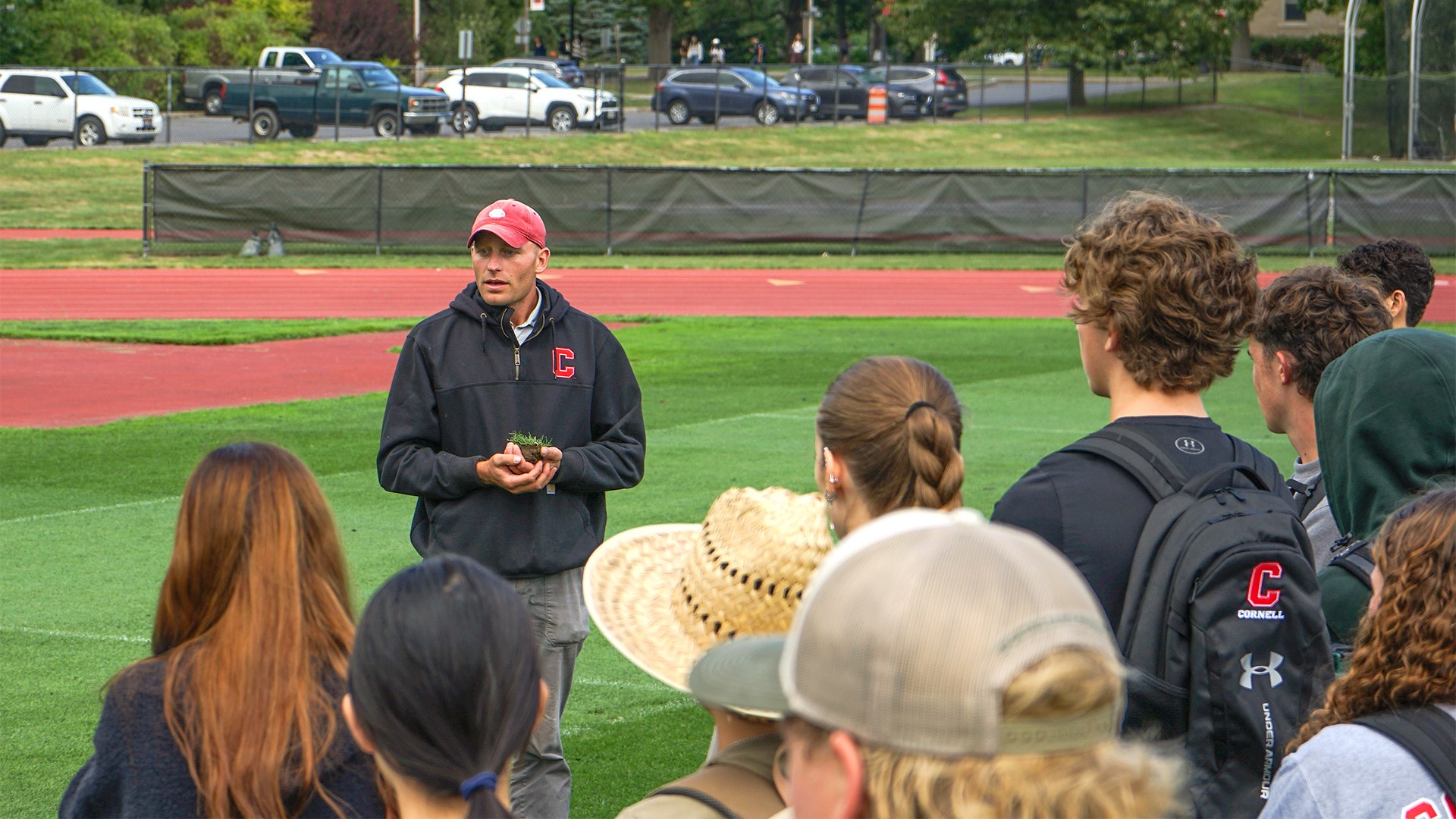
Cornell University's College of Agriculture and Life Sciences hosts classes that highlight turfgrass soil and cropping systems. Sitko is their first exposure to one of the most widespread crops in the world, working with professors to provide afternoon lab experiences. 

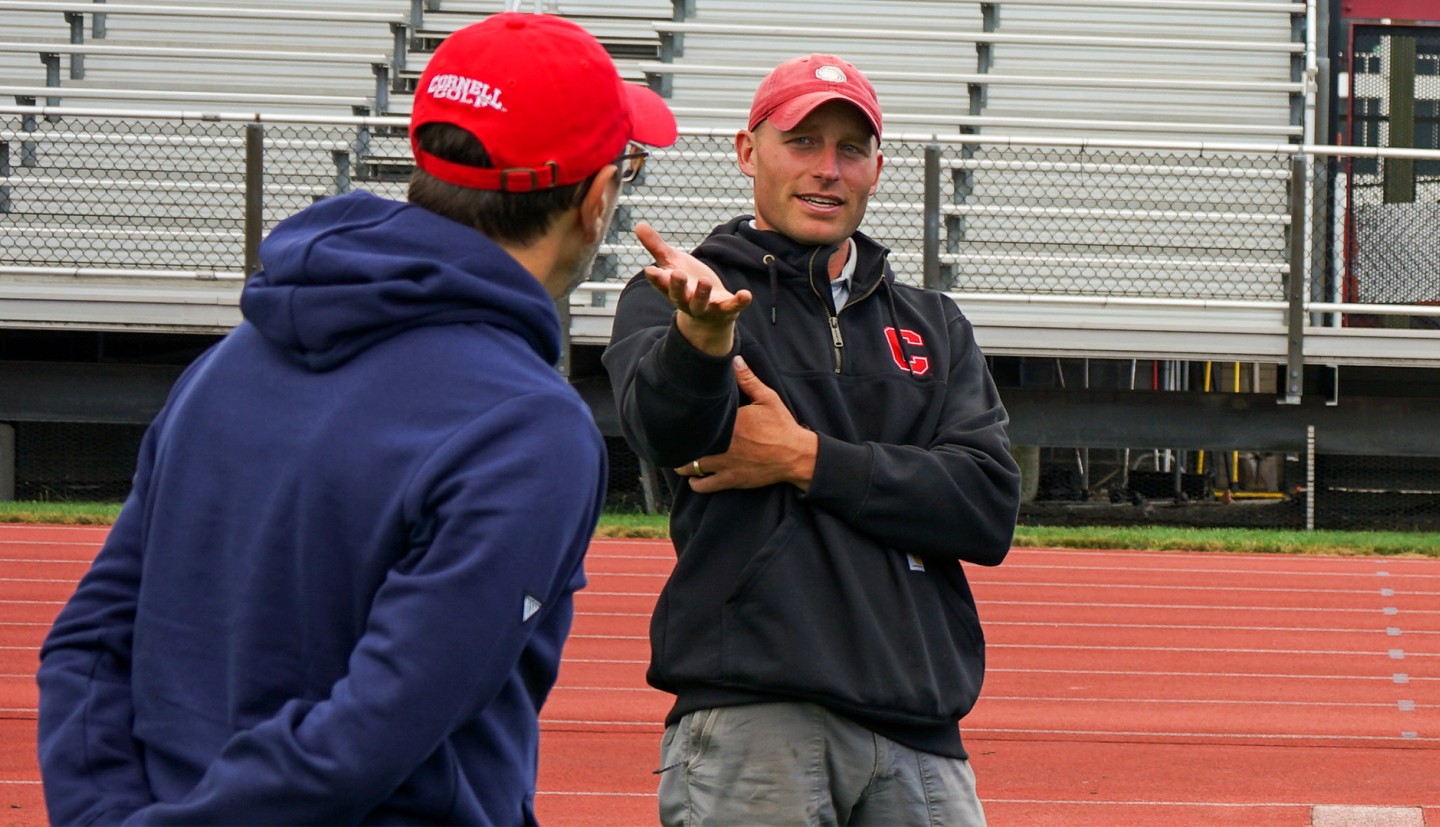
Image above: During an undergraduate course’s afternoon lab, Chris Sitko discusses his role at Cornell with Professor Frank Rossi. (Photo by Jake Zajkowski)

He believes that integration between his work and the university is vital. Looking to provide additional opportunities, he frequently employs undergraduates. 

Entering his fifth year in his role prompts him to reflect on his progress thus far. He is incredibly proud of the team’s accomplishments in the past few years. “They’ve invested in themselves and take significant pride in their work. Our operational capacity has grown so much,” Sitko said.

Uniting researchers, students, coaches and the grounds team, Sitko has elevated the standard of golf and athletic surfaces on campus.  “I’m blessed that I like what I do,” said Sitko. 

Ella Breitenbach ‘28 is a communications intern with the Cornell Turfgrass Program.

Keep Exploring

neurons

News

Cornell researchers have developed an online module, running just over an hour in length, that can be offered as a way to instill concepts of critical thinking early in a student’s academic journey.

  • Ecology and Evolutionary Biology
  • Neurobiology and Behavior
  • School of Integrative Plant Science
electron

News

Researchers discovered electron transfer in electroactive bacteria is mediated by CymA proteins’ ability to synchronize and form a biomolecular condensate in the cell’s inner membrane.

  • Biological and Environmental Engineering