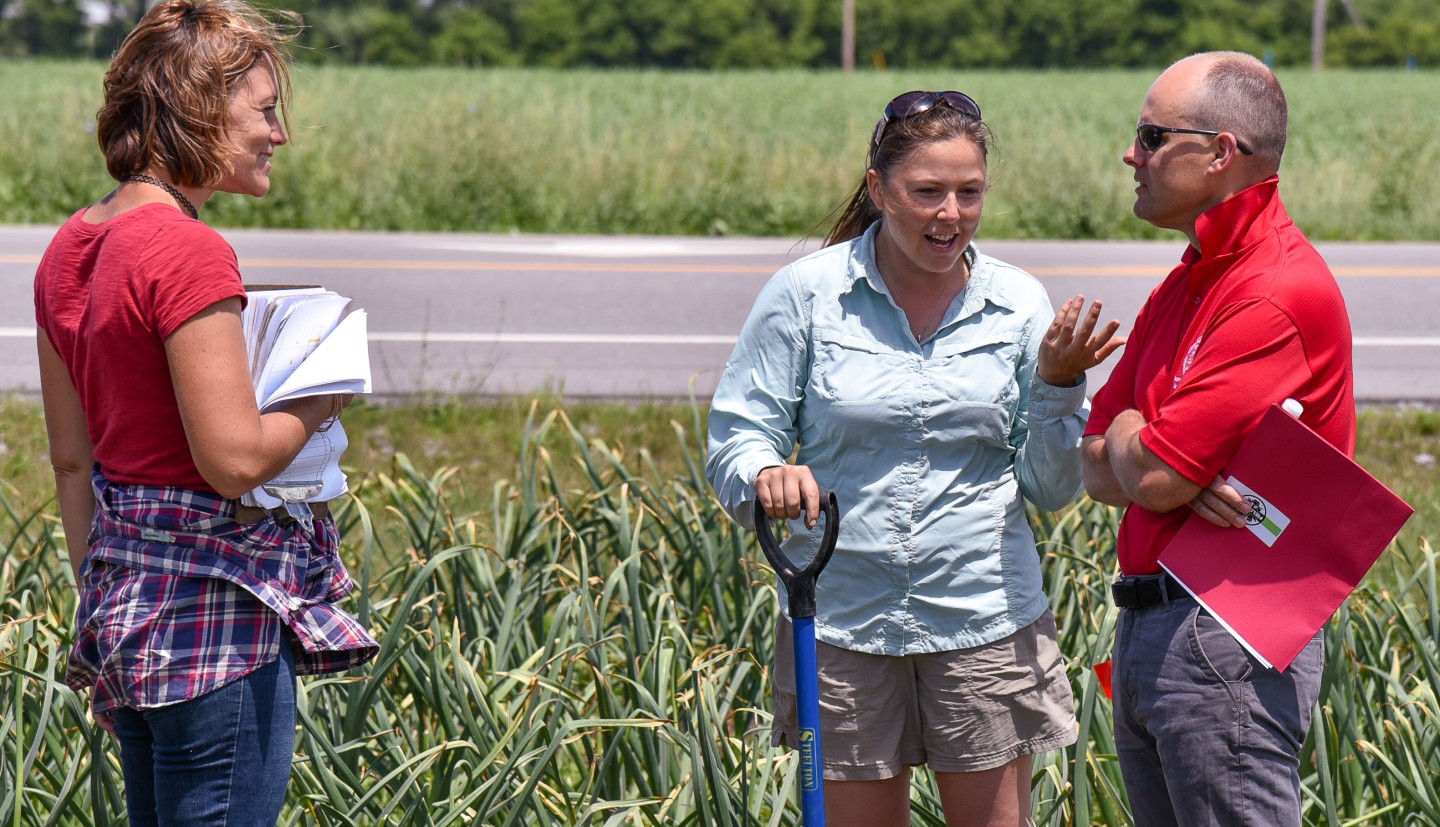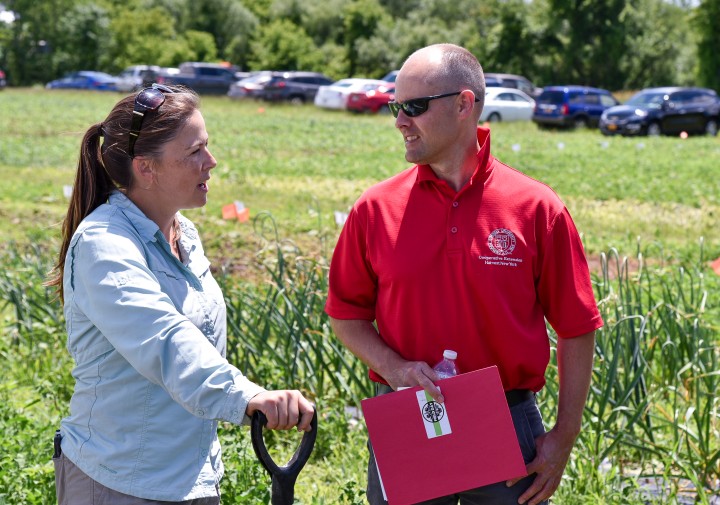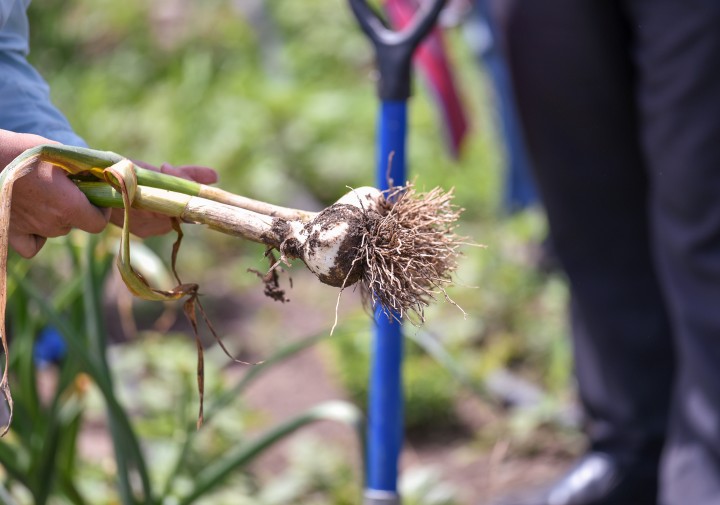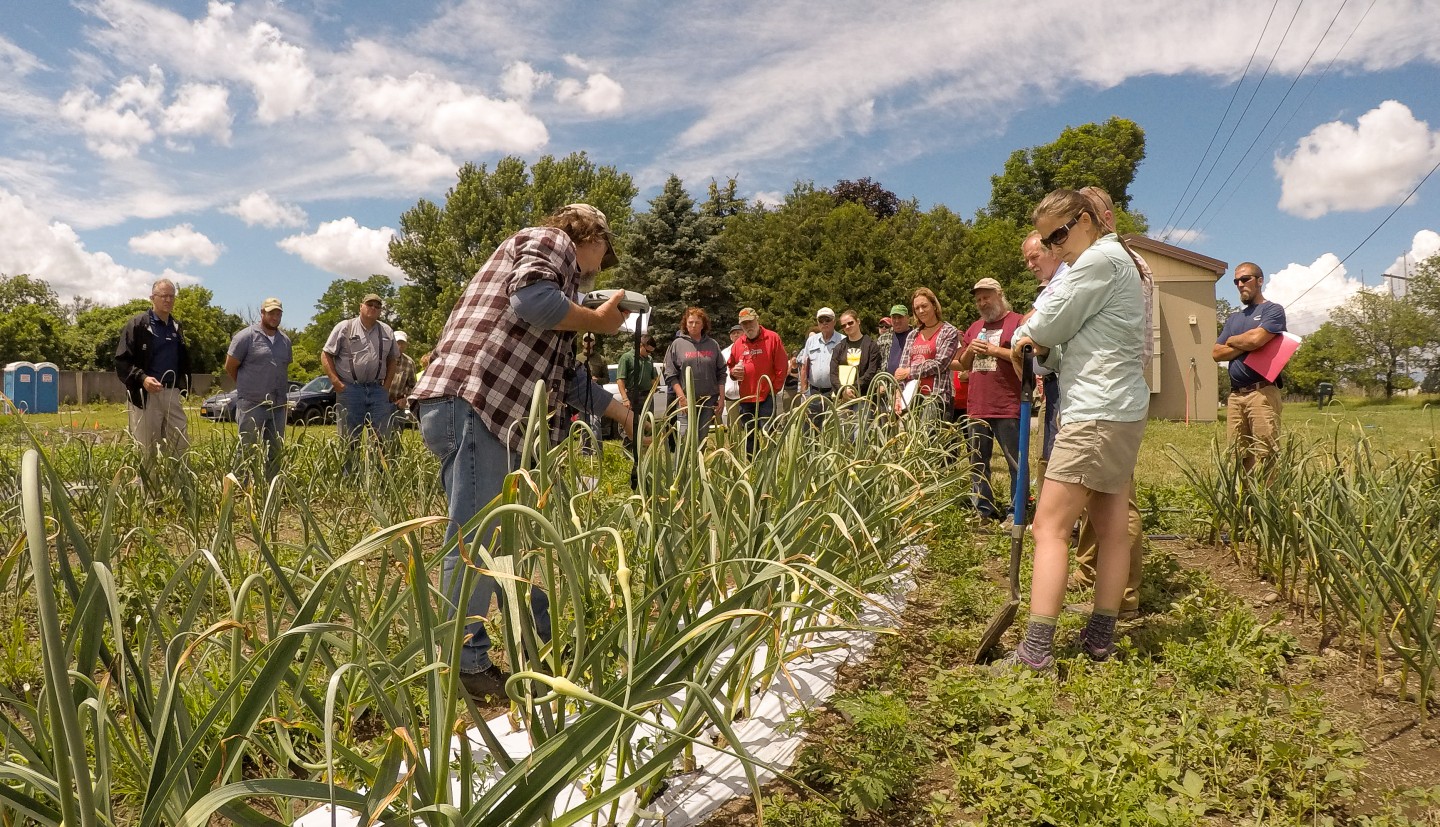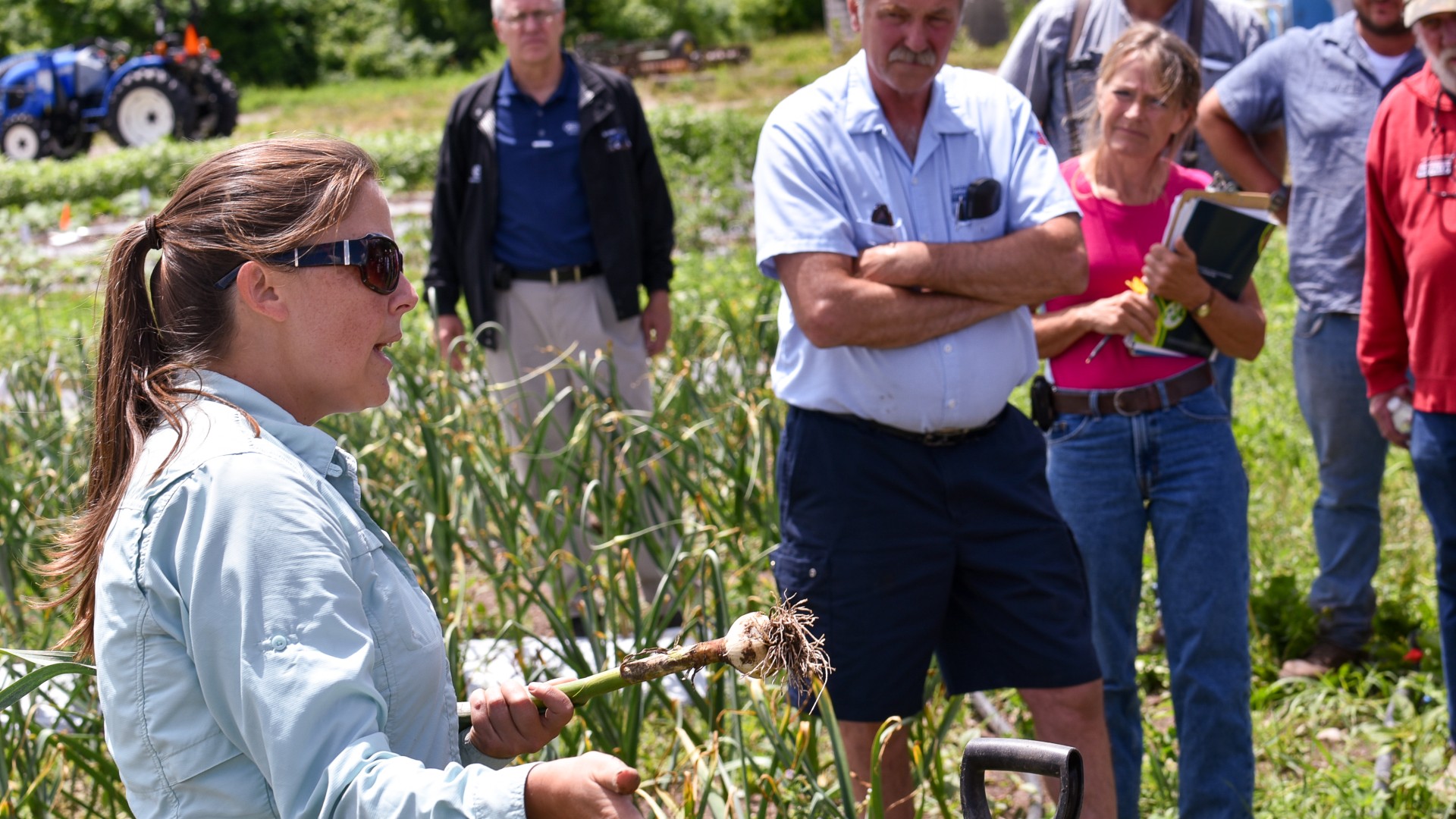
Crystal Stewart-Courtens, regional vegetable specialist with Cornell Cooperative Extension’s (CCE) Eastern New York Commercial Horticulture program, built one of the Northeast's premier garlic research and extension program from scratch over 14 years, combining scientific rigor with a farmer-centered approach. Stewart-Courtens translates growers' field knowledge into rigorous research that provides practical recommendations for regional producers. Her work exemplifies Extension's mission of co-creating knowledge that serves agricultural communities.
Regional vegetable specialist
Becoming a Garlic Specialist
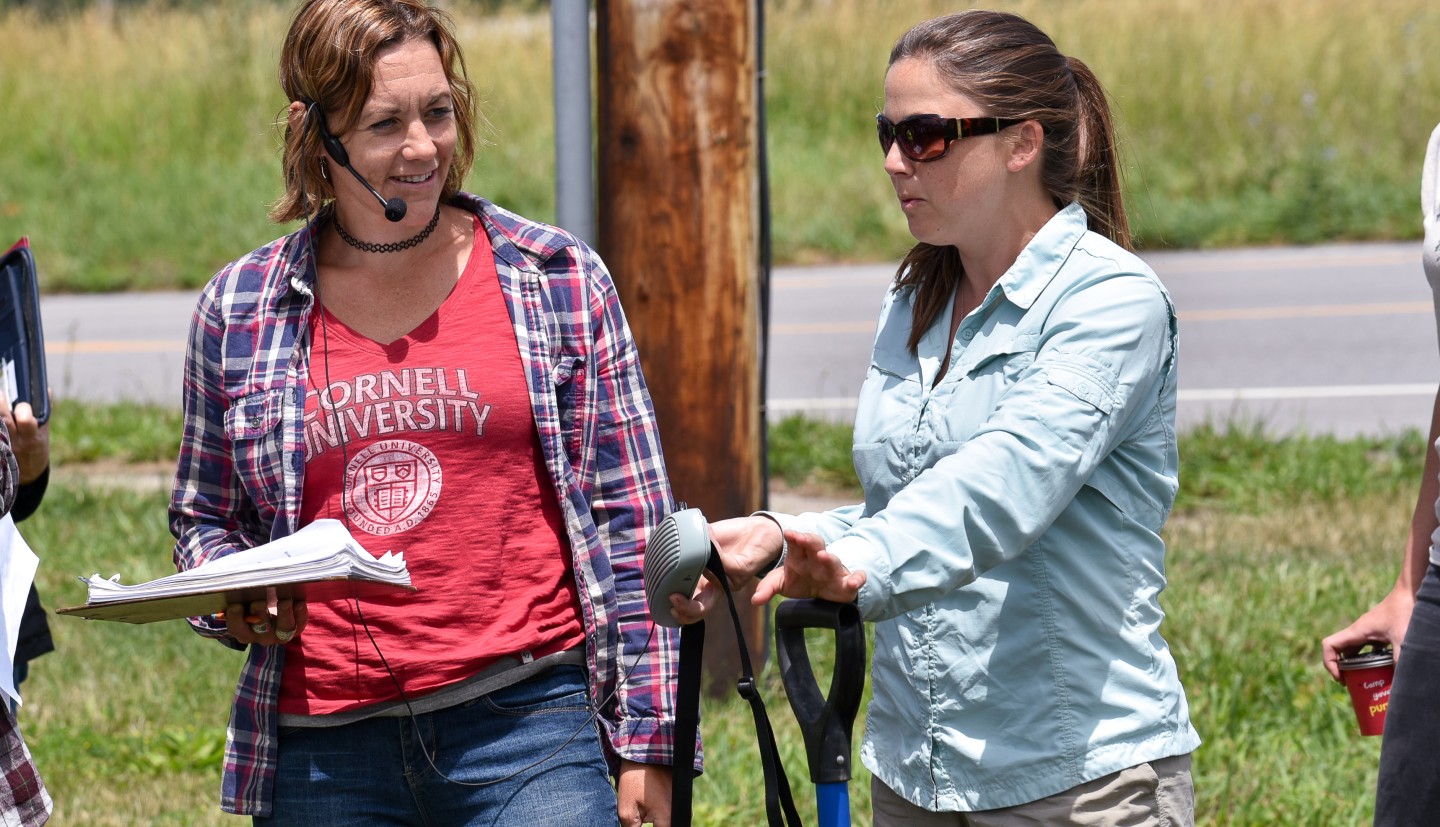
My journey to garlic expertise began during graduate school at the University of Wisconsin in Dr. Irwin Goldman's plant breeding lab. Goldman required all students to contribute to every project, ensuring comprehensive understanding of each other's work. Since the lab focused on carrots, beets, and onions, I conducted deep research into Allium crops despite my project's different focus. This experience proved invaluable, especially given my California background where extensive garlic production provided additional familiarity.
When I joined the Cornell regional team Steve Reiners, professor at Cornell School of Integrative Plant Science and co-team leader of the Cornell Vegetable Program, emphasized specialization. He identified several program gaps, with garlic representing a significant opportunity. When he asked if I'd become the garlic specialist, the role aligned well with my existing knowledge, making it a natural fit.
Podcast with Crystal Stewart-Courtens
In this episode of Extension Out Loud, Cornell Cooperative Extension specialist Crystal Stewart-Courtens shares her journey from Extension newcomer to regional garlic specialist. Crystal discusses her farmer-centered approach to agricultural science, the challenges of researching a crop that rarely produces viable seeds, and how mentors taught her that excellent Extension work requires both scientific rigor and authentic human connection.
Co-Creating Knowledge with Growers
My approach began with direct industry engagement. I connected with David Stern from the Garlic Seed Foundation, who introduced me to other growers. Rather than imposing research agendas, I spent time listening, asking about successful practices, and identifying challenges.
Farmers possess remarkable holistic knowledge, understanding systems intuitively through experience. However, when asked about specific mechanisms, such as why certain cover crops suppress disease, they often respond, "I don't know, it just works." This intuitive understanding, while valuable, presents translation challenges for research.
My work follows a consistent cycle: I visit successful growers, admiring exceptional crops and asking about methods. They explain integrated systems that work beautifully. I collect information, parsing variables and identifying testable components within comprehensive approaches. While farmers think systemically, my role requires breaking down systems into testable parts.
This represents Extension's heart: translating growers' holistic knowledge into research questions that can be rigorously tested, then returning results to inform improved practices for regional producers. It's collaborative knowledge creation respecting both practical wisdom and scientific methodology.
Research Development
My first garlic project developed under Dr. George Abawi's mentorship. This nematologist addressed Garlic Bloat Nematode, which had re-emerged as a New York problem. George helped refine my research methods, building confidence to expand research within my horticulture expertise.
Following that foundational work, I secured numerous grants supporting garlic research through Farm Viability, Northeast SARE, and the Specialty Crop Block Grant Program. These funding sources enabled comprehensive program development.
Applied research has become my passion. After a decade of intensive people-focused Extension work, I wanted to tackle research problems and create measurable impact. I focused on replicated trials to understand best practices and provide science-based recommendations for Northeast growers.
Future Challenges
True garlic seed production remains theoretically possible but practically difficult. Natural seed production occurs primarily in garlic's origin regions, including Kazakhstan and Tajikistan. Currently, garlic improvement focuses on environmental management and pathogen control since genetic modification requires breeding capabilities we lack. Researchers worldwide work to make garlic flowers develop fertile seeds, enabling breeding programs.
Fusarium disease represents a growing national problem for garlic producers. This complex issue requires collaborative efforts from pathologists, plant breeders, and field trial networks. An international team from the United States, Canada, and England has assembled to address this challenge. I'm excited to work with this talented group to advance disease understanding and management.
Mentors and Influences
Several individuals have been essential to my career. Chris Watkins, past CCE Director, convinced me to stay in Extension. As a first-generation college graduate, I struggled with academic inadequacy, believing I needed to hide unprofessional aspects of myself.
Chris's heart-centered leadership gave me permission to work as a wholehearted individual. I didn't need professional walls or excessive formality. I could discuss tragedy with farmers, sit with them after fires, and be fully present. This human connection remains essential to my approach.
Laura McDermott, retired CCE regional berry specialist, worked alongside me for 17 years. Laura demonstrated exceptional competence while maintaining deep humanity, warmth, and genuine understanding. She pioneered being simultaneously professional and authentically human, particularly important for women in agricultural fields where pressure exists to present overly formal versions of ourselves.
George Abawi, professor emeritus at Cornell School of Integrative Plant Sciences, exemplified research excellence and genuine caring. During my divorce, he called saying, "You don't seem okay. Do you need to talk?" This attention to human welfare, noticing when colleagues struggle, represents leadership qualities that shaped my approach to working with others.
These mentors taught me that excellence in Extension work requires both scientific rigor and authentic human connection. Their influence continues shaping how I approach research, farmer relationships, and program development throughout the Northeast.
Keep Exploring
News
- Animal Science
- Animals
News
- Cornell AgriTech
- School of Integrative Plant Science
- Plant Pathology and Plant-Microbe Biology Section
We openly share valuable knowledge.
Sign up for more insights, discoveries and solutions.