Back

Discover CALS

See how our current work and research is bringing new thinking and new solutions to some of today's biggest challenges.

Share
  • Cornell AgriTech
  • Entomology
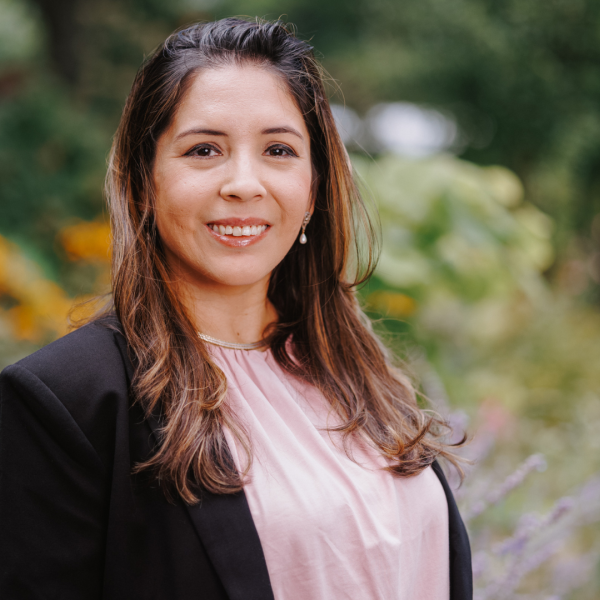
Cornell assistant entomologist Monique Rivera has been named a "40 Under 40" next-generation leader by Fruit Growers News. She is recognized for her research on insect pests that pose a threat to New York's tree fruit growers. In addition to her research, the honor highlights her dedication to the industry through her weekly podcast, "Scaffolds," which provides critical information to growers throughout the apple season.

Monique Rivera, an assistant professor of entomology at Cornell’s College of Agriculture and Life Sciences, has been honored as one of the nation’s top young researchers in the fruit and vegetable industries by Fruit Growers News.

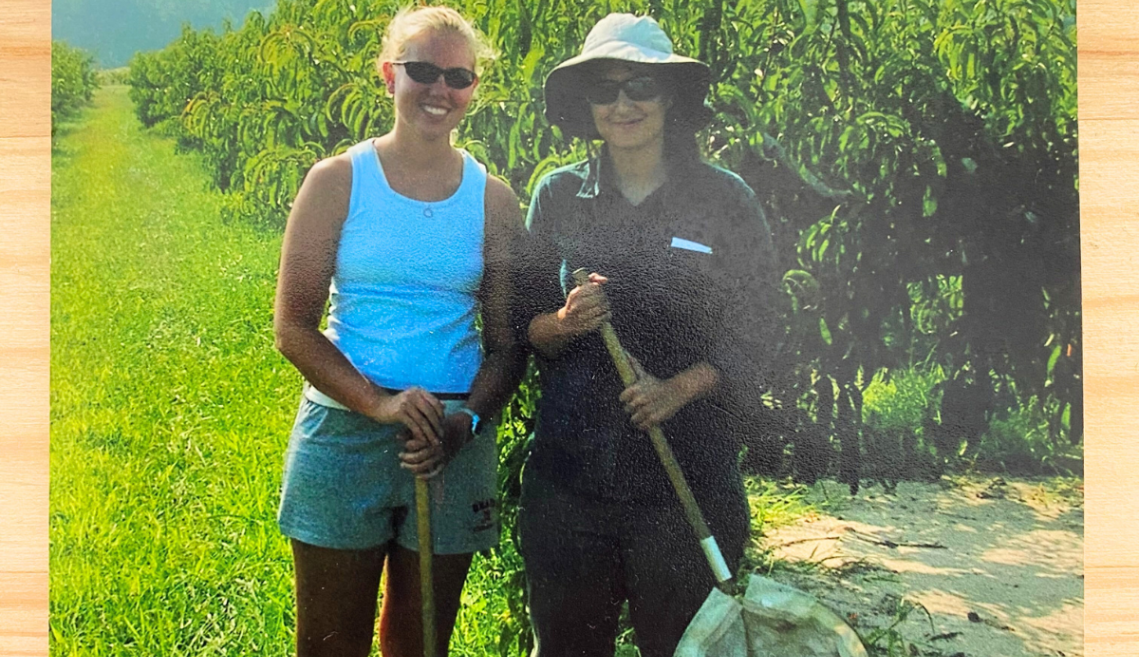
Rivera began working in agricultural entomology in 2006 under Joanne Whalen, Delaware’s integrated pest management specialist. Since then, she has collaborated closely with agricultural communities, including tobacco growers in eastern North Carolina, blueberry growers in New Jersey, and citrus and avocado growers in Florida and California.

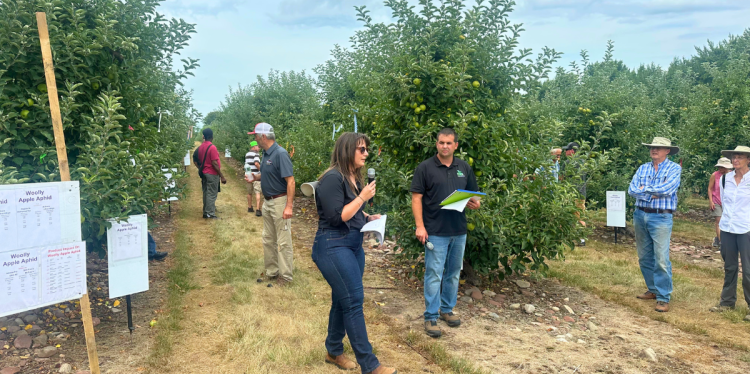
The Cornell entomologist was named a '40 Under 40' next-generation leader for her research on pests that affect New York tree fruit growers, including woolly apple aphids and codling moth.
Along with her research, Rivera was recognized for her weekly podcast, Scaffolds, which supports apple growers throughout the growing season.

Rivera joined Cornell in 2021 after serving as an assistant professor at the University of California, Riverside, where she focused on citrus and avocado. Now in New York, her work centers on apples and their complex pest dynamics. Apples, she noted, “have a dynamic pest complex that can change priorities from year to year.”

Brad Palmer, efficacy research manager at Reality Research LLC, a private company that assists in apple breeding, praised Rivera’s contributions.

“Monique Rivera is a positive influence in our specialty crops,” Palmer said. “Her work shows that woolly apple aphids can overwinter in apple tree canopies and not just in the soil. This change in behavior leads to higher populations, increasing pressure through the season.”

Palmer added that Rivera collaborated with colleagues, industry representatives and growers to develop control options for woolly apple aphids using currently available chemistry while preserving beneficial predators. “Out of this body of data collected from these trials, growers now have a practical list of options to aid control while keeping a robust predator population,” he said.

Rivera’s podcast, which she co-hosts with Kerik Cox, professor of plant pathology and plant microbe-biology, and Anna Wallis, fruit IPM coordinator for Cornell Integrated Pest Management, focuses on entomology, pathology, trap captures and regional updates for New York apple growers.

“Being able to communicate science and build relationships with people so that we can translate knowledge faster is really, really a fun part of my job,” Rivera said.

Delivering this information via audio works well for farmers who listen while working in the tractor or orchard. Since 2023, the team has released weekly episodes for 20 weeks during each growing season.

While science communication is something she loves, Rivera said her core passion goes back to human relationships with food and the land. “It’s this sort of driving, almost instinctual thing—this intimate relationship we have with a plant that provides us with food,” she said.

“The foremost basis of our stability in society is our creation of agricultural societies so we could put down roots and focus on other things.”

“I love thinking about agriculture and how we can improve practices from an entomology point of view,” Rivera said. She added that being recognized by the industry through this award feels meaningful and rewarding.

Keep Exploring

Bee

News

Five new projects from the Cornell Atkinson Center for Sustainability and The Nature Conservancy seek to protect pollinators, restore oyster habitats, manage flood risk and support “cattlevoltaics.”

  • Cornell Atkinson
  • Ashley School of Global Development and the Environment
  • Natural Resources and the Environment Section
A close-up of a person outdoors adjusting their gray wool sock above a brown hiking boot on grassy ground.

News

Research on prior surveys finds very few people have been asked why they chose not to take preventative actions.

  • Cornell Integrated Pest Management
  • Entomology
  • Disease