Originally from Belize, Aidan Villanueva was finishing up his studies at Zamorano University in Honduras when he joined the Nutrient Management Spear Program (NMSP) for a 3-month internship. Later, he returned to work with the team from January through July 2025. Read on to discover what projects he worked on and see what he learned throughout his time here.
What drove you to join NMSP?
My goal was to gain experience in applied research and in managing an investigation of my own. Like anyone starting a new job, I was nervous, but that quickly faded. I was fortunate to enter a very welcoming environment with coworkers who were always willing to assist.
During your time with NMSP, you worked on the Value of Manure project. Can you tell us more about your day-to-day work and how you brought your findings to the public?
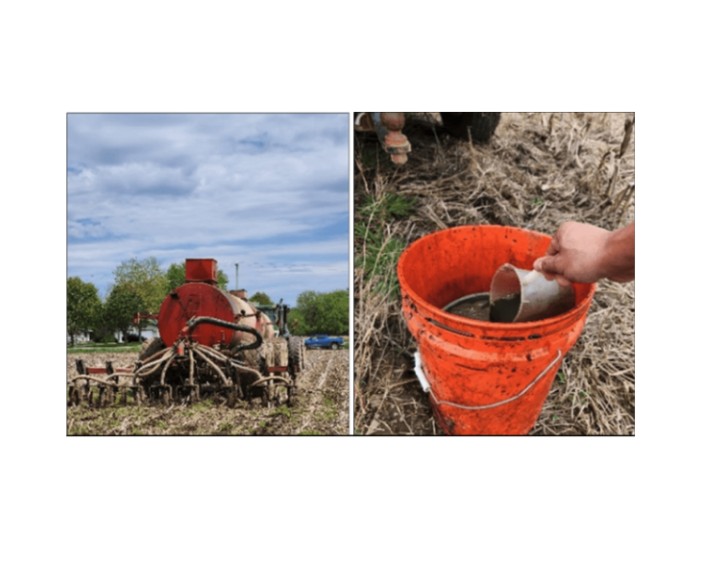
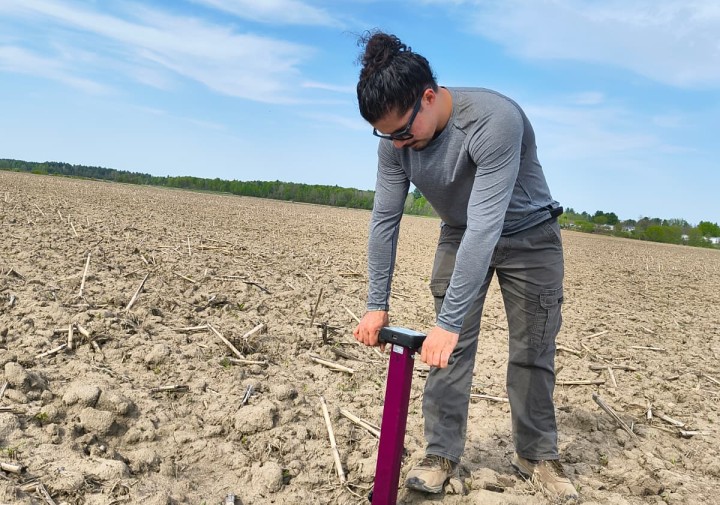
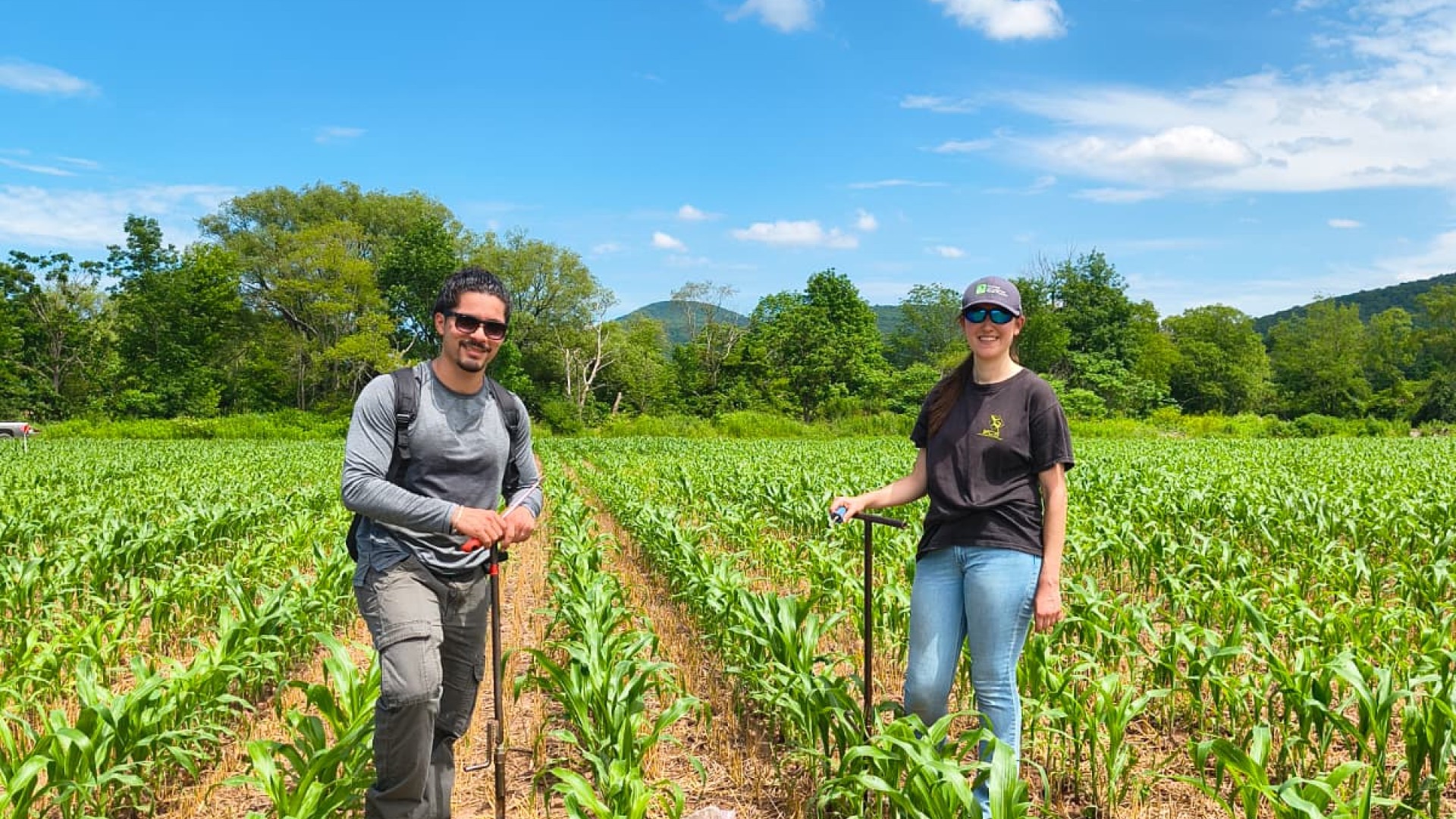
I spent time travelling to participating farms to collect a variety of samples. I really enjoyed the field work and collecting data. This experience was not only valuable professionally, but also personally rewarding.
During these trips, I worked closely with Juan Carlos Ramos Tanchez (NMSP on-farm research coordinator). We formed a strong and collaborative partnership, especially on the longer drives. This gave me the chance to explore different parts of New York state and enjoy scenic mountain views along the way.
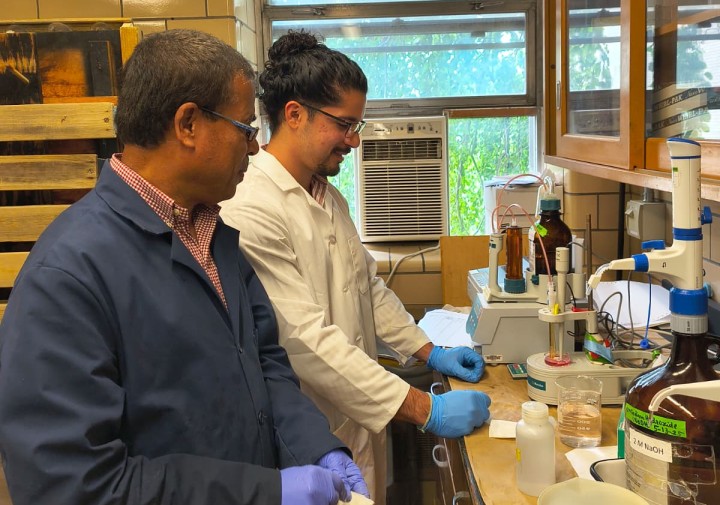
Aside from that, in the lab I had the opportunity to design and carry out a laboratory incubation study where we evaluated the impact of various manure sources on nitrogen dynamics over time. This allowed me to gain more analytical skills, which I hope to apply in my future studies.
I also greatly appreciated the opportunity to learn about extension, present for extension educators and contribute to writing extension articles where we shared findings from our Value of Manure project.
The Power of Manure: Boosting Yields for Multiple Years
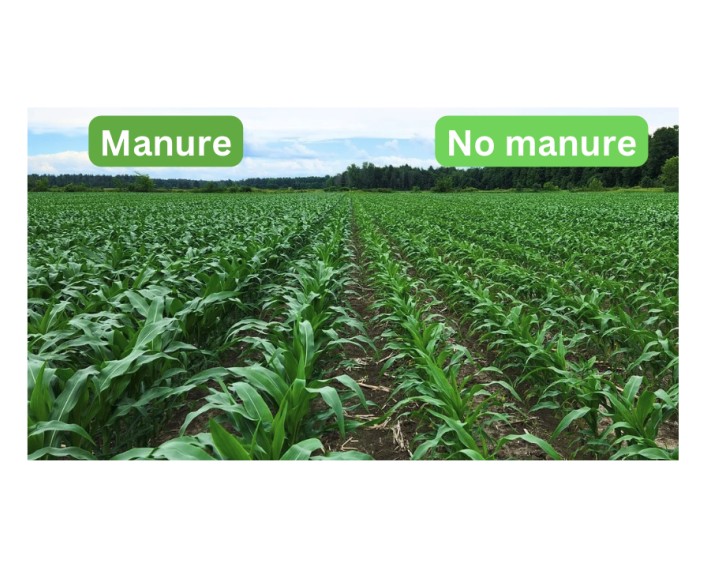
The Value of Manure project has data for 19 on-farm research trials over three years. Read more about the Power of Manure in this extension article that Villanueva co-authored.
Manure nutrient variability during land application in four New York dairies
Dairy manure is a rich source of essential plant nutrients. Unlike inorganic fertilizers, manure dry matter and nutrient content can vary and our team sought to assess this variability for four New York dairies. Check out more about manure nutrient variability in a recent What's Cropping Up? article that Villanueva co-authored.
How would you describe the impacts that NMSP made on you?
As I learned in my evolving positions, I was given greater responsibilities for Value of Manure related projects, such as the incubation study. This helped me become much more confident in working independently, especially when handling fieldwork and lab tasks.
I also assisted with ongoing projects, and working closely with different team members on these projects helped me develop stronger communication and coordination skills.
Most importantly, I’ve learned how to adapt to real-world challenges, whether it was changing field conditions or unexpected results.
How has this experience influenced your career goals?
It’s deepened my interest in agricultural research and strengthened my desire to work directly with farmers. Being involved in both lab and field components showed me how much I enjoy hands-on, collaborative problem solving. I want to continue doing that and to pursue a career that bridges science and practice, contributing to a sustainable future for producers.
You just started a master’s program in aquaculture in Europe. How did your time with NMSP prepare you for this next step?
I gained both communication and project management skills at NMSP, which will surely be useful in supporting my networking efforts and future research projects.
I’ve always been fixed on furthering my studies and exploring the world of aquaculture. What I’ve learned about nutrient management and from working with the NMSP team has helped me pursue that. I just started my new Master’s program as an Erasmus Scholar in Aquaculture, Environment, and Society, which allows me to study in three top European universities. This will give me knowledge and skills that I can hopefully bring back to my home country of Belize.
Madeline Hanscom ‘22 is a communications assistant for the Nutrient Management Spear Program.
Keep Exploring
Field Note
- Dairy Fellows Program
- Animal Science
- Agriculture
News
- Biological Field Station
- Ashley School of Global Development and the Environment
- Natural Resources and the Environment Section
We openly share valuable knowledge.
Sign up for more insights, discoveries and solutions.