Back

Discover CALS

See how our current work and research is bringing new thinking and new solutions to some of today's biggest challenges.

Reimagining reproduction for wildlife conservation

Share
  • Animal Science
  • Animals

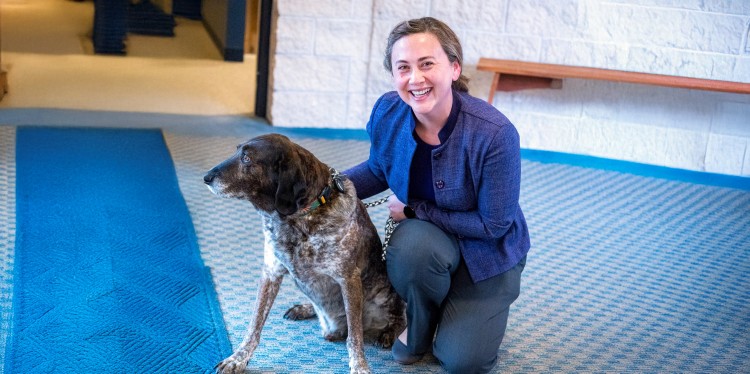
As biodiversity declines and many wildlife species face extinction, the need for innovative conservation solutions has never been more urgent. Among those leading this effort is Jennifer Nagashima ’09, PhD ’15, whose research bridges reproductive biology, biotechnology and species conservation. Her work — from assisted reproductive technologies to microfluidic ovary models — aims to preserve genetic diversity and enhance fertility in endangered species.

A conservation biologist at the Smithsonian’s National Zoo and Conservation Biology Institute, Nagashima’s research is especially vital for animals like the red wolf, whose wild population has dropped below 20. 

“If a critically endangered red wolf passes away and it's not breeding season, we can't get eggs from her to use for the future,” she explained. “Can we grow her ovaries to the point where we can retrieve those eggs — and salvage her genetic potential?”

“If a critically endangered red wolf passes away . . . can we grow her ovaries to the point where we can retrieve those eggs — and salvage her genetic potential?”

Raised in Southern California, Nagashima majored in animal science with a minor in education at Cornell. One academic highlight was an animal biology and physiology course taught by Ron Butler, emeritus professor. “That was actually the first time I started thinking more like a researcher — to think through the mechanism and ask questions and extrapolate,” she said. Although the course was difficult at the time, it reshaped how she approached science.

Nagashima's career path took a pivotal turn her senior year when she attended a guest seminar by the late David E. Wildt, a pioneering conservationist and then-director of the Smithsonian’s Conservation Biology Institute. His talk, which included his work on panda reproductive cycles and artificial insemination in black-footed ferrets, introduced her to a career she hadn’t realized existed. 

Overcoming her usual reluctance, Nagashima approached Wildt after the talk. He helped her get an internship that led her to wildlife endocrinology research, where she extracted hormones from African lion feces to study whether hormone levels differed across the reproductive lifespan — from pre-pubescent to adult to elderly lions. 

“I was essentially covered in lion poop dust for three months,” she said. “The fact that I was still really enjoying what I did meant that this was a career I should really be pursuing.”
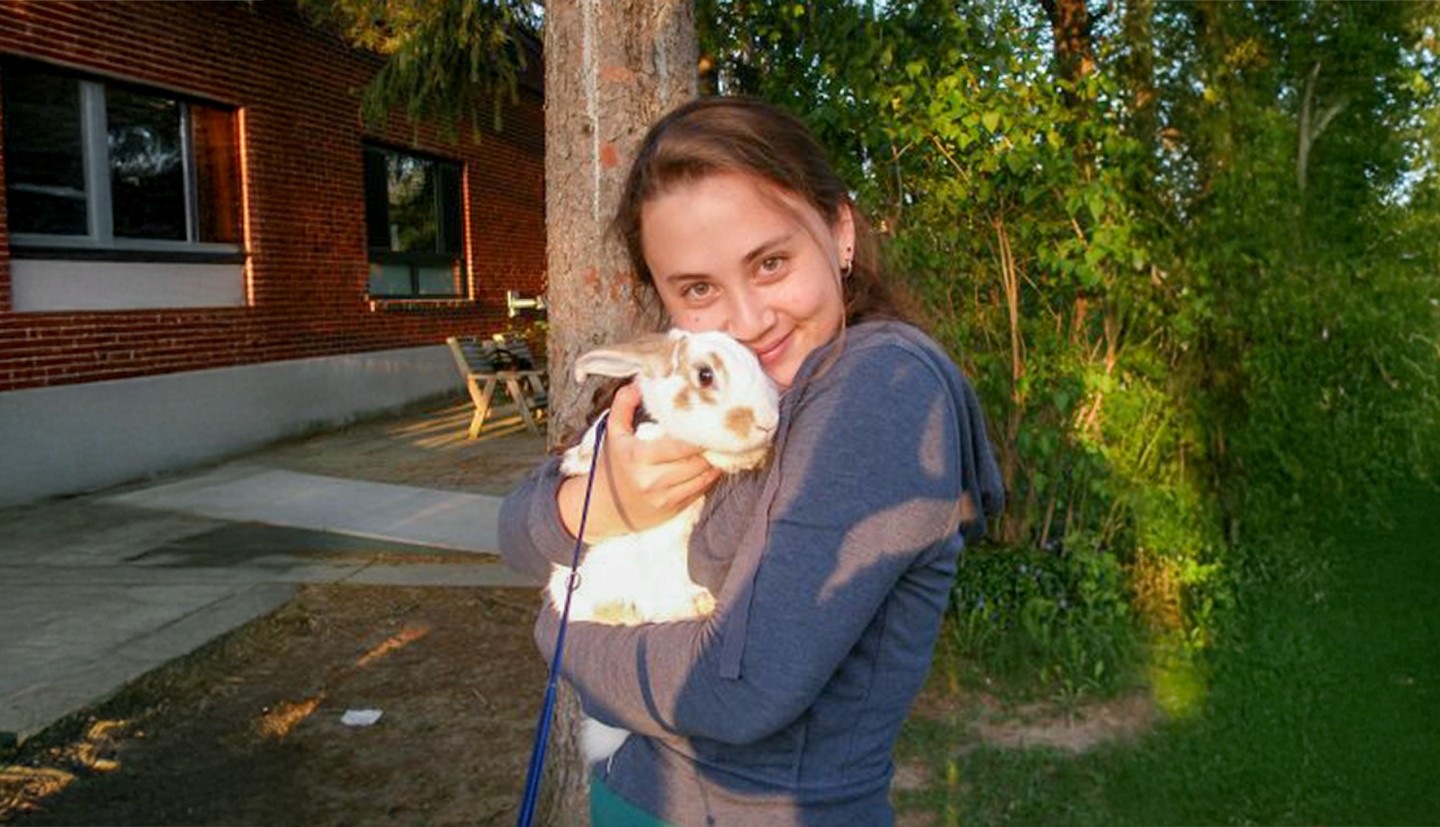
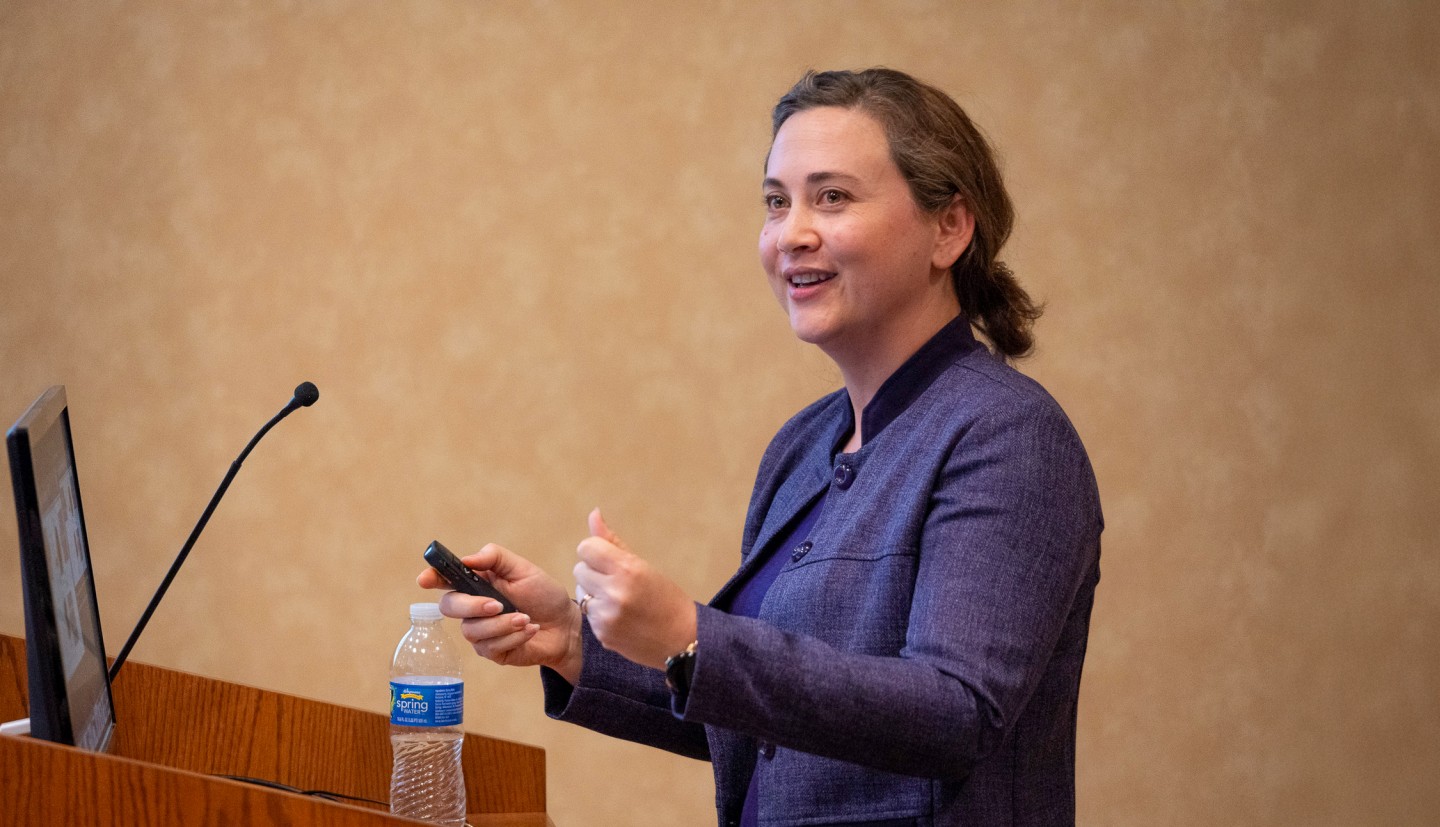
Nagashima decided to switch from veterinarian medicine and pursue a Ph.D. at Cornell. Through a joint training program between Cornell and the Smithsonian, she studied under Alexander J. Travis, now chair of Cornell’s Department of Public & Ecosystem Health, and Nucharin Songsasen, Center Head for Species Survival at the Smithsonian. 

Her doctoral work focused on improving assisted reproductive technologies in dogs, with the broader goal of applying those techniques to endangered canids. The work culminated in a scientific milestone: the first successful birth of puppies through in vitro fertilization in dogs. 

“The puppies were born on a Friday,” she said. “And I defended my thesis on Tuesday of the next week. I remember being completely tired because I’d spent the entire weekend nervously checking on these puppies.”

Today, Nagashima continues to innovate at the Smithsonian, where she is developing microfluidic ovary models: tiny, chip-based systems that mimic the natural environment of an ovary. Unlike traditional culture dishes, these models simulate dynamic conditions such as nutrient flow and hormone signaling. This approach is part of a broader field called biomimicry, where technology emulates natural biological systems.

“We’ve produced these microfluidic chips where I can place cells, ovarian tissue or eggs into a center chamber and flow media through with various hormones,” she explained. “We can recreate a more natural, pulsatile hormone environment, like what happens inside a living body, and see how it affects development.”

Nagashima aims to grow fertilizable eggs from early-stage follicles, starting with domestic cats and eventually applying the technique to endangered wild canids and felids. “The larger goal is to grow eggs all the way to the point where we can produce fertilizable eggs and ultimately embryos that result in healthy live offspring,” she said.

Nagashima also plays a leading role in red wolf conservation, serving as reproductive co-advisor for the red wolf SAFE (Saving Animals From Extinction) program. Each breeding season, she visits conservation facilities to collect sperm samples from male red wolves, assess reproductive health and cryopreserve (freeze at extremely low temperatures) genetic material for future use.

To aspiring scientists, Nagashima offers encouragement to connect with others. “One of the biggest pieces of advice I give to undergrads is: Reach out to people,” she said. 

She also urges students to try new things and be open to unexpected paths. "I never thought I would be doing 3D modeling and physics of fluid flow, but I find it really interesting, especially its applications to wildlife conservation," she said.

Nagashima says what she loves most about her work is its sense of purpose — and the people who share it. “I feel like I'm working toward a greater goal that I really believe in, and that always keeps me motivated when things are hard,” she said. 

Caroline Stamm ’24 is a former communications assistant for the Cornell CALS Department of Animal Science.

Keep Exploring

three woman stand together eating orange slices

Field Note

by Harley Wolfanger '28 Where does our food really come from? That question followed our group throughout our agricultural expedition to California this past January. I decided to embark on this trip because I wanted to understand how the...
  • Dairy Fellows Program
  • Animal Science
  • Agriculture
a group of young people stand together in front of a building

News

The New York State 4-H Livestock Ambassador Program recently offered an immersive, multi-day educational experience for youth participants, providing hands-on exposure to New York’s diverse livestock industries. The program began with a visit to...
  • Animal Science
  • Animals