

Written by Emily Fell (Eastern Great Lakes Watershed Coordinator, NYSWRI and NYSDEC)
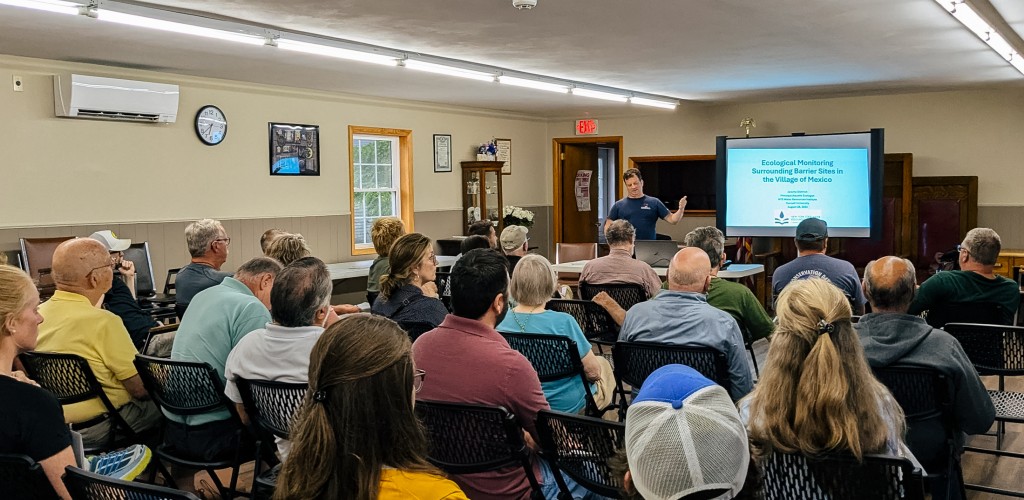
Partners from NYS Water Resources Institute (NYSWRI), Tug Hill Commission and NYS Department of Environmental Conservation (NYSDEC), and NY Sea Grant in coordination with the village of Mexico and other municipalities held an information meeting on August 28, 2024, to share information and discuss opportunities for dam removal on the Little Salmon River in Mexico. As part of the meeting, Jeremy Deitrich, Aquatic Ecologist with NYSWRI presented on his research on Ecological Monitoring of Barrier Mitigation Projects in New York’s Great Lakes Watershed. This research used biomonitoring to assess water quality conditions of the Little Salmon River as well as Black Creek upstream and downstream of the three dams in the Village of Mexico. Results of which indicated that downstream conditions were of better quality than upstream, based on the aquatic life and habitat conditions of the substrate. Jeremy also shared insights from dam removal projects in the Hudson River watershed where conditions improved within a few short years of dam removals.
The meeting engaged Little Salmon River watershed residents and other stakeholders providing an opportunity to share their perspectives on the potential for dam removal in the watershed. There was interest expressed in conducting additional studies on the Little Salmon River dams to further explore the potential benefits and impacts, such as habitat improvement, enhanced resiliency, improved safety, and the potential for water quality impacts, increased flood risk, or invasive species introductions.
Emily Fell with NYSDEC’s Great Lakes Program and NYSWRI also presented on funding opportunities to support Watershed Resiliency Options for the watershed, including funding to support studies of dam removal or other alternatives for enhancing dam safety, habitat and resiliency for the river, and guidance available from NYSWRI and NYSDEC about dam safety, aquatic connectivity, and barrier removals.
More information and links to meeting presentations is available from the Tug Hill Commission website.


