Back

Discover CALS

See how our current work and research is bringing new thinking and new solutions to some of today's biggest challenges.

Share

Media Coverage

Research Associate Sarah Gilbert was quoted in the Public Responsibility in Medicine and Research podcast “Research Ethics across Domains.” The podcast explored the intersection of research ethics, online communities, and emerging technologies.

Graduate student Roxana Muenster was quoted in the Washington Post article “Trump Will Soon Be Able to Sell Shares in Truth Social’s Parent Company. What’s at Stake?” ahead of the end of the lock-up agreement for shares held by its presidential candidate owner.

Presentations

In June 2024, Senior Lecturer Michelle LaVigne co-presented “Potential and Contingent Bodies: Assembling/Disassembling Knowledges” at Performance Studies International #29: Assemble. This co-facilitated workshop considered questions of assembly and dispersal using embodied methods of thinking drawn from fields of performance and rhetoric. The workshop explored the relationships between bodies, language, and motion, and in ideas that underscore the value and potential of bodies to move, speak, alter, and rearrange themselves within and outside of institutions, systems, and knowledges. Participants explored theories and perspectives on assembly/disassembly through experiential exercises that use everyday movements, speech, and writing. In these exercises, participants engaged as individuals and collectives as they activated and questioned ideas about the limits and freedoms of what potential bodies have to (re)assemble and (re)make knowledge that may or may not be commonly recognized.

Michelle is pictured with co-facilitator, Megan Nicely, at Senate House, University of London.

On September 6, 2024, Professor Bruce Lewenstein presented “Lessons from Science Communication” at the Humanities Communication Convening at the American Academy of Arts & Sciences in Cambridge, MA. As part of a day-long workshop on developing a "Center for Humanities Communication," he presented key insights from science communication—the most important is the difference between deficit and dialogue.

Publications

Professor Bruce Lewenstein, August 2024, “Science Communication in a Diverse World,” Journal of Science Communication. Recent years have brought a welcome and needed attention to diversity and inclusion in science communication. This diversity covers language, geography, religion, gender, sexuality — and politics. But with diversity comes complication, where our interest in public communication of science and technology comes in conflict with our identities, our politics, and sometimes even our moral positions. This paper presents a number of examples, highlighting the need for science communicators to be self-reflective about their commitments and how they shape their activities as science communicator practitioners and researchers.

G. Asante, Assistant Professor Wunpini Mohammed, A. Appiah-Kubi, September 2024, “LGBT Activism, Social Media and the Politics of Queer Visibility in Ghana,” The Oxford Handbook of Media and Social Justice, Oxford University Press. This chapter explores how lesbian, gay, bisexual, transgender, and sassoi (LGBTS) Ghanaian activists use social media to mitigate the tensions around their desire for political visibility and need for personal safety. Social media sites such as Twitter, Facebook, and Instagram allow for such complex maneuvering to occur by creating room for anonymity and privacy. Nonetheless, such sites are not outside the confines of social hierarchy in face-to-face interaction. As such, these sites should be approached as spaces where desires for social justice intersect with corporate capitalist extractivist tactics and in turn complicate the efficacy of social justice efforts.

Picture Time!

On September 11, 2024, faculty participated in a Q&A in Navigating the Communication Major and Beyond (COMM 1111). The course, which is taught by Professor Sahara Byrne and Undergraduate Program Coordinator Kristie Millimanintroduces first-year and sophomore students to our major and focuses on transitioning to college life, developing academic identity, and making meaning of the college experience. 

Pictured from left are Kristie (moderator), Assistant Professor Danny ParkerProfessor Jeff Niederdeppe, Senior Lecturer Christopher Byrne, and Professor Lee Humphreys.

Following the Q&A, Assistant Professor Danny Parker spoke with students about her academic experiences, including that as a first-generation student.

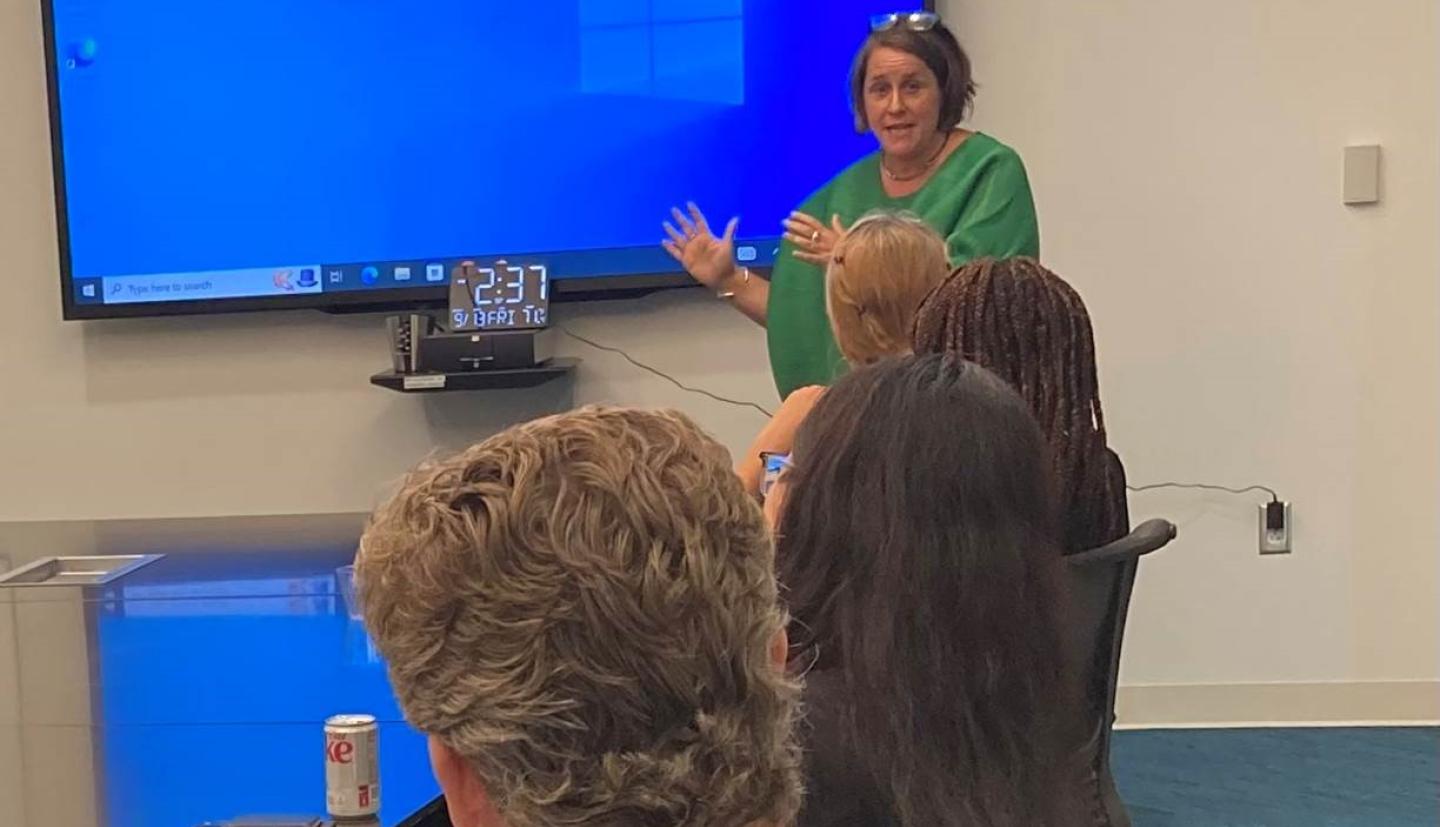
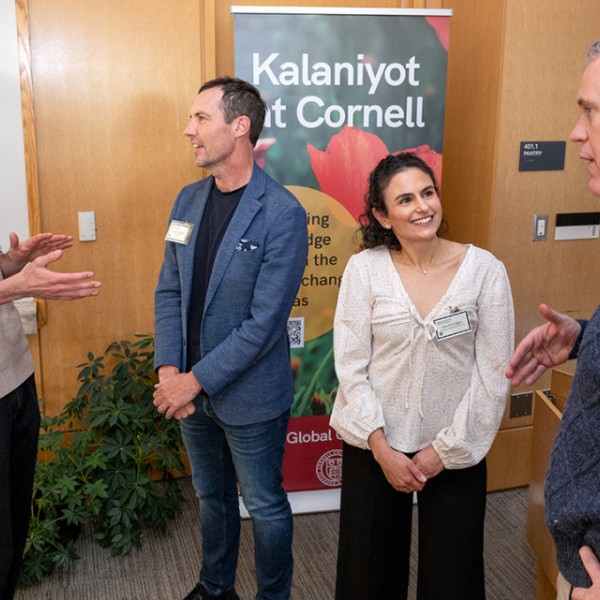
On September 13, 2024, the Department of Communication hosted the annual New CALS Faculty Reception. During the event, Associate Professor Claire Wardle presented to the CALS leadership.

Keep Exploring

a group of young people stand together in front of a building

News

The New York State 4-H Livestock Ambassador Program recently offered an immersive, multi-day educational experience for youth participants, providing hands-on exposure to New York’s diverse livestock industries. The program began with a visit to...
  • Animal Science
  • Animals
Hand grabbing apple

News

Apple scab, caused by the fungus Venturia inaequalis, is one of the most economically devastating diseases facing apple growers in the Northeast. Managing it has long depended on regular fungicide applications—and for many growers, that means...
  • Cornell AgriTech
  • School of Integrative Plant Science
  • Plant Pathology and Plant-Microbe Biology Section