Back

Discover CALS

See how our current work and research is bringing new thinking and new solutions to some of today's biggest challenges.

Share
  • Animal Science
  • Animals

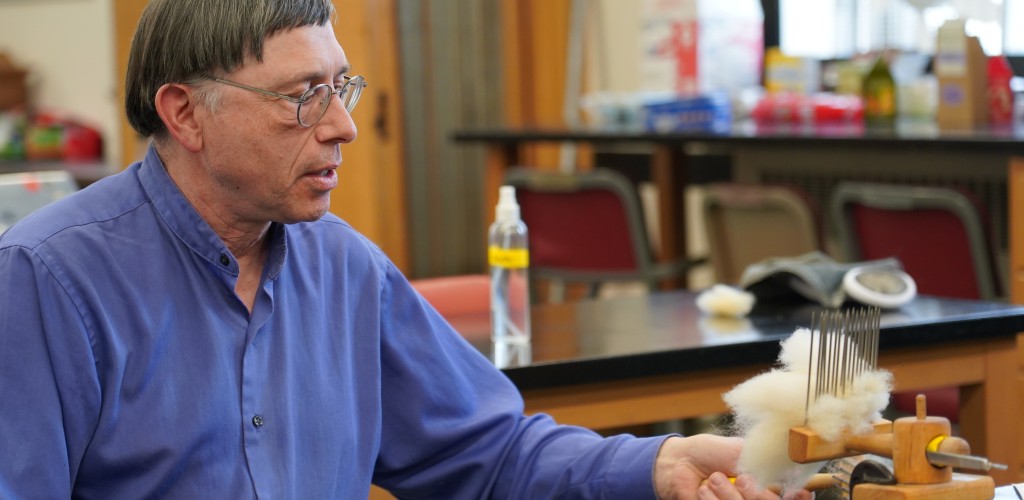
In the heart of Morrison Hall on a Monday afternoon, Bruce Berggren-Thomas ’79, instructor for ANSC 1400 Wool: Animal Fiber Production and Processing, and a wool enthusiast, teaches students the process of washing and carding fresh wool. As they gather next to piles of raw wool, Berggren-Thomas demonstrates scooping out locks and immersing them in a washing tub of water.        

Berggren-Thomas grew up on a dairy farm where he developed a profound appreciation for the intricacies of farm life and a love of animals. While the family farm included a flock of sheep, he never learned about the process of spinning or processing the wool. “My mom did all of the spinning. I just helped shear the sheep and wash and card the wool,” he said.

After receiving a degree in Animal Science from Cornell, Berggren-Thomas worked at research stations across the United States, where he gained invaluable experience in sheep breeding and husbandry. He made his way back to the Department of Animal Science, working as a teaching support specialist for the department.

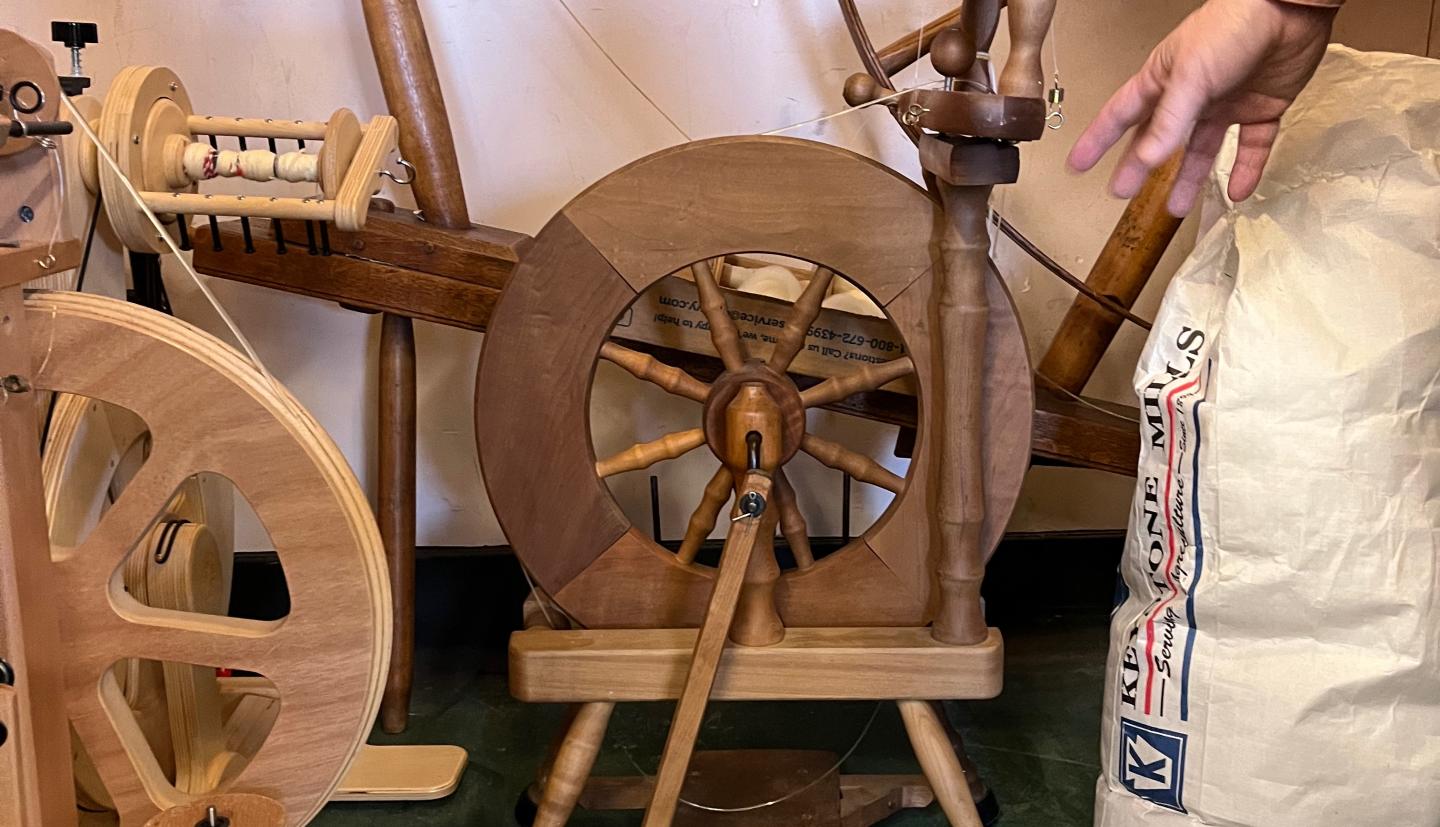
During the COVID-19 pandemic, Berggren-Thomas found himself drawn to his roots in wool. He taught himself how to drop spindle first and then tried out the electric spinning wheel. “The electric spinning wheel is much smaller,” he explained. “When you’re working with the bigger spinning wheel, you have to coordinate what to do with your hands and feet. You don’t have to worry about that with the electric spinning wheel.”

Even so, getting over the learning curve was difficult, Berggren-Thomas said. He advises any beginner wanting to spin to do 15 minutes a day. “This is the perfect amount of time because it won’t get you too frustrated and want to quit,” he said.   

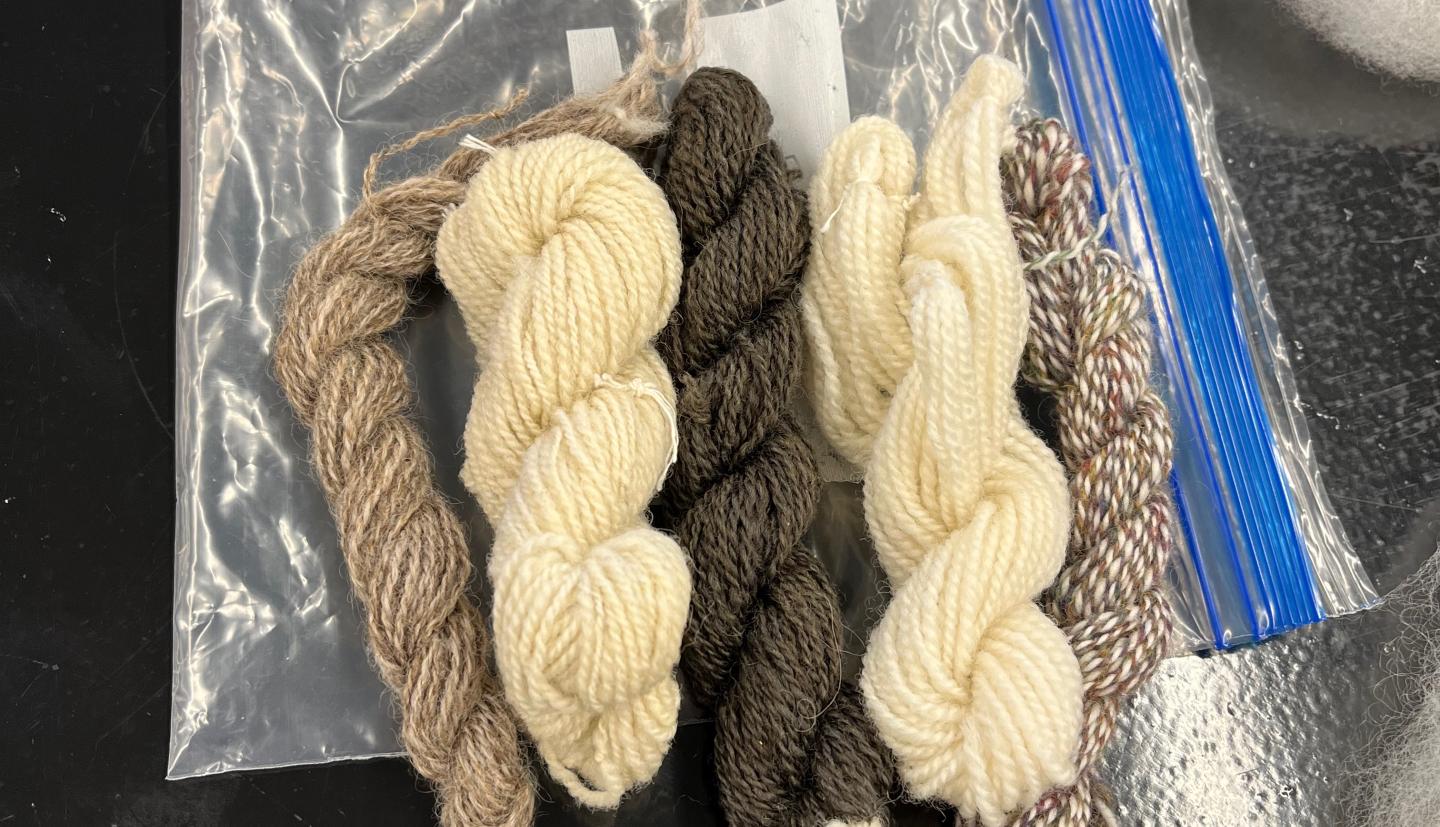
Berggren-Thomas’s wool class offers students a holistic understanding of wool production, from sheep to skein. Through a series of hands-on activities, students delve into the intricacies of fiber analysis, shearing, washing, carding and spinning, culminating in the creation of their own yarn masterpieces. Field trips to local wool mills and sheep farms give students the chance to see firsthand how wool is produced for commercial use, as well as to learn about breed-specific wool characteristics.

In his class, Berggren-Thomas welcomes students from diverse academic backgrounds, ranging from engineering to fiber science. He fosters a collaborative and supporting environment. “My goal is to instill in students a deep appreciation for the artistry and craftsmanship of wool production,” he said. Through experiential learning, students gain practical skills and also develop a profound connection to the traditions and heritage associated with wool.

My goal is to instill in students a deep appreciation for the artistry and craftsmanship of wool production.

Berggren-Thomas envisions expanding the course to reach a broader audience, tapping into the growing resurgence of interest in natural fibers and artisanal craftsmanship, he said. Despite the challenges of teaching a practical skill in an academic environment, he is passionate about the enduring legacy of wool and believes in its power to inspire creativity, connection and community. 

“I love talking to my students about their passion for wool,” he said. “The wool industry is cyclical and it’s rewarding to hear them talk about their excitement for learning the process it takes to go from sheep to fabric.”

Caroline Stamm ’24 is an animal science major and student writer for the Cornell CALS Department of Animal Science.

Keep Exploring

three woman stand together eating orange slices

Field Note

by Harley Wolfanger '28 Where does our food really come from? That question followed our group throughout our agricultural expedition to California this past January. I decided to embark on this trip because I wanted to understand how the...
  • Dairy Fellows Program
  • Animal Science
  • Agriculture
a group of young people stand together in front of a building

News

The New York State 4-H Livestock Ambassador Program recently offered an immersive, multi-day educational experience for youth participants, providing hands-on exposure to New York’s diverse livestock industries. The program began with a visit to...
  • Animal Science
  • Animals