In less than a month, the tracker has listed more than 200 projects from colleges and universities around the world. Matias posted two investigations, one proposing evaluations of the impacts of public health messages on beliefs and behavior, the other sharing a real-time tracker of the COVID-19 information – and misinformation – being promoted by Reddit algorithms.
Dozens of scholars have volunteered projects, particularly in communication, psychology and social computing, Matias said. They are sharing ideas, pooling resources – such as adding questions to broaden a survey’s impact – and posting preliminary results for review and validation.
“It’s been really exciting to see what people are working on and to see people cooperating on this list,” he said.
Researchers at Stanford University’s Polarization and Social Change Lab rapidly organized a flash, virtual conference on COVID-19 public health messaging, using the tracker to bring together 11 research groups across five countries to give short talks, share advice on how to overcome common roadblocks and discuss future work.
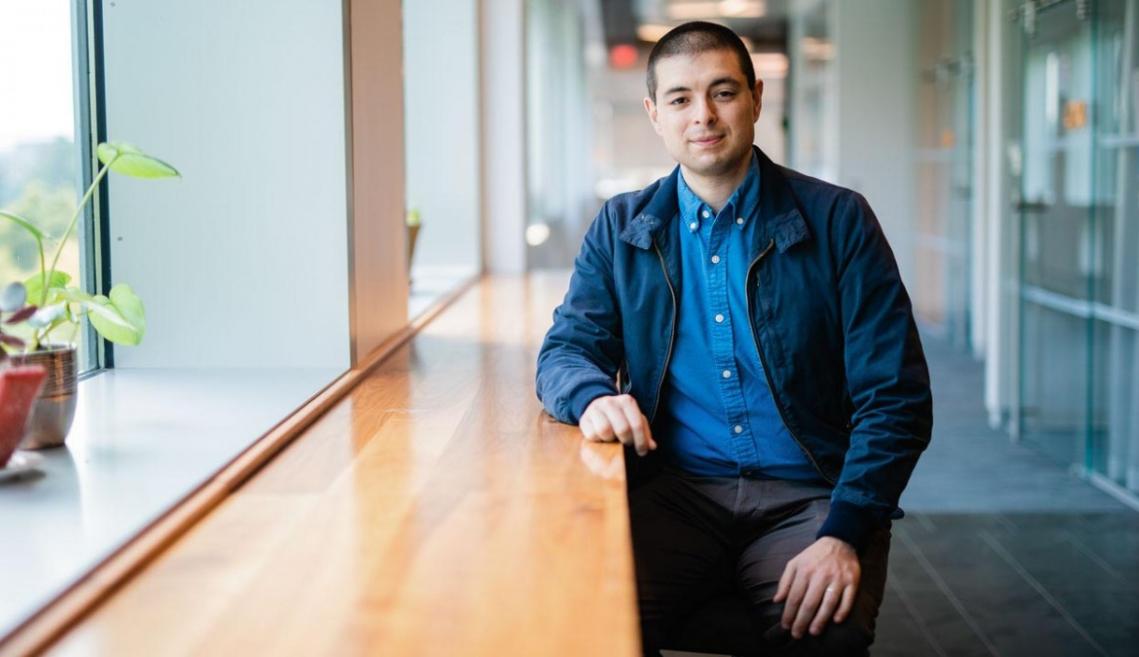
“I think it’s the right tool for this moment,” Matias said, “especially because people have reasons to move fast, and the value of sharing ideas and resources quickly is clear to everyone.” -Nathan Matias
“With many research groups working on similar projects, it would be easy for COVID-19 social science research to become competitive,” Sophia Pink, a graduate student in the fields of management science and engineering who works in the lab, wrote in an email. “Initiatives like the COVID-19 research tracker set collaboration as the norm.”
Participants in the virtual conference included a lab led by Molly Crockett, an assistant professor of psychology at Yale University, that studied which moral justifications in public health messages would most effectively slow the spread of COVID-19.
“The COVID-19 Social Science Research Tracker has been an invaluable resource for researchers around the world, enabling us to find collaborators, receive and provide feedback on our research in real time, avoid duplicating our efforts with other teams, and learn from one another,” Crockett wrote in an email. “It’s been inspiring to see the social science community come together in this way during a time of crisis.”
During more normal times, scientists typically communicate through draft and published research papers, and in smaller groups, Matias said. The tracker, he said, employs a collaborative model more common to open-source software or publishing communities such as Wikipedia, referred to by scholars as “peer production.”
It’s a useful model now, Matias said, when there is a danger that rapid-response research could be rushed, resulting in poor study designs and measurements and weaker – or potentially flawed – findings. That’s all the more reason, he said, for researchers to join forces early on, which the COVID-19 tracker has helped make possible for social scientists.
“I think it’s the right tool for this moment,” Matias said, “especially because people have reasons to move fast, and the value of sharing ideas and resources quickly is clear to everyone.”
This article also appeared in the Cornell Chronicle.