Kathryn J. Boor is the Ronald P. Lynch Dean of the College of Agriculture and Life Sciences. Serving as the college’s chief academic and administrative officer, she is responsible for developing and implementing the strategic direction of the college, which has 360 faculty, 3,700 undergraduate students and 1,000 graduate students. Boor shares responsibility for leading Cornell Cooperative Extension throughout New York state with the Dean of Cornell's College of Human Ecology.
As I complete my tenure as the Ronald P. Lynch Dean of the College of Agriculture and Life Sciences (CALS) this year after serving two five-year terms, I’m struck by the trajectory of change that has marked the past decade.
CALS has driven change since its founding. We have an enduring commitment to direct our research, teaching and extension programs to address the evolving needs of our time. And as global challenges become increasingly complex, our approaches, by necessity, are increasingly collaborative and cross-disciplinary.
The stories in this issue of periodiCALS highlight some of our programs that reflect our commitments to change.
For example, you’ll read about our new Department of Global Development, which offers multidisciplinary approaches to preparing students for our interconnected world. You’ll also read about the investments we’re making in our Master of Professional Studies program to meet the needs of today’s professionals who strive to advance their careers by attaining new, specialized skill sets.
From our researchers, you’ll read about the evolution in breeding techniques that has yielded innovative new varieties of fruits and vegetables—including tomatoes, squash and apples—for which our plant scientists are world famous.
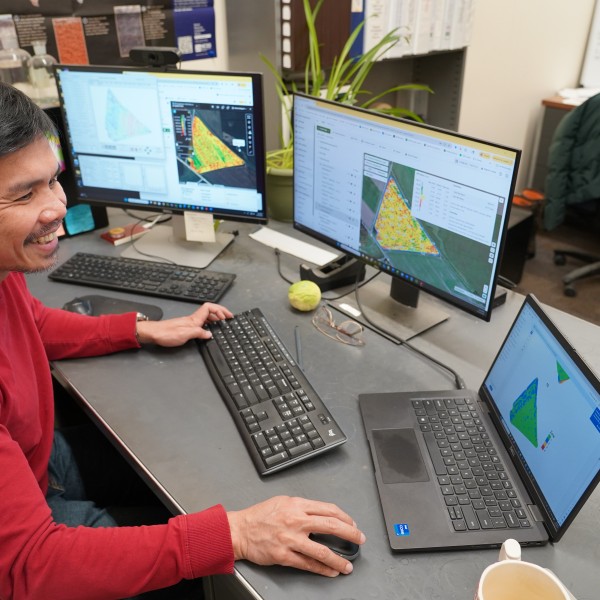
This issue also provides an update on our forward-looking initiative focused on digital agriculture, which is inspiring research collaborations across Cornell that defy the boundaries of traditional disciplines. For example, you’ll read about a partnership between CALS and Cornell’s College of Engineering to develop new technologies to help grape growers.
Also changing is the range of CALS’ research and extension programming in New York City, which continues to expand in support of President Martha E. Pollack’s One Cornell visioning initiative. You’ll read about three newly funded CALS projects based there. One will focus on racial inequality and health care, another will study soil health in urban environments, and the third project will develop online food safety programs through a partnership with our Cornell Food Venture Center and eCornell.
As Cornellians, we see life as an ongoing journey of exploration driven by change. I’m inspired daily by the new areas of inquiry that emerge and motivate our students, faculty and staff. It is the work of a lifetime.
As always, thank you for your ongoing support and partnership. Please keep in touch.
Kathryn J. Boor
Ronald P. Lynch Dean of the
College of Agriculture and Life Sciences
This message was originally published in the CALS Magazine.