Back

Discover CALS

See how our current work and research is bringing new thinking and new solutions to some of today's biggest challenges.

  • Cornell Atkinson
  • Global Development Section
  • Charles H. Dyson School of Applied Economics and Management
  • Digital Agriculture
  • Food
  • Global Development
Share

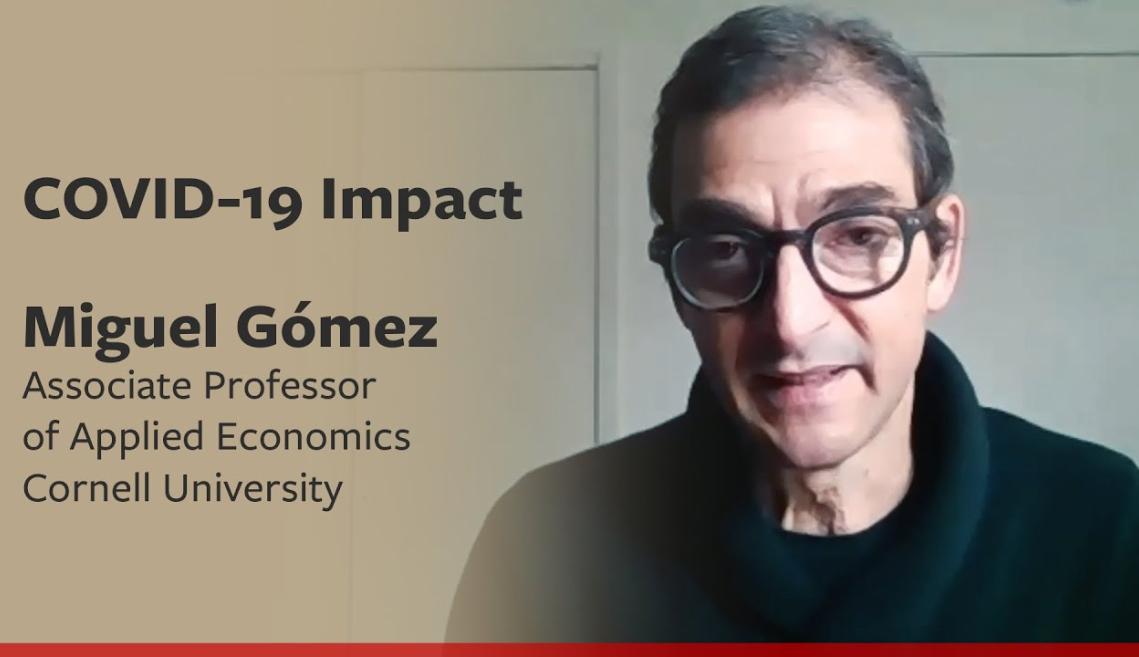
Miguel Gómez, an expert on food markets and supply chains, says food supply chains must become more flexible so that goods can be more easily directed to either supermarkets or food service establishments, wherever the need is greatest. Current inflexibility has resulted in milk and produce being discarded rather than distributed to the food banks that desperately need it. “So far, these two supply chains have worked completely independently,” he says.

Gómez is associate professor at the Charles H. Dyson School of Applied Economics and Management and a faculty fellow of the Cornell Atkinson Center for Sustainability. His research focuses on supply chain competitiveness and sustainability, and on such concepts as demand response, buyer-seller negotiations and market power.

For more COVID-19 impact videos, see the playlist on YouTube.
This article also appeared in the Cornell Chronicle.

Keep Exploring

image of patrick webb

News

Patrick Webb, a globally influential scholar of nutrition, food and agriculture policy, and humanitarian assistance, will join Cornell July 1 as the inaugural executive director of the Ashley School of Global Development and the Environment in...
  • Ashley School of Global Development and the Environment
  • Global Development Section
  • Natural Resources and the Environment Section
Illustration of different people purchasing produce on a mobile phone

News

Grocery shopping online could help SNAP families access healthy foods, especially for those with young children or long commutes to grocery stores.

  • Communication
  • Food
  • Health + Nutrition