All farms that meet market and income requirements and that grow fruits and vegetables commonly eaten raw are now required to comply with a new set of regulations aimed at keeping fresh fruits and vegetables – everything from salad greens, celery and carrots to berries and watermelons – free of microbial contamination from such pathogens as Listeria and Salmonella.
That’s not easy: The rule book is exceedingly complex, and understanding exactly what is needed to make one’s farm compliant is a daunting task.
Thankfully, Cornell Cooperative Extension (CCE) agents can make sure farmers understand what updates their farms may require.
Trained CCE extension agents teamed with New York State Department of Agriculture and Markets (NYSDAM) personnel across the state offer free and confidential on-farm readiness reviews. Agents walk through a farm and provide a wholistic assessment to insure that farmers can meet the new standards.
“If you’re looking at this large document with tiny writing without anyone explaining how it would fit your operation and your environment, can be overwhelming,” said Caroline Boutard-Hunt, an agricultural educator at CCE’s Yates County office.
The Food and Drug Administration’s new Food Safety Modernization Act (FSMA) Produce Safety Rule establishes, for the first time, science-based minimum standards for the safe growing, harvesting, packing and holding of fruits and vegetables grown for human consumption, according to the FDA website. Previous guidelines were voluntary.
The rule covers a wide range of areas, including: worker health and hygiene; worker training; agricultural water sources and irrigation practices; biological soil amendments of animal origin; post-harvest handling and sanitation; and potential contamination by farm animals and wildlife.
“These are the first federal regulations in our country regarding produce safety,” Boutard-Hunt said. “The goal of the Produce Safety Rule is to prevent outbreaks of microbial pathogens on food. This is a really important step to keep people safe.”
Though the rules went into effect in 2016, inspections began on a rolling basis in 2018, depending on a farm’s size.
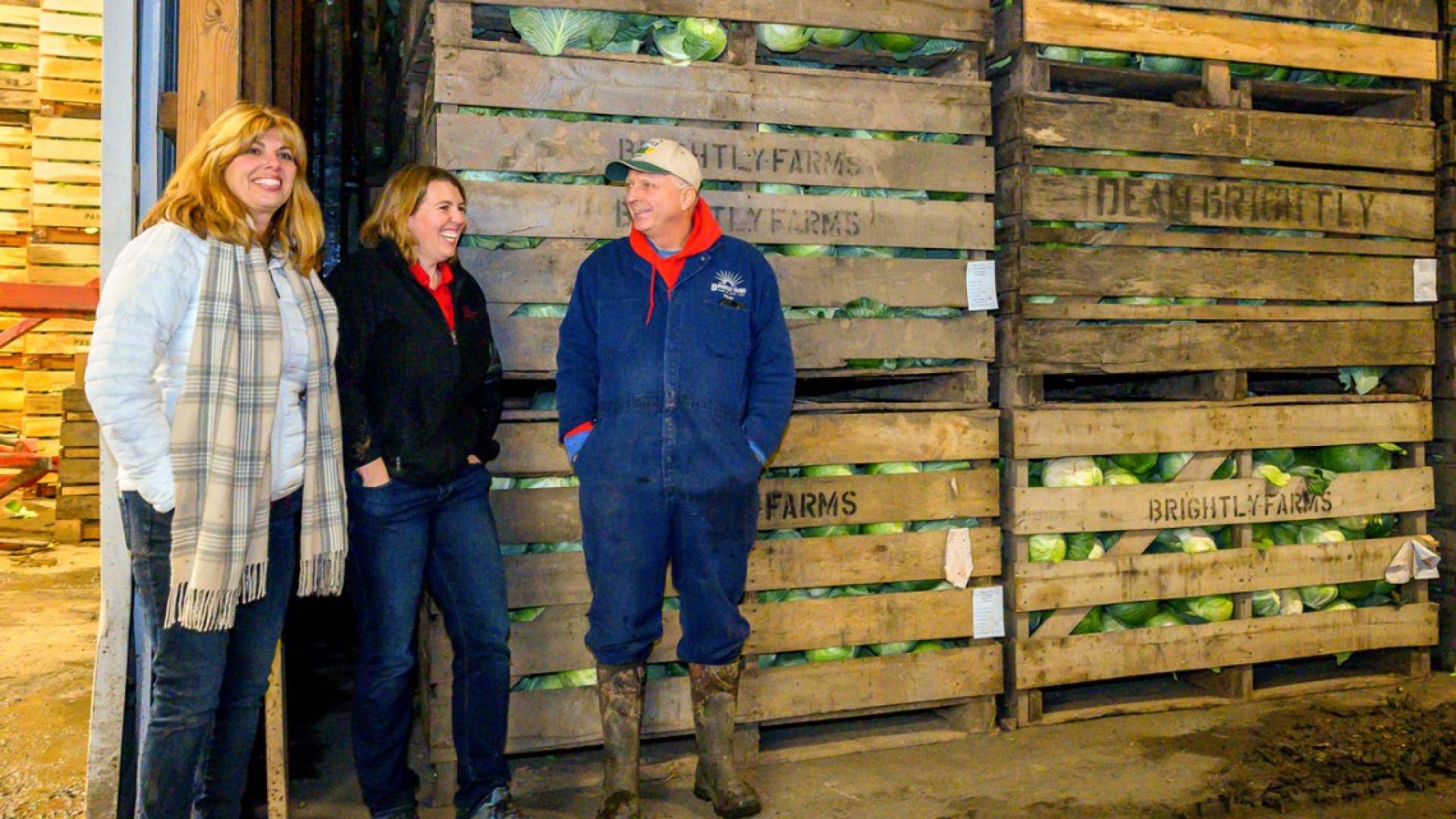
For Brightly Farms, inspections begin this year for their 300 acres of cabbage and 80 acres of orchard apples, both of which qualify as produce commonly consumed raw.