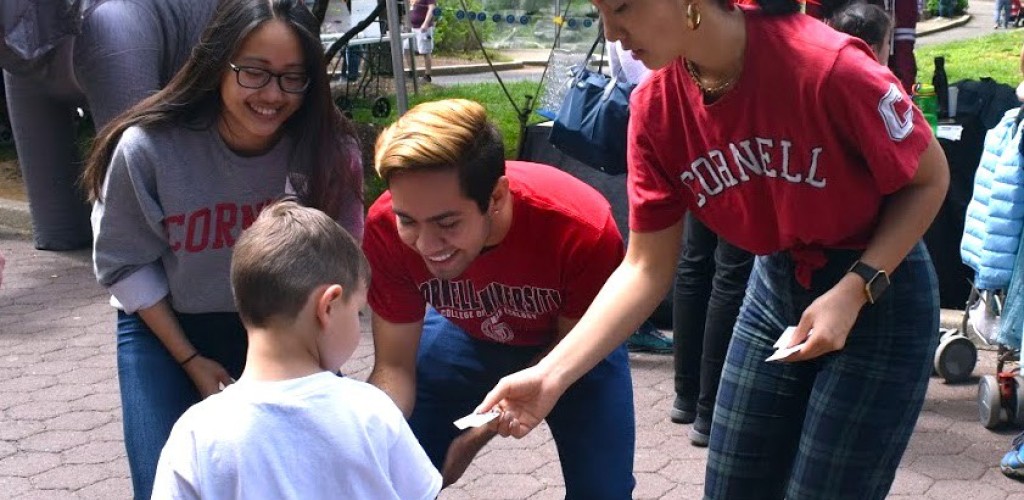
A group of Cornell students spent Earth Day outdoors at the Smithsonian’s National Zoo in Washington, D.C., teaching patrons how to mold plastic in a different way – by reduction.
Members of Cornell University Sustainable Design (CUSD) enlightened the zoo’s patrons and their kids April 22 about how to reduce humanity’s insatiable demand for plastic.
“We celebrated conservation successes and offered hope to maintain a biodiverse planet, while encouraging visitors to take positive action to help protect the Earth and the creatures inhabiting it,” said organizer Zeyu Hu ’19, a CUSD team leader.
The Cornell booth – set up across from the zoo’s popular primates exhibit and orangutan play yard – drew hundreds of participants. It featured interactive demonstrations, games, cute stickers and postcards designed by CUSD members to boost children’s awareness of the issue.
As part of the Smithsonian-wide Earth Optimism initiative, the Smithsonian’s National Zoo and Conservation Biology Institute hosted events on Earth Day. The zoo invited several groups – including Cornell, Earth Conservation Corps, Earth Day Network and the EcoTeen Action Network – to participate.
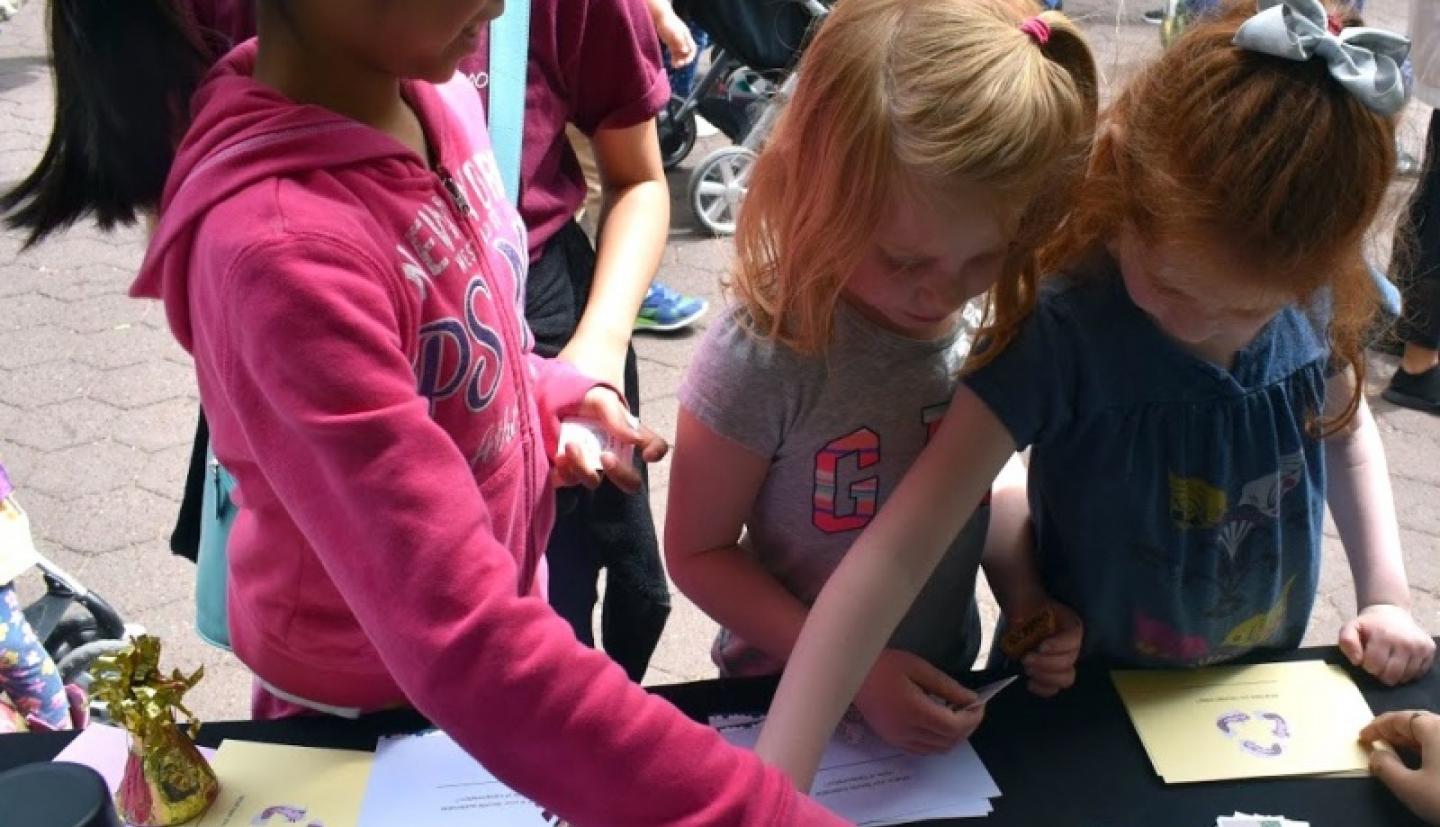
Throughout the day, kids stopped by the Cornell University Sustainable Design Booth at the National Zoo on Earth Day to scoop up stickers. Photo provided
CUSD has worked since last year with the zoo’s sustainability committee for the One Smithsonian Plastic Reduction Initiative, or OSPRI, to substantially reduce visitor plastic waste – specifically single-use plastic water bottles – by Earth Day 2020.
“People connected their interests with ours,” said Dora Tan ’18, MPA ’19, who spoke with an educator who protects the Anacostia River watershed in Washington, D.C., and Maryland, where plastic bottles wash up; and an artist who admired CUSD’s plastic turtle and spoke of creating an exhibit out of plastic waste.
“It was heartwarming to see the zoo visitors – especially kids – get so excited about nature,” Lynn Li ’20 said. “Everyone near us was in awe of these gentle giants, the orangutans. The marvel of it all made me more passionate about doing good for the Earth.”
Adam Ziccardi ’21 enjoyed hanging out with kids all day at the zoo. “I loved working at summer camp, so this was really engaging for me,” he said. “By having fun with them, it helped us to connect our message.”