

Manufactured foods will be getting a boost in safety thanks to a partnership between the U.S. Food and Drug Administration (FDA), the Institute of Food Safety at Cornell University (IFS@CU) and the New York State Department of Agriculture and Markets (NYSDAM).
The FDA is aiming to increase availability of training courses and food safety knowledge by allowing State Departments of Agriculture to partner with universities to become authorized providers of its FDA Food Processing and Technology course (FD152).
New York and the IFS@CU are among two pilot university-state collaborations to initiate FD152. The Cornell course will help New York state meet the requirements of its Manufactured Food Regulatory Program Standards to better educate food inspectors.
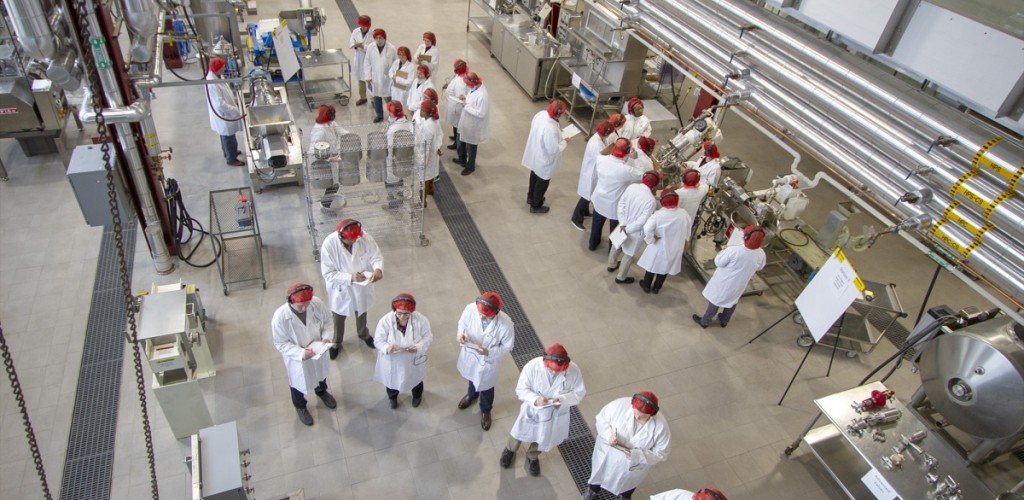
The IFS@CU offered the first course Nov. 5-9 at Cornell AgriTech’s newly renovated Fruit and Vegetable Pilot Plant. Faculty and staff from IFS@CU, the Cornell Food Venture Center, the HPP Validation Center, and the Brewing and Enology Extension Groups taught 36 NYSDAM personnel from the divisions of Food Safety and Inspection and Milk Control and Dairy Services.
“Working collaboratively to bring necessary food safety training to New York is one of the things the Institute for Food Safety at Cornell University does to support New York food production,” said Betsy Bihn, director of IFS@CU. “Capitalizing on our food safety expertise ensures that regulatory personnel, growers, packers, processors, retailers, and entrepreneurs have access to the training and food safety information they need to keep food safe and remain economically competitive in the marketplace.”

FD152 provides an overview of the basic principles in food processing, technology, and the equipment used to produce safe manufactured foods in a pilot plant setting. The course included lectures and demonstrations of processing equipment, according to Bihn, who said a major benefit of the course is that participants discuss how equipment design and use impact food safety and sanitation practices and develop a strong food safety foundation to aid in inspections for manufactured foods.
“The FDA training course is a great example of how things work better when we all work together. We were pleased to collaborate with Cornell and our federal partners to build on the great work of our food safety inspections’ team and expand the training available to our staff,” said Richard Ball, New York State Commissioner of Agriculture and Markets. “The creation of a standard training solution that will promote consistency and competency across all states, not just in New York, is a key guiding principle set forth by the National Integrated Food Safety System. We look forward to continuing to expand our knowledge-base and expertise in our mission to ensure the safety of New York’s food supply.”


