

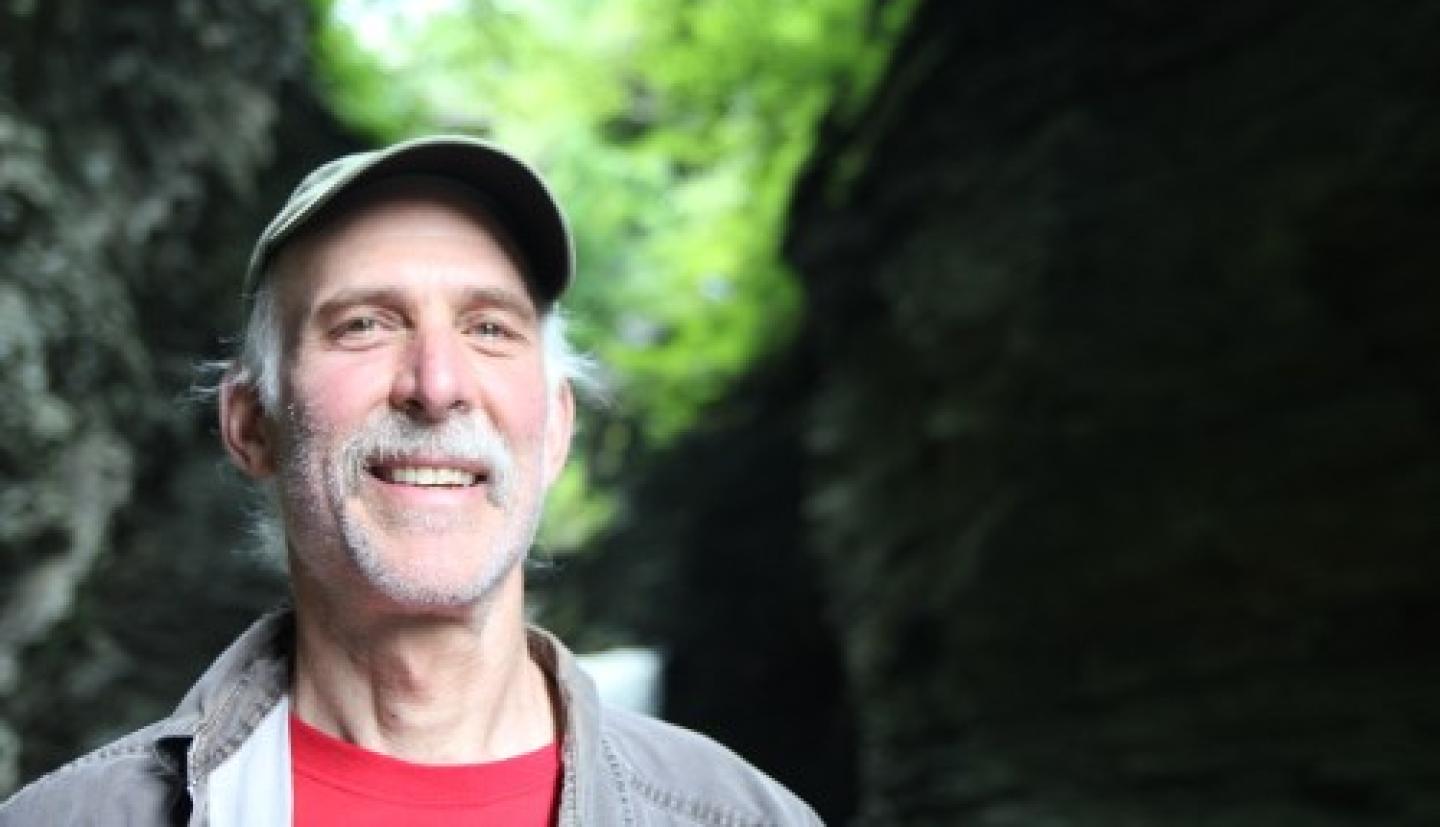
“Cultivating Environments,” a new episode of the “What Makes Us Human” podcast series, looks at the human actions behind the changes in our environment.
“In my work as a professional ecologist ... I’ve come to see humans as gardeners, managing cultivated environments. Pristine nature seems to be an illusion,” Clifford Kraft, professor of natural resources in the College of Agriculture and Life Sciences, says in the podcast.
Kraft studies ecosystem interactions that influence the management of freshwater fish populations in lakes and rivers – with an emphasis on Adirondack ecosystems. His research is designed to identify ways to manage the abundance of these organisms or to understand factors that limit our capacity for their management.
The “What Makes Us Human” podcast’s second season asks the question, “Where Is the Human in Climate Change?” and showcases the newest thinking across academic disciplines about the relationship between humans and the environment. The series is produced by the College of Arts and Sciences in collaboration with the Cornell Broadcast Studios and features audio essays written and recorded by Cornell faculty.
New episodes are released each Tuesday through the spring and are available for download on iTunes and SoundCloud and for streaming on the Arts and Sciences humanities page, where text versions of the essays are also posted.


