

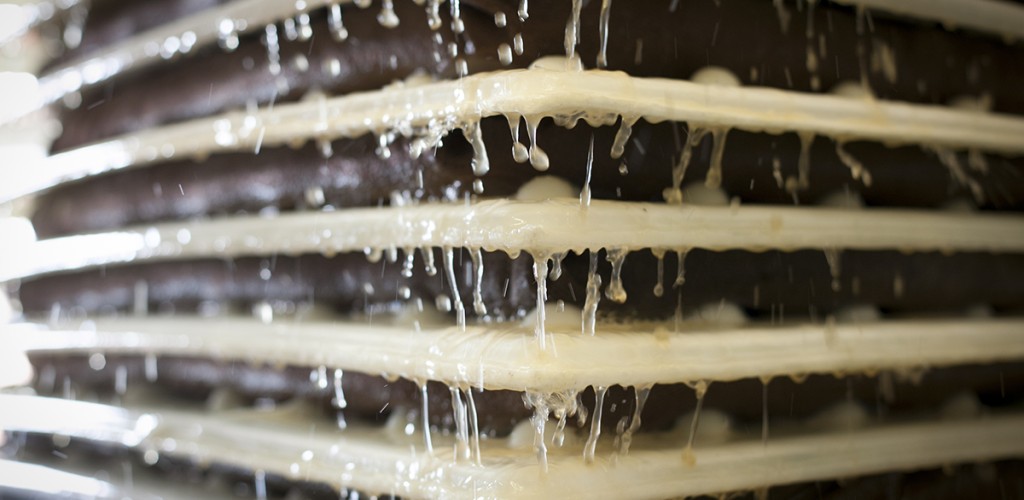
Unfavorable apple growing conditions in Ithaca this season nearly crushed a seasonal favorite: Cornell Orchards’ cider. But with the help of Cornell’s New York State Agricultural Experiment Station (NYSAES) in Geneva, New York, the popular beverage pressed right on campus is once again available to the Cornell community.
For a time this fall, the production of Cornell cider seemed in jeopardy. Erratic temperatures and a late spring frost followed by a persistent summer drought spelled trouble for the Ithaca campus apple trees used to make the cider.
While Ithaca’s apples suffered, the orchards 50 miles north in Geneva benefited from slightly more favorable conditions.
Orchards in Ithaca are on lower ground compared with Geneva, where the higher elevation helped apples survive sudden plunges in temperatures, according to Peter Herzeelle, research support specialist at NYSAES. Geneva’s success, however, was relative: Yields this year were down 40 percent compared with the bumper crop of 2015. Generally, Herzeelle said, years that follow such boons tend to produce a smaller harvest. This year many apple varieties felt the sting, especially those that budded early in April.
“We were lucky to have any fruit at all, let alone a decent crop,” said Herzeelle.
In Ithaca, the small apple harvest forced Cornell Orchards farm manager Eric Shatt to look elsewhere for the apples needed to make the 15,000-20,000 gallons of cider typically produced per year.
Shatt reached out to Herzeelle about sourcing juice apples from the orchards in Geneva.
NYSAES came through with about 1,000 bushels of juice grade apples. Shatt said the Orchards have used Geneva apples to supplement cider production in the past but never in such large quantities as this year.
Herzeelle, who works in professor Terence Robinson’s lab studying apples and other fruits such as sweet cherries and peaches, said that supplying the Orchards with apples is an example of collaborative work between the two campuses. “It’s all about moving forward together. We’re all on the same team.”
Cornell Orchards has been producing and selling house-made cider to the public since the store opened in 1952. The cider is available at campus stores and the Cornell Dairy Co-op.
Melanie Cordova is communications coordinator for the College of Agriculture and Life Sciences.


